Function-Based Diagnosis and Physiotherapeutic Intervention for Shoulder Pain and Scapulothoracic Movement Control Deficits in Volleyball Players: A Case Report
Samiya Khan, Kalpana Zutshi, Aafreen LNU, Ashfaque Khan, Abdur Raheem Khan

TL;DR
A volleyball player's shoulder pain was treated through targeted physiotherapy focusing on scapular movement, showing the importance of functional diagnosis in sports rehabilitation.
Contribution
This case report introduces a function-based physiotherapy approach for volleyball players with shoulder pain and scapulothoracic movement deficits.
Findings
A six-week physiotherapy intervention improved shoulder pain and scapulothoracic movement control in a volleyball player.
Scapular function plays a crucial role in shoulder joint mobility and stability for overhead athletes.
Function-based diagnosis helps tailor rehabilitation to sport-specific performance needs.
Abstract
Overhead athletes require complete, unrestricted arm movements to perform their peak-level sports. As a result, the shoulders must maintain a careful balance between mobility and stability. Volleyball players frequently experience shoulder pain and mobility limitations due to the repetitive overhead motions involved in spiking and serving, which place significant strain on the shoulder joint. This case report examines the functional diagnosis and physiotherapeutic intervention for a 26-year-old male volleyball player suffering from right shoulder pain and limited mobility during overhead activities. The assessment revealed deficiencies in scapulothoracic movement, highlighting the crucial role of the scapular function in shoulder joint mobility. Physiotherapeutic intervention, which focused on restoring scapular function through a six-week conservative physiotherapy intervention,…
Genes, proteins, chemicals, diseases, species, mutations and cell lines named across the full text — each resolved to its canonical identifier and authoritative record.
Click any figure to enlarge with its caption.
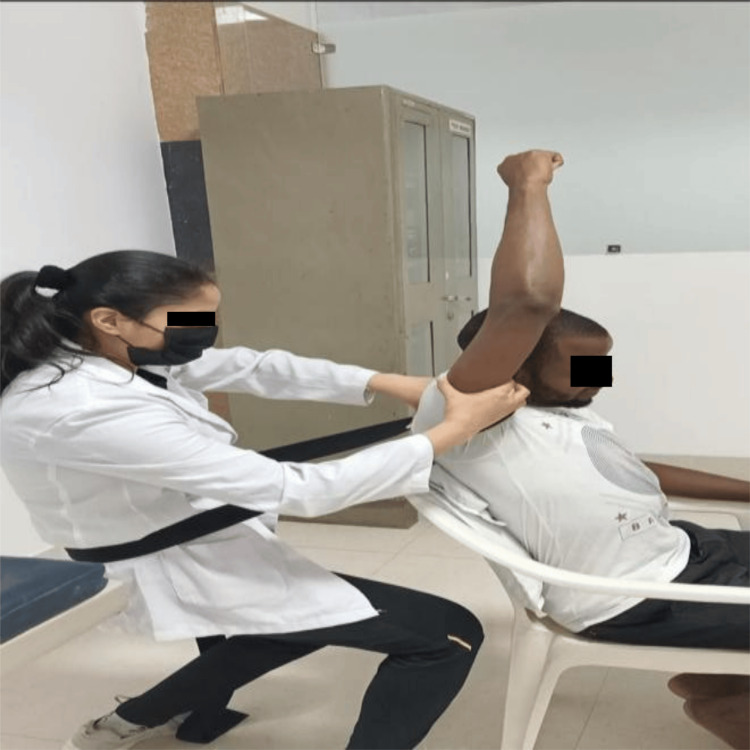 Figure 1
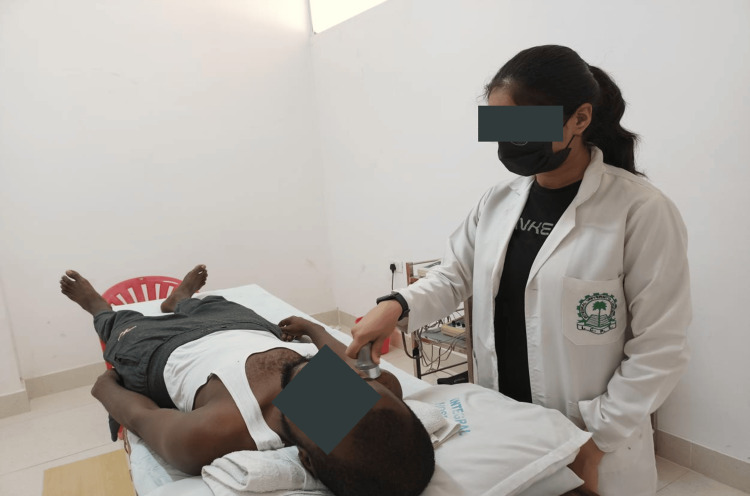 Figure 2
| Measurement category | Test/Measure used | Test/Measure results pre-treatment | Test/Measure results post-treatment |
| UE functional activity | Quick DASH | 45.5% | 6.8% |
| Participation in work duties | Patient report quick DASH-W | 52.3% | 4.5% |
| Special test | Hawkins Kennedy/ impingement test | Positive | Negative |
| Category | Outcome measure | Baseline assessment | After six weeks |
| Posture | Observation | Scapula elevated, protracted, forward rotated and anterior tipping. Dorsal spine mild posterior convexity present | Improve on visual estimation |
| Pain | VAS | 7 | 2 |
| ROM | Goniometer | Flexion-170 Extension-50 Abduction-165 External rotation-80 | Flexion-175 Extension-55 Abduction-175 External rotation-90 |
| Accessory motion | Inferior and posterior glide | Shoulder joint inferior glide: hypo mobile pain (+) posterior glide: hypo mobile, pain (+) | Shoulder joint inferior glide: normal mobile pain (-) posterior glide: normal mobile, pain (-) |
| Shoulder and scapular stabilizer strength | MMT | Flexion-5/5 Abduction-4/5 Internal rotation-4/5 External rotation-4/5 Scapular stabilizer-4/5 | Flexion-5/5 Abduction-5/5 Internal rotation-5/5 External rotation-5/5 Scapular stabilizer-5/5 |
| Body function | Physiotherapeutic intervention | Outcome measure | Net Improvement in outcome |
| Posture | Home instruction for posture correction | Observation | Improve on visual estimation |
| Pain | Patient education regarding self-pain management, ultrasound sound therapy- continuous mode, 1.5 Hz for 7 minutes, cold pack 10-20 min after exercises | VAS | 5 |
| ROM | GH physiologic mobilization for abduction grade II and III- 2x30 second bouts. Progressed vigorous by increasing grades to III and IV and increasing bouts to 2x60 seconds | Goniometer | Flexion-5 Extension-5 Abduction-10 External rotation-10 |
| Accessory motion | GH accessory mobilization AP and inferior glides. Grade II and III-, 2x30 second bouts. Progressed vigorous by increasing grades to III and IV and increasing bouts to 2x60 seconds MWM for posterior and anterior glide Therapeutic exercises shoulder pulley for abduction 20 rep 2 session | Inferior and posterior glide | Shoulder joint inferior glide: normal mobile pain (-) Posterior glide: normal mobile, pain (-) |
| Muscle strength | Exercise in prone 5 sec hold, 5 sec relax, 5 rep, 3 sets, 2 sessions. PNF diagonal with TheraBand (Ohio, USA). External rotator stg with TheraBand 5 sec hold, 5 sec relax, 5 rep, 3 sets, 2 sessions. Prone horizontal ab 10 stg exs 5 sec hold, 5 sec relax, 5 rep, 3 set, 2 sessions. | MMT | Flexion-1 Abduction-1 Internal rotation-1 External rotation-1 Scapular stabilizer-1 |
| Activity limitation | Physiotherapeutic intervention | Outcome measure | Net improvement in outcome |
| Moderately limited function for UE activities |
Same plan of care as in Table | Quick DASH | Improve shoulder function by 38% |
| Decreased ability to perform ADL’s | Functional strengthening performed in clinic 2x/week • Scapular PNF: S/L anterior elevation/posterior depression x5 minutes | VAS | Patient is able to independently perform activities with no pain (0/10). And sports activities with no pain (0/10) |
| Disrupted sleep | Same plan as pain management. Educated patient on sleep hygiene and pillow positioning | Quick DASH | Pain does not interfere with the patient's sleep, and they sleep well |
Peer Reviews
No public reviews on file for this paper yet. If you reviewed it on a platform where reviews are public (OpenReview, ICLR, NeurIPS, ICML), you can paste yours below so the community can read it here.
Videos
No videos yet. Explain this paper in a talk, walkthrough, or lecture? Add one.
Taxonomy
TopicsShoulder Injury and Treatment · Shoulder and Clavicle Injuries · Nerve Injury and Rehabilitation
Introduction
Volleyball is a popular sport that requires repetitive overhead motions, which can lead to a high incidence of shoulder pain and dysfunction among participants. This is due to the physical demands and nature of key volleyball actions, such as spiking, setting, serving, and blocking. As a result, understanding the factors that contribute to these shoulder-related issues in volleyball players is an important area of research and clinical practice [1,2].
Previous research by Kugler et al. was among the first to document the impact of chronic overuse on shoulder girdle mechanics in volleyball players, highlighting asymmetric scapular positioning and limited range of motion in the shoulder girdle on the dominant side among elite athletes. Although scapular dysfunction on the dominant side is now recognized as a common issue in overhead athletes, there has been limited follow-up research specifically examining this phenomenon in the volleyball population since their influential study [3].
Most studies examining shoulder girdle function in volleyball players have emphasized the relevance of the ratio between internal and external rotational isokinetic strength. These studies generally indicate that imbalances in these strength ratios are linked to a history of shoulder injuries in adult volleyball players [4].
Functional-based diagnosis in rehabilitation emphasizes identifying movement patterns, biomechanical issues, and neuromuscular problems that contribute to injuries rather than focusing solely on symptoms or anatomical problems [5]. This method assesses how the entire body functions during activities or movements that are relevant to daily life or sports [6]. This case study aimed to assess the functional deficits and movement patterns that contribute to shoulder pain and scapular dyskinesia in volleyball players.
This case study focused on identifying and addressing the underlying biomechanical and neuromuscular impairments that lead to improved shoulder function, reduced pain, and prevention of future injuries. It provides data to guide personalized, movement-based rehabilitation programs for overhead athletes, such as volleyball players. This study contributes to the growing literature on functional diagnosis and targeted interventions for shoulder disorders in sports. Studying the specific movement deficits in this population will enable clinicians to develop more effective, prevention-focused training programs to optimize shoulder health and performance in volleyball players.
Case presentation
A 26-year-old male student and university-level volleyball player reported a sudden onset of right shoulder pain that occurred two months before the initial visit while playing volleyball and was unable to perform overhead activities. Subsequently, the patient received conservative treatment in the form of ice and sling immobilization. After a few days of immobilization, the patient again started playing volleyball, and during the smashing activity, he experienced pain again. During the time of symptom onset, he recalled going through daily work. The pain progressed throughout the following month, and he began noticing increased pain during overhead activity, activities of daily living (ADL), and at night. No relevant medical or family history was present, and his musculoskeletal system was impaired, as evidenced by his right shoulder pain and difficulty in ADL. The patient was an unmarried, slim, physically active, and non-vegetarian student. Based on observations and patient discussions, the patient’s communication, affect, cognition, and learning were unimpaired.
Clinical findings
The patient’s deficits were categorized using the International Classification of Functioning, Disability, and Health Model [7]. Visual Analog Scale (VAS), goniometric measurements, manual muscle testing (MMT), and Quick DASH were used as outcome measures.
The examination involves body functioning and structure examination focusing on posture, pain, range of motion (ROM), sleep, ADLs report, and strength. These are documented in Table 1. Functional status involving functional activity and special tests is listed in Table 2. No imaging study advice was given to the patient because of a function-based diagnosis. Table 3 shows the net improvement in outcomes through therapeutic intervention for body function. Table 4 shows the net improvement in outcomes through therapeutic intervention for activity limitation. Figure 1 shows GH accessory mobilizations, which are techniques used to improve joint mobility, specifically targeting the glenohumeral joint (shoulder joint). Figure 2 shows ultrasound therapy applied to the patient for 7 minutes at 1.5 W/cm².
Movement with mobilization at the glenohumeral jointThe image is clicked by the author.
Application of ultrasound therapy at the glenohumeral jointThe image is clicked by the author.
Outcome measure
In this case study, we used posture, VAS, DASH, and accessory motion; goniometric measurement of ROM and MMT at pre-intervention at 0 days; and measurement of all outcome measures at the end of six weeks. Pre-to-post-intervention (end of six weeks), all outcome measures showed improvements. The pre-to-post-net improvement in various outcome measures was as follows: posture improved on visual estimation, VAS net improvement 5 points, shoulder ROM improvement Flexion-5 and Extension-5 Abduction-10 External rotation-10 (in degrees). Accessory motion and muscle strength (MMT) improved. DASH improves by 38%.
Discussion
The patient showed a significant decrease in pain, along with notable improvements in range of motion (ROM) and enhanced strength of the shoulder and scapular stabilizer muscles. These advancements have greatly improved the patient’s capacity to perform everyday activities and elevated their overall quality of life. Increased ROM and muscle strength have enabled smoother and pain-free movement, allowing the patient to participate more fully in daily and recreational activities. Consequently, the patient experienced enhanced well-being and functional abilities. This progress highlights the effectiveness of the targeted rehabilitation strategy, which not only alleviates pain but also emphasizes the restoration of functional movement and muscle strength. Consequently, the patient is now better able to handle daily tasks and enjoy an improved quality of life, demonstrating the success of physiotherapeutic intervention.
The rehabilitation program effectively addressed the identified impairments and activity limitations through a function-based multimodal intervention approach. This comprehensive strategy proved crucial for driving the significant improvements observed in patient outcomes. Targeted interventions focused on pain management, restoration of proper shoulder biomechanics, strengthening of the involved musculature, and reintegration of functional tasks.
The findings from this case study are consistent with those reported in similar studies, which have found that a combined approach of manual therapy techniques, therapeutic exercises, and patient education can lead to significant improvements in clinical outcomes for patients with shoulder pathologies such as adhesive capsulitis [8]. One study indicated that exercise, joint mobilization, and laser therapy are beneficial in reducing pain and enhancing function in individuals with shoulder impingement syndrome and that joint mobilization combined with other interventions can be more effective in treating primary shoulder impingement [9].
This study has several limitations. As a single case study, the findings are based on only one volleyball player, which restricts the ability to generalize the results to a broader population or other athletes. The findings of this case study can also be explained by alternative factors beyond rehabilitation interventions. For instance, the patient’s own natural healing processes, changes in their daily activities or lifestyle, or even a placebo effect from the treatments could have contributed to the observed improvements. The focus on a single type of intervention, without comparison with other methods, further constrains the study's applicability. Finally, the short-term nature of follow-up does not provide insight into the long-term sustainability of the improvements.
Future research on this case study in randomized control trials could take several important directions. Expanding the study sample to include a larger and more diverse population of volleyball players would enhance the generalizability of our findings. Implementing a control or comparison group would provide a clearer understanding of the specific effects of each intervention in the rehabilitation program. Additionally, exploring a range of physiotherapeutic methods, both individually and in combination, could offer valuable insights into the most effective treatment strategies for addressing shoulder pain and functional deficits in this athlete population. Long-term follow-up studies are also needed to assess the sustainability of the improvements observed and the impact on patients' overall athletic performance and quality of life.
Conclusions
The case study provides valuable insights into the effectiveness of a targeted rehabilitation approach for this population. The study demonstrated promising results in a single volleyball player, where a six-week protocol involving ultrasound, mobilization, and scapular and shoulder strengthening exercises led to significant improvements in muscle strength, a notable reduction in pain, and an enhancement in quality of life and the ability to perform daily activities. These findings suggest that this comprehensive, multimodal intervention has the potential to effectively address shoulder pain and functional deficits in volleyball players. While further research is needed to confirm these outcomes in a broader population, this case study represents an important step in developing evidence-based rehabilitation strategies for this athlete group, which could have meaningful implications for their overall athletic performance and quality of life.
The reference list from the paper itself. Each links out to its DOI / PubMed record.
- 1Injuries among world-class professional beach volleyball players. The Fédération Internationale de Volleyball beach volleyball injury study Am J Sports Med Bahr R Reeser JC 1191253120031253176810.1177/03635465030310010401 · doi ↗ · pubmed ↗
- 2A one season prospective cohort study of volleyball injuries Br J Sports Med Verhagen EA Van der Beek AJ Bouter LM Bahr RM Van Mechelen W 4774813820041527319010.1136/bjsm.2003.005785 PMC 1724865 · doi ↗ · pubmed ↗
- 3Muscular imbalance and shoulder pain in volleyball attackers Br J Sports Med Kugler A Krüger-Franke M Reininger S Trouillier HH Rosemeyer B 256259301996888912410.1136/bjsm.30.3.256PMC 1332345 · doi ↗ · pubmed ↗
- 4Concentric and eccentric shoulder and elbow muscle strength in female volleyball players and non-active females Scand J Med Sci Sports Alfredson H PietiläT Lorentzon R 26527081998980938410.1111/j.1600-0838.1998.tb 00481.x · doi ↗ · pubmed ↗
- 5Traumatic shoulder injuries: a force mechanism analysis of complex injuries to the shoulder girdle and proximal humerus Am J Roentgenol Sheehan SE Gaviola G Sacks A Gordon R Shi LL Smith SE 024201201310.2214/AJR.12.998723971472 · doi ↗ · pubmed ↗
- 6Functional movement screening: the use of fundamental movements as an assessment of function - part 1Int J Sports Phys Ther Cook G Burton L Hoogenboom BJ Voight M 39640992014 https://pubmed.ncbi.nlm.nih.gov/24944860/24944860 PMC 4060319 · pubmed ↗
- 7A systematic review of measures of shoulder pain and functioning using the International classification of functioning, disability and health (ICF)BMC Musculoskelet Disord Roe Y Soberg HL Bautz-Holter E Ostensjo S 731420132344555710.1186/1471-2474-14-73PMC 3668165 · doi ↗ · pubmed ↗
- 8Efficacy of arthroscopic surgery in the management of adhesive capsulitis: A systematic review and network meta-analysis of randomized controlled trials Arthroscopy Forsythe B Lavoie-Gagne O Patel BH 228122973720213322142910.1016/j.arthro.2020.09.041 · doi ↗ · pubmed ↗