First record of the genus Cochleopsaltria Pham & Constant (Hemiptera, Cicadidae, Cicadinae) from China, with a description of the second species

Abstract
Genes, proteins, chemicals, diseases, species, mutations and cell lines named across the full text — each resolved to its canonical identifier and authoritative record.
Click any figure to enlarge with its caption.
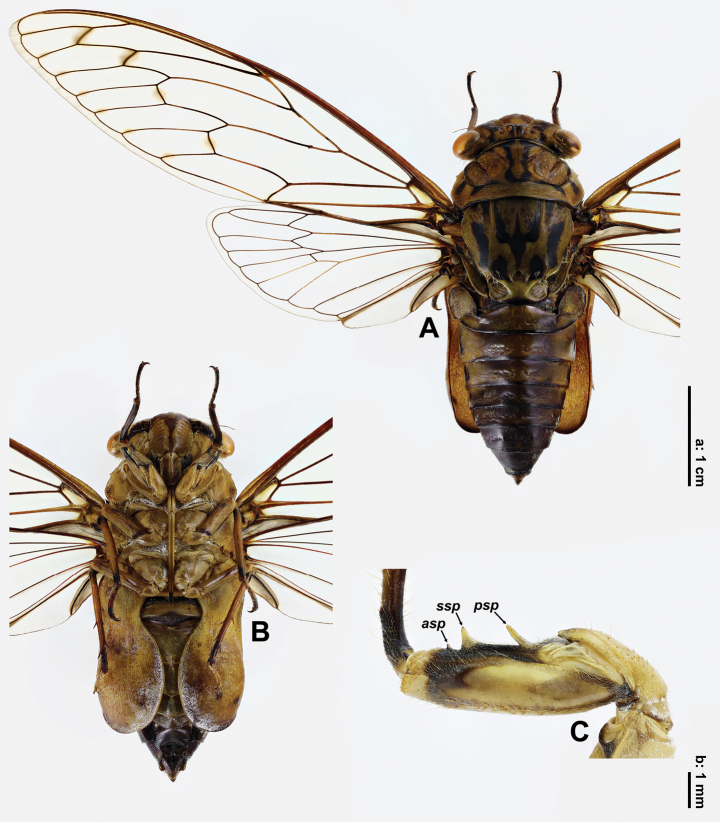 Figure 1
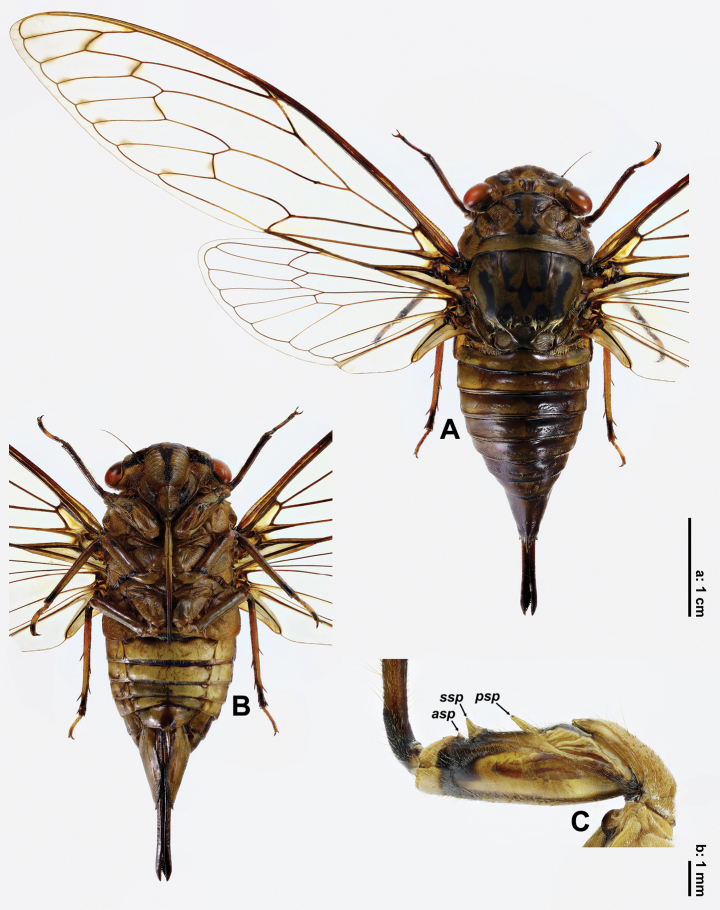 Figure 2
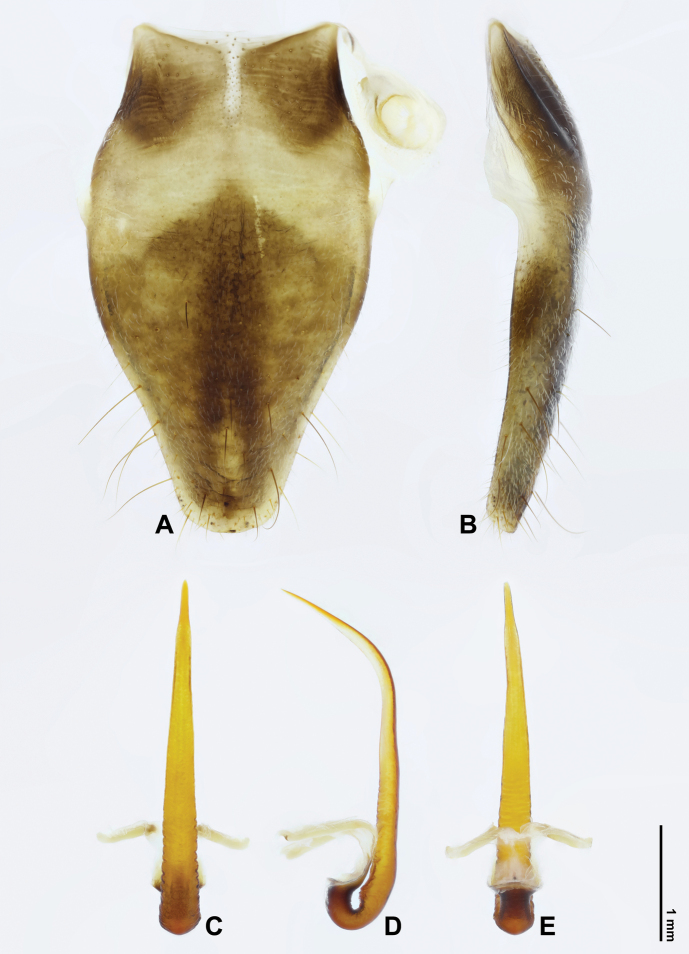 Figure 3
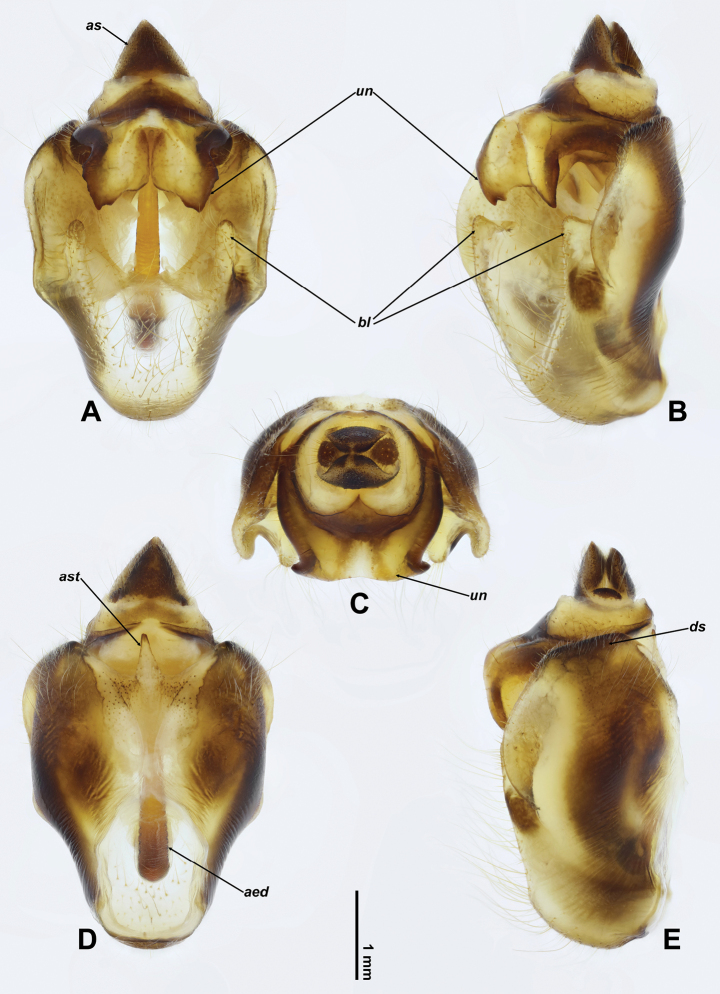 Figure 4
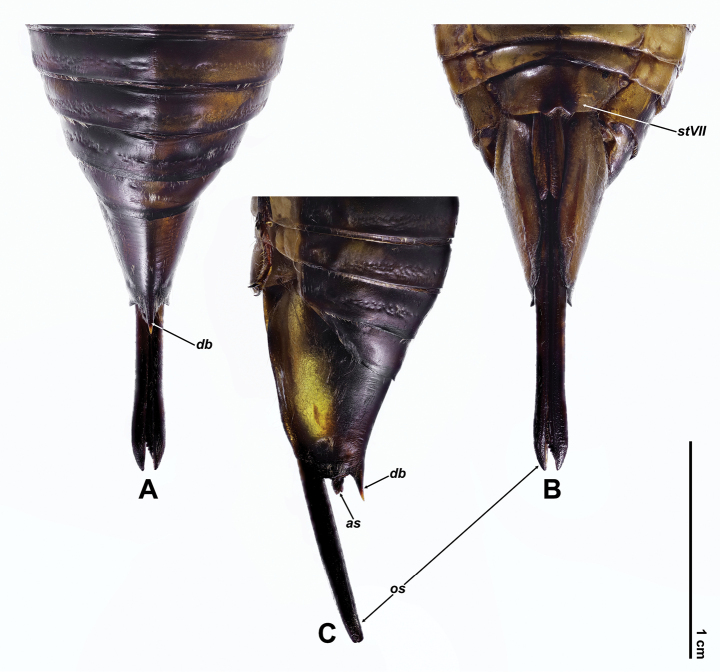 Figure 5
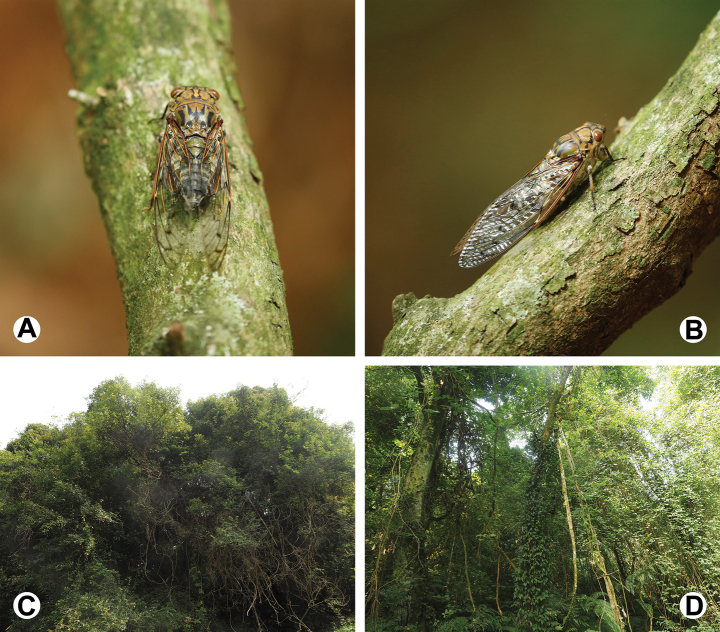 Figure 6
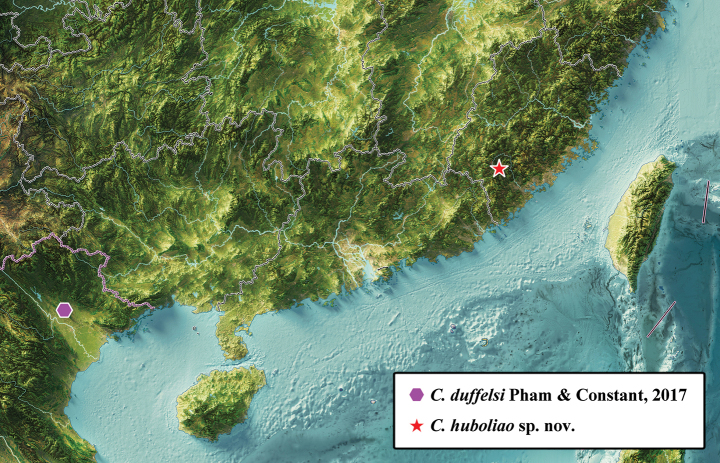 Figure 7
| 1 | Pygofer basal lobes in ventrolateral view rounded in apical parts ( |
|
| – | Pygofer basal lobes in ventrolateral view subtriangular in apical parts (Fig. |
|
Peer Reviews
No public reviews on file for this paper yet. If you reviewed it on a platform where reviews are public (OpenReview, ICLR, NeurIPS, ICML), you can paste yours below so the community can read it here.
Videos
No videos yet. Explain this paper in a talk, walkthrough, or lecture? Add one.
Taxonomy
TopicsPlant and animal studies · Insect and Pesticide Research · Animal Behavior and Reproduction
Introduction
The monotypic genus Cochleopsaltria (Hemiptera, Cicadidae, Cicadinae, Dundubiini, Dundubiina) was erected by Pham and Constant in 2017 for C.duffelsi Pham & Constant, 2017, based on a single male from northern Vietnam (Pham and Constant 2017). Since then, there has been no report on the discovery of this species or the genus.
In the present study, a new species of Cochleopsaltria is described from Huboliao National Nature Reserve, Fujian, China, representing a new national record for genus. Therefore, the number of the genera in the subtribe Dundubiina from China amounts to four: Cochleopsaltria Pham & Constant, 2017, Dundubia Amyot & Audinet-Serville, 1843, Macrosemia Kato, 1925 and Platylomia Stål, 1870 (Metcalf 1963; Chou et al. 1997; Sanborn 2013; Wang 2014). Illustrations of the diagnostic characters of the new species, a distribution map of the genus, and a key to the two species are provided.
Material and methods
Four males and three females of the new species were collected from Huboliao National Nature Reserve of Fujian Province (China) on 25 October 2023. After fieldwork, the specimens were kept in a freezer (-20 °C). About half a year later, the specimens were relaxed and softened in water at room temperature for 12 h and then placed in distilled water for cleaning and dissection. To examine the male genitalia, the pygofer (containing the aedeagus), together with sternite VIII, were detached by fine-point tweezers and cleared with a trypsin solution at room temperature for 12 h. Then, they were placed in a 70% ethanol solution to remove the remaining trypsin. After examination, the body parts were mounted on a slide using Euparal mounting medium for future studies. Images were taken with a Canon MP-E 65 mm 1–5× macro lens on a Canon EOS 5DsR. Images of the same object at different focal planes were combined using Zerene Stacker 1.04 stacking software. Adobe Photoshop CS6 was used for post-processing. The description was carried out on dry specimens. Morphological terminology follows Moulds (2005, 2012) and higher taxonomy follows Marshall et al. (2018) and Simon et al. (2019). Measurement criteria in millimetres (mm) follow Wang and Liu (2022).
The type material of the new species is deposited in the following collections: CLYQ—Chonglinyequ Cultural Creativity Co., Ltd., Fuzhou, China; MYNU—Invertebrate Collection of Mianyang Normal University, Mianyang, China.
Taxonomy
Family Cicadidae Batsch, 1789
Subfamily Cicadinae Batsch, 1789
Tribe Dundubiini Atkinson, 1886
Subtribe Dundubiina Atkinson, 1886
Cochleopsaltria
Taxon classificationAnimaliaHemipteraCicadidae
Genus
Pham & Constant, 2017
8014E0D4-AC8F-59C7-BBFE-53CB2FF19FD7
Cochleopsaltria Pham & Constant, 2017: 227 (description; 1 sp.); Marshall et al. 2018: 27, 39 (higher taxonomy; list).
Type species.
Cochleopsaltriaduffelsi Pham & Constant, 2017, by original designation and monotypy.
Note.
2 species; Oriental region.
Diagnosis.
The genus Cochleopsaltria Pham & Constant, 2017 can be separated from all other genera in the subtribe Dundubiina by the combination of the following characters: Male. Head not wider than pronotum while wider than mesonotum; rostrum at least reaching posterior coxae; pronotum shorter than mesonotum; pronotal collar with median length long, about 0.4 times as long as pronotal disc; forewings with infuscations; opercula spoon-shaped, broad and strongly convex in about apical 2/3, with apices broadly rounded, at least reaching posterior margin of sternite VI; abdomen almost as long as distance from head to cruciform elevation; pygofer upper lobes absent; uncus bifurcate with lobes stout, fused at base. Female. Abdominal tergite 9 with dorsal beak elongate, longer than anal styles; ovipositor sheath extremely elongate.
Cochleopsaltria
duffelsi
Taxon classificationAnimaliaHemipteraCicadidae
Pham & Constant, 2017
9D1F9CA8-C2C2-5D91-B6BF-33D1A787C1B4
Cochleopsaltria duffelsi Pham & Constant, 2017: 227, figs 1–4 (description; illustrations).
Type locality.
“Hoa Binh 2, Quan Chu, Dai Tu, Thai Nguyen Province, 200–300 m”.
Distribution.
Vietnam.
Cochleopsaltria
huboliao
sp. nov.
Taxon classificationAnimaliaHemipteraCicadidae
14134308-549D-57E7-9A99-76E82BDB9859
https://zoobank.org/1AEF95BD-8D9B-41D4-B03F-FC0931EE64EA
Figs 1A–C , 2A–C , 3A–E , 4A–E , 5A–C , 6A, B Chinese common name: 虎伯寮勺蝉
Type locality.
China, Fujian: Zhangzhou City, Huboliao National Nature Reserve [虎伯寮国家级自然保护区], Letu District [乐土片].
Type material.
4 ♂♂ 3 ♀♀. Holotype: • ♂ (MYNU), China, Fujian: Zhangzhou City, Huboliao National Nature Reserve [虎伯寮国家级自然保护区], Letu District [乐土片], 25.X.2023, Liang Guo, Qun-Zhen Wu & Zu-Bin Chen leg. (MYNU). Paratypes: • 3 ♂♂ 3 ♀♀ (1 ♀ in MYNU and 3 ♂♂ 2 ♀♀ in CLYQ), same data as holotype.
Etymology.
The specific epithet is from the Chinese name (in Pinyin) of the type locality “Huboliao”. The name is a noun in apposition.
Description.
Male (Figs 1A, B, 6A, B). Measurements (mm, N = 2, including smaller holotype). Body 37.3–39.2 long. Lengths of different body parts: head (2.6–2.9), pronotum (5.8–6.3), mesonotum (10.1–10.5), forewing (49.4–50.5), abdomen (18.8–19.5); width: head (13.0–13.2), pronotum (13.4–13.7), mesonotum (8.3–8.7), forewing (13.9–14.4), tergite 3 (12.0–12.3). Ratios of different body parts: (body length)/(head width) = 2.9; (pronotal length)/(head length) = 2.2; (mesonotal length excluding cruciform elevation)/(pronotal length) = 1.5; (abdominal length)/(head + pronotal + mesonotal length) = 1.0; (head width)/(pronotal width) = 1.0; (head width)/(mesonotal width) = 1.6; (tergite 3 width)/(mesonotal width) = 1.4; (forewing length)/(forewing width) = 3.6.
Cochleopsaltriahuboliao sp. nov., ♂, holotype A habitus, dorsal view B ditto, ventral view C right fore femur, lateral view. Abbreviations asp: apical spine psp: primary spine ssp: secondary spine. Scale bar a for A, B and b for C.
Head. Ground colour ochraceous, with following black markings: longitudinal median fascia broad, bifurcate in posterior part, enclosing three ocelli, reaching frontoclypeal suture and posterior margin of head, without extended lateral parts; lateral fasciae broad except distinctly narrowed posterior part, reaching anterolateral and posterior margins of head; transverse fascia narrowly along posterior margin of head; paired small spots against posterior margin of head. Compound eyes ochraceous. Ocelli orangish. Distance between lateral ocellus and corresponding eye about 2.8 times as wide as distance between lateral ocelli. Antennae brown to fuscous. Postclypeus moderately swollen, mostly ochraceous, with paired brown oblique fasciae just anterior to frontoclypeal suture and a long “Y”-like brown median fascia ventrally, with 10–11 wide transverse grooves on each side. Anteclypeus ochraceous along median carina and brown laterally. Gena ochraceous, with oblique black fascia in anterior part. Lorum black in about posterior half and ochraceous in about anterior half. Rostrum ochraceous with blackish apical part, reaching middle of sternite II.
Thorax. Pronotum ochraceous, slightly tinged with greenish on pronotal collar, with following black markings: submedian fasciae long, extending from anterior margin of pronotum to ambient fissure, broadened at both anterior and posterior ends; fascia along ambient fissure, broadening anterolaterally; two paired large elongate spots on pronotal collar, joining ambient fissure; no fasciae along paramedian and lateral fissures. Pronotal collar with median length long, about 0.4 times as long as pronotal disc, moderately ampliate posterolaterally; lateral margins with acute lateral teeth at about anterior 1/3, orientating laterally; posterolateral angles widely rounded; surface transversely grooved. Mesonotum greenish ochraceous, with following black markings: median fascia fusiform, broadened in middle part, strongly tapering anteriorly and reaching anterior 1/6 of mesonotum excluding cruciform elevation, moderately tapering posteriorly and not reaching anterior margin of cruciform elevation; submedian fasciae slender, along parapsidal sutures, moderately tapering anteriorly and broadening posteriorly, joining median fascia; accessory fasciae short, between submedian fasciae and accessory spots, not joining lateral fasciae posteriorly; lateral fasciae wide, gently curved, starting from anterior 2/7 of mesonotum excluding cruciform elevation, extending posteriorly just near anterior arms of cruciform elevation; accessory spots small, lateral to accessory fasciae; posterior spots large, occupying scutal depressions. Cruciform elevation bright ochraceous, with paired black markings on anterior arms. Wing groove ochraceous. Ventral side ochraceous, basisternum 2 with paired oblique black rhombic markings, basisternum 3 with paired small black spots, surface densely with short setae.
Legs. Bicoloured, ochraceous to brown with blackish markings. Profemur (Fig. 1C) with three spines: primary spine slender, digitiform, obliquely inserted, with apex rounded; secondary spine subtrianglular, with apex rounded; apical spine rather small, subtrianglular, with apex rounded. Meracanthi ochraceous, slender and slightly curving medially.
Wings. Hyaline. Forewing with eight apical cells; ulnar cell 3 about twice as long as apical cell 5; RA_2_ vein with distal portion about 1.9 times as long as proximal portion; venation color mixed with ochraceous, brown and fuscous; infuscations present on r, r-m, m and m-cu crossveins, and paler on apices of longitudinal veins of apical cells; nodal line absent; basal cell greyish ochraceous; basal membrane greyish ochraceous. Hindwing with six apical cells; venation color mixed with ochraceous, brown and fuscous, 3A blackish; jugum and longitudinal margins of vannus greyish ochraceous.
Operculum. Mostly ochraceous, with basal part of lateral margin blackish; spoon-shaped, constricted around basal 2/7, broad and strongly convex in about apical 2/3; apex broadly rounded, extending beyond posterior margin of sternite VI; separated from each other about 1/5 width of one of them; lateral margin slightly bisinuate while medial margin strongly so.
Abdomen. Obconical, in dorsal view generally brownish in basal part and fuscous apically. Tergite 1 fuscous to blackish; tergites 2–8 with posterior margins narrowly blackish; tergites 3–6, each with one fuscous spot at lateral side. Timbal cover oval, ochraceous with narrow brown margin, covered with greyish hairs, especially in lateral part, completely concealing timbal in dorsal view. Sternites III–VI mostly ochraceous to brown; sternite VII fuscous except ochraceous in posterior part, subhexagonal, inconspicuously emarginate at posterior margin, with longitudinal median groove in posterior part; sternite VIII (Fig. 3A) ochraceous with brown median fascia and paired anterior markings, drop-like, rounded at posterior margin, anterolateral apodemes subtriangularly developed.
Genitalia. Pygofer suboval, more or less narrowing anteriorly in ventral and dorsal views (Fig. 4A, D); anal styles relatively large, moderately sclerotised, densely covered with short setae (Fig. 4A–E); apical stylus relatively large, slender, lightly sclerotised, digitiform (Fig. 4D); basal lobes in ventral view elongate (Fig. 4A), in ventrolateral view subtriangular in apical parts (Fig. 4B); upper lobes absent; distal shoulders obliquely truncated at apices in lateral view (Fig. 4E). Uncus bifurcate; lobes stout, fused at base, rather narrowly separated from each other medially, in ventral view angulate at apices, crenulate at lateral margin and bisinuate at medial margin (Fig. 4A), in ventrolateral view further one bidentate at apices (Fig. 4B). Aedeagus thin and slender, gradually narrowing towards apex, without processes (Fig. 3C, E); in lateral view, strongly turning ventrally in apical 1/3 and almost straight in basal 2/3 (Fig. 3D).
Female (Fig. 2A, B). Measurements (mm, N = 2). Body 42.1–45.8 long. Length of different body parts: head (1.9–2.7), pronotum (4.9–5.9), mesonotum (9.1–10.0), forewing (50.8–52.6), abdomen (26.2–27.2); width: head (12.6–13.1), pronotum (13.5–13.9), mesonotum (9.5–10.1), forewing (14.2–14.7), tergite 3 (13.1–13.5). Ratios of different body parts: (body length)/(head width) = 3.5; (pronotal length)/(head length) = 2.1; (mesonotal length excluding cruciform elevation)/(pronotal length) = 1.4; (abdominal length)/(head + pronotal + mesonotal length) = 1.5; (head width)/(pronotal width) = 1.0; (head width)/(mesonotal width) = 1.3; (tergite 3 width)/(mesonotal width) = 1.3; (forewing length)/(forewing width) = 3.6.
Cochleopsaltriahuboliao sp. nov., ♀, paratype A habitus, dorsal view B ditto, ventral view C right fore femur, lateral view. Abbreviations asp: apical spine psp: primary spine ssp: secondary spine. Scale bar a for A, B and b for C.
Cochleopsaltriahuboliao sp. nov., ♂, holotype A sternite VIII, ventral view B ditto, lateral view C aedeagus, dorsal view D ditto, lateral view E ditto, ventral view.
Pygofer of Cochleopsaltriahuboliao sp. nov., ♂ A ventral view B ventrolateral view C apical view D dorsal view E lateral view. Abbreviations aed: aedeagus as: anal styles ast: apical stylus bl: basal lobe ds: distal shoulder un: uncus.
Rostrum extending beyond posterior margin of abdominal sternite II; profemur (Fig. 2C) similar to that of male; abdomen subconical, gradually converging apically; operculum short, rounded at posterior margin, extending slightly beyond posterior margin of abdominal sternite II and separated from each other by about 1.7 times width of one of them; abdominal sternite VII (Fig. 5B) subroundly incised at middle of posterior margin, with paired protuberances flanked incision; abdominal tergite 9 with dorsal beak (Fig. 5A, C) elongate, roundly sharp, longer than anal styles; ovipositor sheath (Fig. 5A–C) blackish, extremely elongate.
Female terminalia of Cochleopsaltriahuboliao sp. nov., paratype A dorsal view B ventral view C lateral view. Abbreviations as: anal styles db: dorsal beak stVII: sternite VII os ovipositor sheath.
Variation.
All male or female types without evident variation.
Field observations.
A living male of the new species is shown in Fig. 6A, B and its habitat in Huboliao National Nature Reserve is shown in Fig. 6C, D. According to the collectors’ recollection, during the collecting trip in late October, this cicada was abundant in the reserve, but the individuals were difficult to capture. They were in the canopy and not attracted to light traps at night, so the collectors had to climb up the trees to capture them.
Field observations of Cochleopsaltriahuboliao sp. nov. at Huboliao National Nature Reserve (© Qun-Zhen Wu) A a living male perching on a branch, posterodorsal view B ditto, lateral view C, D habitat and host plant.
Distribution.
China (Fujian) (Fig. 7).
Distribution map of Cochleopsaltria species.
Differential diagnosis.
The new species well resembles its only congener C.duffelsi from Vietnam in general appearance, but it is not difficult to distinguish them using the following key.
Additionally, although many species in Cicadinae exhibit morphological variations in markings and operculum length, they still have certain reference characteristics:
In C.duffelsi, pronotal collar with three paired large spots (Pham and Constant 2017: figs 2A; 3A); mesonotum with median fascia moderately tapering anteriorly and weakly so posteriorly, lateral fasciae relatively slender, accessory spots absent (Pham and Constant 2017: figs 2A; 3A); opercula reaching posterior margin of sternite VI (Pham and Constant 2017: figs 2B; 3B). In C.huboliao sp. nov., pronotal collar with two paired large spots (Fig. 1A); mesonotum with median fascia strongly tapering anteriorly and moderately so posteriorly, lateral fasciae relatively wide, small accessory spots lateral to accessory fasciae (Fig. 1A); opercula extending beyond posterior margin of sternite VI (Fig. 1B).
Key to males of Cochleopsaltria Pham & Constant, 2017
**: **
Supplementary Material
XML Treatment for Cochleopsaltria
XML Treatment for Cochleopsaltria duffelsi
XML Treatment for Cochleopsaltria huboliao
The reference list from the paper itself. Each links out to its DOI / PubMed record.
- 1Chou I Lei Z-R Li L Lu X-L Yao W (1997) The Cicadidae of China (Homoptera: Cicadoidea).Tianze Eldoneio, Hong Kong, 380 pp.
- 2Marshall DC Moulds MS Hill KBR Price BW Wade EJ Owen CL Goemans G Marathe K Sarkar V Cooley JR Sanborn AF Kunte K Villet MH Simon C (2018) A molecular phylogeny of the cicadas (Hemiptera: Cicadidae) with a review of tribe and subfamily classification.Zootaxa 4424(1): 1–64. 10.11646/zootaxa.4424.1.130313477 · doi ↗ · pubmed ↗
- 3Metcalf ZP (1963) General Catalogue of the Homoptera. Fascicle VIII. Cicadoidea. Part 1. Cicadidae.North Carolina State College, Raleigh, No. 1502, 919 pp.
- 4Moulds MS (2005) An appraisal of the higher classification of cicadas (Hemiptera: Cicadoidea) with special reference to the Australian fauna.Records of the Australian Museum 57(3): 375–446. 10.3853/j.0067-1975.57.2005.1447 · doi ↗
- 5Moulds MS (2012) A review of the genera of Australian cicadas (Hemiptera: Cicadoidea).Zootaxa 3287: 1–262. 10.11646/zootaxa.3287.1.1 · doi ↗
- 6Pham H-T Constant J (2017) A new genus and species of cicada from Vietnam: Cochleopsaltriaduffelsi gen. et sp. nov. (Hemiptera: Cicadomorpha: Cicadidae).Bulletin de la Société Royale Belge d’Entomologie 153: 226–230.
- 7Sanborn AF (2013) Catalogue of the Cicadoidea (Hemiptera: Auchenorrhyncha). With Contributions to the Bibliography by Martin H. Villet.Elsevier/Academic Press, London, 1001 pp. 10.1016/B 978-0-12-416647-9.00001-2 · doi ↗
- 8Simon C Gordon ER Moulds MS Cole JA Haji D Lemmon AR Lemmon EM Kortyna M Nazario K Wade EJ Meister RC Goemans G Chiswell SM Pessacq P Veloso C Mc Cutchen JPŁukasik P (2019) Off-target capture data, endosymbiont genes and morphology reveal a relict lineage that is sister to all other singing cicadas.Biological Journal of the Linnean Society 128(4): 865–886. 10.1093/biolinnean/blz 120 · doi ↗