The genome sequence of Greek sea-spurrey, Spergularia bocconei (Scheele) Graebn. (Caryophyllaceae)
Denise Power, Maarten J. M. Christenhusz, Colin French, Ian Bennallick, Sahr Mian, Ilia J. Leitch, Joseph F. Walker, Bimal K Chetri, Ahmed Faried

TL;DR
This paper presents the genome sequence of the Greek sea-spurrey, a plant in the Caryophyllaceae family, with a detailed assembly of its chromosomes and organelle genomes.
Contribution
The study provides the first genome assembly for Spergularia bocconei, including chromosomal pseudomolecules and organelle sequences.
Findings
The genome assembly is 466.20 megabases long and organized into 18 chromosomal pseudomolecules.
The mitochondrial and plastid genomes are 327.07 kilobases and 152.41 kilobases, respectively.
The plant is identified as an allotetraploid with a chromosome count of 2n = 4x = 36.
Abstract
We present a genome assembly from a specimen of Spergularia bocconei (Greek sea-spurrey; Streptophyta; Magnoliopsida; Caryophyllales; Caryophyllaceae). The genome sequence has a total length of 466.20 megabases. Most of the assembly is scaffolded into 18 chromosomal pseudomolecules suggesting the individual is an allotetraploid (2 n = 4 x = 36). The mitochondrial and plastid genome assemblies have lengths of 327.07 kilobases and 152.41 kilobases, respectively.
Genes, proteins, chemicals, diseases, species, mutations and cell lines named across the full text — each resolved to its canonical identifier and authoritative record.
Click any figure to enlarge with its caption.
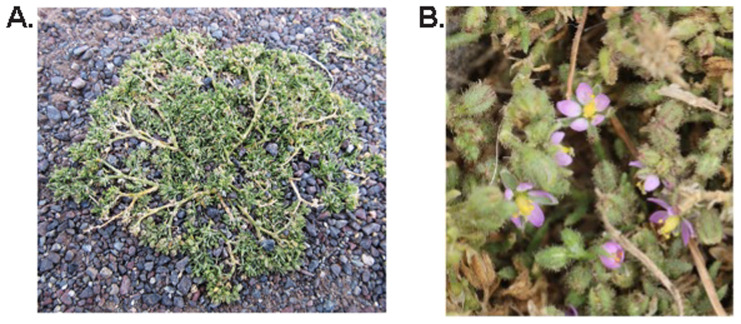 Figure 1
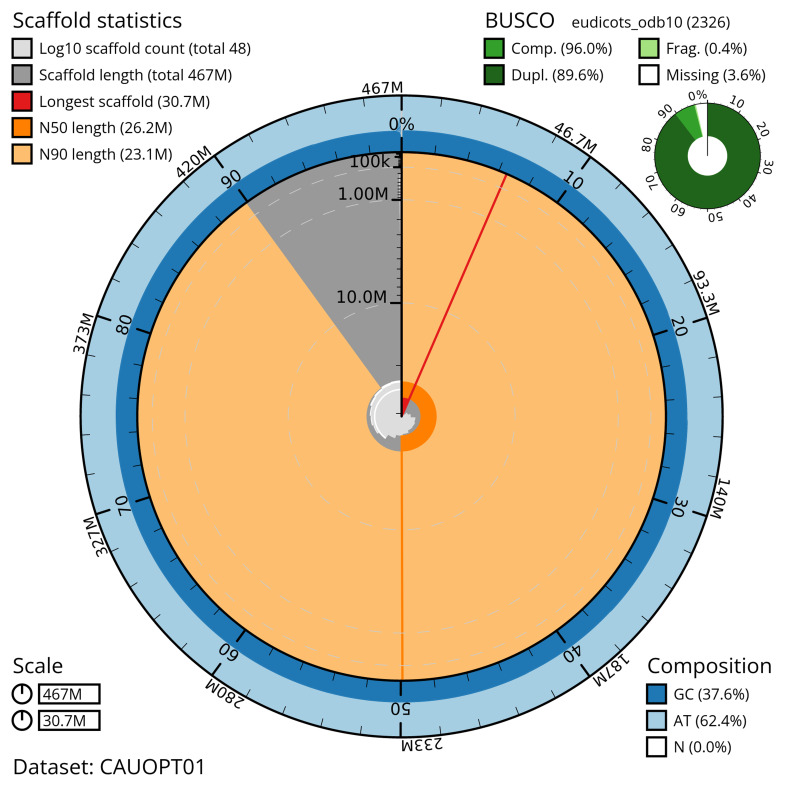 Figure 2
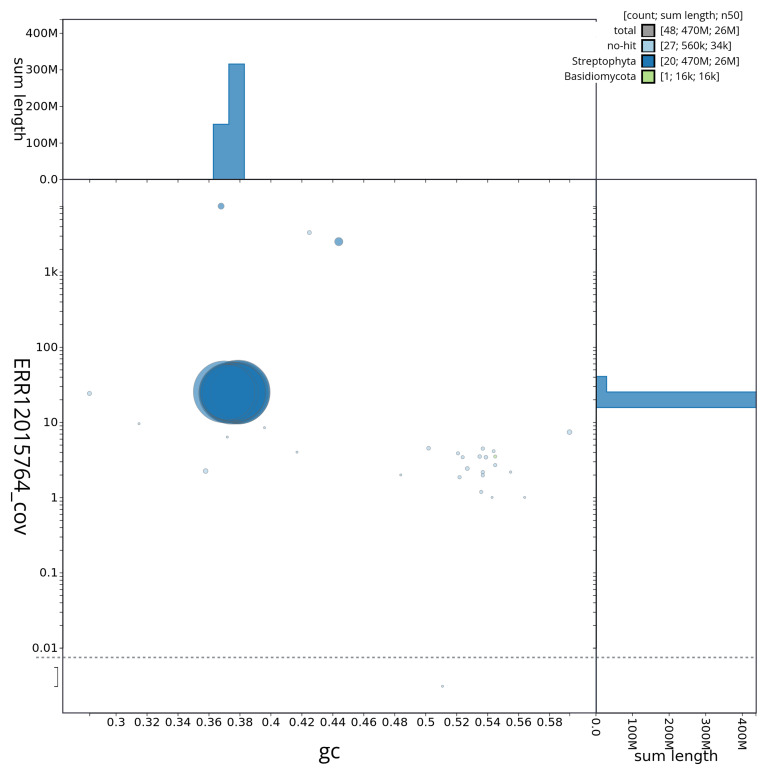 Figure 3
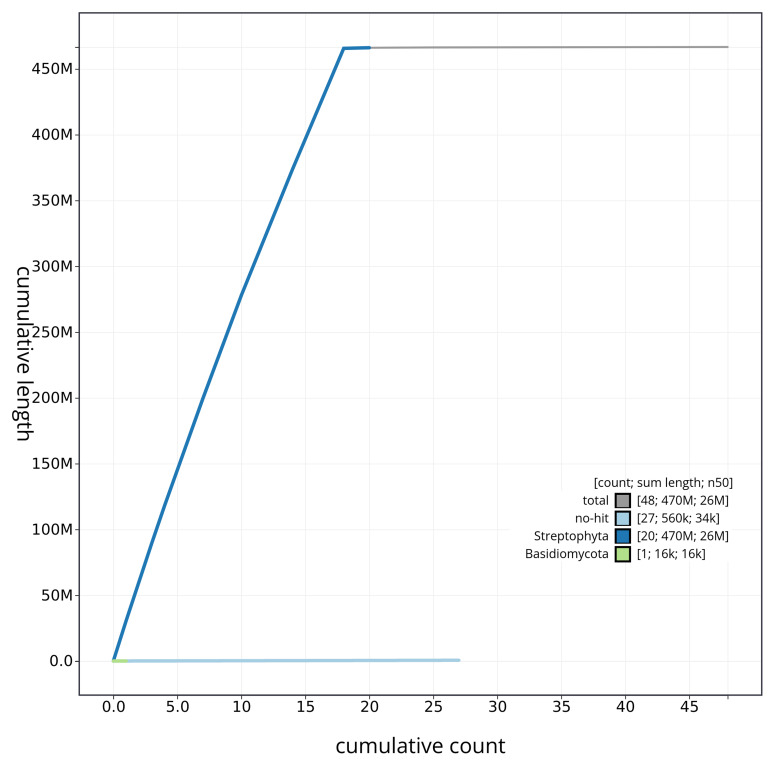 Figure 4
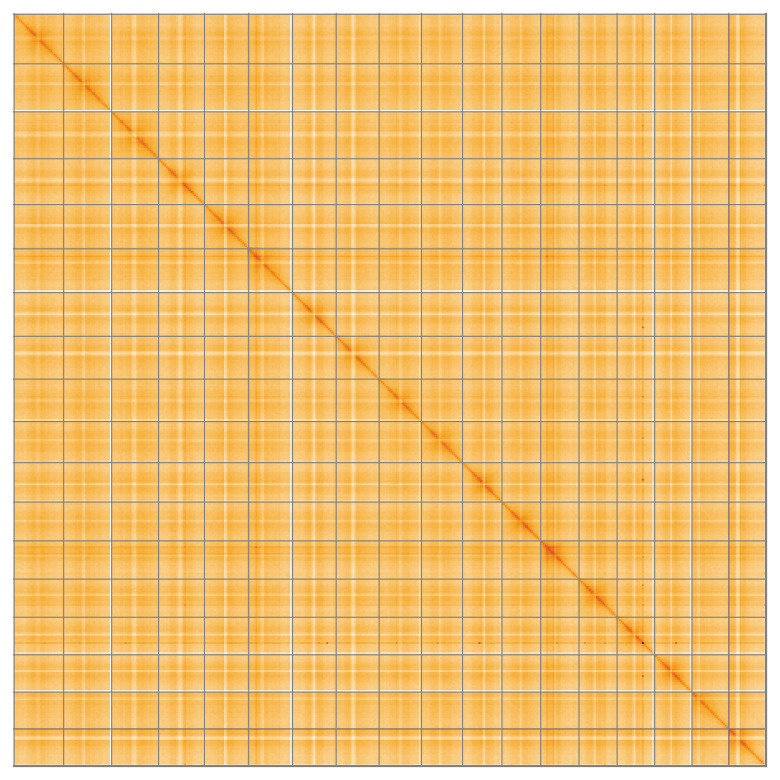 Figure 5
| Project information | |||
|---|---|---|---|
|
|
| ||
|
| PRJEB65700 | ||
|
|
| ||
|
| SAMEA110450233 | ||
|
| 1053398 | ||
| Specimen information | |||
|
|
|
|
|
|
| dcSpeBocc1 | SAMEA110451311 | Whole organism |
|
| dcSpeBocc1 | SAMEA110451311 | Whole organism |
|
| dcSpeBocc1 | SAMEA110451311 | Whole organism |
| Sequencing information | |||
|
|
|
|
|
|
| ERR12035284 | 8.69e+08 | 131.27 |
|
| ERR12015764 | 1.97e+06 | 24.38 |
|
| ERR12245595 | 6.42e+07 | 9.7 |
| Genome assembly | ||
|---|---|---|
| Assembly name | dcSpeBocc1.1 | |
| Assembly accession | GCA_963457585.1 | |
|
|
| |
| Span (Mb) | 466.20 | |
| Number of contigs | 244 | |
| Number of scaffolds | 46 | |
| Longest scaffold (Mb) | 30.69 | |
| Assembly metrics
|
| |
| Contig N50 length (Mb) | 3.6 |
|
| Scaffold N50 length (Mb) | 26.2 |
|
| Consensus quality (QV) | 71.3 |
|
|
| Primary: 97.94%;
|
|
| BUSCO
| C:96.0%[S:6.1%,D:89.9%],
|
|
| Percentage of assembly
| 99.77% |
|
| Organelles | Mitochondrial genome:
|
|
| INSDC accession | Name | Length (Mb) | GC% |
|---|---|---|---|
| 1 | 30.69 | 38.0 | |
| 2 | 29.8 | 38.0 | |
| 3 | 29.04 | 37.5 | |
| 4 | 28.46 | 37.0 | |
| 5 | 27.39 | 37.5 | |
| 6 | 27.17 | 38.0 | |
| 7 | 27.06 | 37.5 | |
| 8 | 26.58 | 37.5 | |
| 9 | 26.22 | 37.5 | |
| 10 | 25.49 | 38.0 | |
| 11 | 24.4 | 37.5 | |
| 12 | 24.03 | 37.5 | |
| 13 | 23.77 | 37.5 | |
| 14 | 23.59 | 37.5 | |
| 15 | 23.26 | 37.5 | |
| 16 | 23.09 | 37.5 | |
| 17 | 22.82 | 38.0 | |
| 18 | 22.74 | 37.0 | |
| MT | 0.33 | 44.5 | |
| Pltd | 0.15 | 36.5 |
| Software
| Version | Source |
|---|---|---|
| BEDTools | 2.30.0 |
|
| Blast | 2.14.0 |
|
| BlobToolKit | 4.3.7 |
|
| BUSCO | 5.4.3 and 5.5.0 |
|
| bwa-mem2 | 2.2.1 |
|
| Cooler | 0.8.11 |
|
| DIAMOND | 2.1.8 |
|
| fasta_
| 0.2.4 |
|
| FastK | 427104ea91c78c3b8b8b49f1a7d6bbeaa869ba1c |
|
| Gfastats | 1.3.6 |
|
| GoaT CLI | 0.2.5 |
|
| Hifiasm | 0.16.1-r375 |
|
| HiGlass | 44086069ee7d4d3f6f3f0012569789ec138f42b84
|
|
| Merqury.FK | d00d98157618f4e8d1a9190026b19b471055b2
|
|
| MultiQC | 1.14, 1.17, and 1.18 |
|
| NCBI
| 15.12.0 |
|
| Nextflow | 23.04.0-5857 |
|
| PretextView | 0.2 |
|
| OATK | 0.2 |
|
| purge_dups | 1.2.3 |
|
| samtools | 1.16.1, 1.17, and 1.18 |
|
| sanger-tol/
| - |
|
| Seqtk | 1.3 |
|
| Singularity | 3.9.0 |
|
| TreeVal | 1.0.0 |
|
| YaHS | 1.1a.2 |
|
- —Wellcome Trust
Peer Reviews
No public reviews on file for this paper yet. If you reviewed it on a platform where reviews are public (OpenReview, ICLR, NeurIPS, ICML), you can paste yours below so the community can read it here.
Videos
No videos yet. Explain this paper in a talk, walkthrough, or lecture? Add one.
Taxonomy
TopicsGenomics and Phylogenetic Studies · Genetic diversity and population structure · Marine and coastal plant biology
Species taxonomy
Eukaryota; Viridiplantae; Streptophyta; Streptophytina; Embryophyta; Tracheophyta; Euphyllophyta; Spermatophyta; Magnoliopsida; Mesangiospermae; eudicotyledons; Gunneridae; Pentapetalae; Caryophyllales; Caryophyllaceae; Sperguleae; Spergularia; Spergularia bocconei (Scheele) Graebn. (NCBI:txid1053398).
Background
Greek sea-spurrey, Spergularia bocconei (Scheele) Graebn. (Caryophyllaceae), is a small, prostrate, annual/biennial herb found across the Mediterranean Region, Macaronesia, Western Asia and Arabia. It is naturalised in the Azores, Western USA, Baja California, southern South America, South Africa, Tasmania and Korea ( POWO, 2024). The plant often grows in disturbed sandy (sometimes slightly brackish) soils by the sea and in trampled habitats. Indeed, this is the case for the specimen sampled for the Darwin Tree of Life project as it was collected from the compact gravel of the Kynance Cove National Trust parking area on the Lizard Peninsula in Cornwall, UK.
Spergularia bocconei’s first appearance in Britain is uncertain although it was first officially recorded in Marazion Green, Cornwall in 1870, and Cornwall still remains the stronghold for this species. It probably arrived with dumped ballast, as it was common to dump ballast in and around the harbours and such dumped waste was a known hotspot for newly arrived alien plants ( Hulme, 2021).
Although the Cornish populations are typically small and vulnerable, they are persistent, and the species is now quite widespread along the coasts, particularly in harbour areas and car parks. Nevertheless, it is also spreading elsewhere in coastal Britain and was reported for the first time in Ireland in 2014, and in Scotland in 2016. These new sites are all associated with either yachting marinas, small harbours or nearby car parks, which strongly suggests it is most frequently being dispersed by boats, cars and pedestrians.
Spergularia bocconei is easily confused with the similar, but more common Spergularia rubra, which differs in flower colour, stipule shape and size, habit and in being less glandular ( Ratter, 1986; Rich, 2013). Indeed, plants of S. bocconei are often covered with soil trapped by their numerous glandular hairs. Various common names have been attributed to this species including Boccone's sea-spurrey named after the Sicilian botanist Paolo Boccone (1633–1704), who was a well-travelled natural historian and described many rare plants.
Spergularia bocconei has been reported to have a chromosome count of 2 n = 36 ( Kamari et al., 1996), in common with some (e.g. S. marina) but not all Spergularia species (e.g. S. media has 2 n = 18) that have been studied. Its chromosome number suggests S. bocconei is tetraploid, although it is unclear when it arose. A recent phylogenetic study of Caryophyllaceae (including several Spergularia species) suggested that the evolutionary branch leading to S. bocconei underwent a whole genome duplication (WGD; i.e., polyploidisation) event somewhere between 8.8 and 2.3 million years ago, whereas there was no evidence of any WGD event on the evolutionary branch leading to extant species reported to have half the number of chromosomes (i.e., 2 n = 18) ( Feng et al., 2024).
The genome of Spergularia bocconei was sequenced as part of the Darwin Tree of Life Project, a collaborative effort to sequence all named eukaryotic species in the Atlantic Archipelago of Britain and Ireland. Here we present a chromosomal-level genome sequence for S. bocconei. Its assembly into 18 pseudochromosomes suggest it is an allopolyploid.
Genome sequence report
Using flow cytometry, the genome size (1C-value) of the of Spergularia bocconei specimen ( Figure 1) was estimated to be 0.58 pg, equivalent to 560 Mb. The genome was sequenced using Pacific Biosciences single-molecule HiFi long reads, generating a total of 24.38 Gb (gigabases) from 1.97 million reads, providing approximately 86-fold coverage. Primary assembly contigs were scaffolded with chromosome conformation Hi-C data, which produced 131.27 Gb from 869.31 million reads, yielding an approximate coverage of 282-fold. Specimen and sequencing information is summarised in Table 1.
Photograph of ( a) the Spergularia bocconei (dcSpeBocc1) specimen used for genome sequencing (photo by Peter Wood), and ( B) a close up of a different individual showing the flowers and glandular hairs (photo by Colin French).
Table 1.: Specimen and sequencing data for Spergularia bocconei.
Manual assembly curation corrected 30 missing joins or mis-joins, reducing the scaffold number by 4.0%, and decreasing the scaffold N50 by 3.09%. The final assembly has a total length of 466.20 Mb in 46 sequence scaffolds, with 196 gaps. The scaffold N50 is 26.2 Mb ( Table 2) The snail plot in Figure 2 provides a summary of the assembly statistics, while the distribution of assembly scaffolds by GC proportion and coverage is shown in Figure 3. The cumulative assembly plot in Figure 4 shows curves for subsets of scaffolds assigned to different phyla. Most (99.77%) of the assembly sequence was assigned to 18 unique chromosomal-level scaffolds. Chromosome-scale scaffolds confirmed by the Hi-C data are named in order of size ( Figure 5; Table 3). The assembly deposited is of one haplotype. Contigs corresponding to the second haplotype have also been deposited. The mitochondrial and plastid genomes were also assembled and can be found as contigs within the multifasta file of the genome submission.
Table 2.: Genome assembly data for Spergularia bocconei.
Snail plot summary of assembly statistics for assembly dcSpeBocc1.1: The BlobToolKit snail plot shows N50 metrics and BUSCO gene completeness.The main plot is divided into 1,000 size-ordered bins around the circumference with each bin representing 0.1% of the 466,632,261 bp assembly. The distribution of scaffold lengths is shown in dark grey with the plot radius scaled to the longest scaffold present in the assembly (30,692,203 bp, shown in red). Orange and pale-orange arcs show the N50 and N90 scaffold lengths (26,218,481 and 23,087,913 bp), respectively. The pale grey spiral shows the cumulative scaffold count on a log scale with white scale lines showing successive orders of magnitude. The blue and pale-blue area around the outside of the plot shows the distribution of GC, AT and N percentages in the same bins as the inner plot. A summary of complete, fragmented, duplicated and missing BUSCO genes in the eudicots_odb10 set is shown in the top right. An interactive version of this figure is available at https://blobtoolkit.genomehubs.org/view/CAUOPT01/dataset/CAUOPT01/snail.
Blob plot of base coverage against GC proportion for sequences in the assembly dcSpeBocc1.1: Scaffolds are coloured by phylum.Circles are sized in proportion to scaffold length. Histograms show the distribution of scaffold length sum along each axis. An interactive version of this figure is available at https://blobtoolkit.genomehubs.org/view/CAUOPT01/dataset/CAUOPT01/blob.
BlobToolKit cumulative sequence plot.The grey line shows cumulative length for all scaffolds. Coloured lines show cumulative lengths of scaffolds assigned to each phylum using the buscogenes taxrule. An interactive version of this figure is available at https://blobtoolkit.genomehubs.org/view/CAUOPT01/dataset/CAUOPT01/cumulative.
Genome assembly of Spergularia bocconei, dcSpeBocc1.1: Hi-C contact map of the dcSpeBocc1.1 assembly, visualised using HiGlass.Chromosomes are shown in order of size from left to right and top to bottom. An interactive version of this figure may be viewed at https://genome-note-higlass.tol.sanger.ac.uk/l/?d=QraDAWETRdypP27HsFlUdw.
Table 3.: Chromosomal pseudomolecules in the genome assembly of Spergularia bocconei, dcSpeBocc1.
The estimated Quality Value (QV) of the final assembly is 71.3. The primary assembly has an estimated k-mer completeness of 97.94%, with the alternate haplotype having a completeness of 0.29%, and the combined assemblies have a k-mer completeness of 97.98%. The primary assembly also has a BUSCO v5.4.3 completeness of 96.0% (single = 6.1%, duplicated = 89.9%), using the eudicotyledons_odb10 reference set ( n = 2,326).
Methods
Sample acquisition, DNA barcoding and genome size estimation
A specimen of Spergularia bocconei (specimen ID KDTOL10490, ToLID dcSpeBocc1) was collected from Kynance Cove, Cornwall, United Kingdom (latitude 49.97, longitude –5.23) on 2022-06-14. The specimen was collected by Maarten Christenhusz and Denise Power, identified by Maarten Christenhusz and then preserved by freezing at –80 °C. The herbarium voucher of the sequenced plant (K001527018) is deposited in the herbarium of RBG Kew (K).
The initial species identification was verified by an additional DNA barcoding process following the framework developed by Twyford et al. (2024). Part of the plant specimen was preserved in silica gel desiccant ( Chase & Hills, 1991). DNA was extracted from the dried specimen, then PCR was used to amplify standard barcode regions. The resulting amplicons were sequenced and compared to public sequence databases including GenBank and the Barcode of Life Database (BOLD). The barcode sequences for this specimen are available on BOLD ( Ratnasingham & Hebert, 2007). Following whole genome sequence generation, DNA barcodes were also used alongside the initial barcoding data for sample tracking through the genome production pipeline at the Wellcome Sanger Institute ( Twyford et al., 2024). The standard operating procedures for the Darwin Tree of Life barcoding have been deposited on protocols.io ( Beasley et al., 2023).
The genome size was estimated by flow cytometry using the fluorochrome propidium iodide and following the ‘one-step’ method as outlined in Pellicer et al. (2021). For this species, the General Purpose Buffer (GPB) supplemented with 3% PVP and 0.08% (v/v) beta-mercaptoethanol was used for isolation of nuclei ( Loureiro et al., 2007), and the internal calibration standard was Solanum lycopersicum ‘Stupiké polní rané’ with an assumed 1C-value of 968 Mb ( Doležel et al., 2007).
Nucleic acid extraction
The workflow for high molecular weight (HMW) DNA extraction at the WSI Tree of Life Core Laboratory includes a sequence of core procedures: sample preparation and homogenisation, DNA extraction, fragmentation and purification. Detailed protocols are available on protocols.io ( Denton et al., 2023). The dcSpeBocc1 sample was weighed and dissected on dry ice ( Jay et al., 2023), and tissue from the whole organism was cryogenically disrupted using the Covaris cryoPREP ^®^ Automated Dry Pulverizer ( Narváez-Gómez et al., 2023).
HMW DNA was extracted in the WSI Scientific Operations core using the Automated Plant MagAttract v2 protocol ( Todorovic et al., 2023). HMW DNA was sheared into an average fragment size of 12–20 kb in a Megaruptor 3 system ( Bates et al., 2023). Sheared DNA was purified by solid-phase reversible immobilisation, using AMPure PB beads to eliminate shorter fragments and concentrate the DNA ( Strickland et al., 2023). The concentration of the sheared and purified DNA was assessed using a Nanodrop spectrophotometer and Qubit Fluorometer and Qubit dsDNA High Sensitivity Assay kit. Fragment size distribution was evaluated by running the sample on the FemtoPulse system.
RNA was extracted from the dcSpeBocc1 sample in the Tree of Life Laboratory at the WSI using the RNA Extraction: Automated MagMax™ mirVana protocol ( do Amaral et al., 2023). The RNA concentration was assessed using a Nanodrop spectrophotometer and a Qubit Fluorometer using the Qubit RNA Broad-Range Assay kit. Analysis of the integrity of the RNA was done using the Agilent RNA 6000 Pico Kit and Eukaryotic Total RNA assay.
Hi-C tissue preparation
Hi-C data were generated from tissue from the dcSpeBocc1 sample using the Arima-HiC v2 kit. Tissue was finely ground using cryoPREP and then subjected to nuclei isolation. Nuclei were isolated using a modified protocol of the Qiagen QProteome Cell Compartment Kit where only CE1 and CE2 buffers are used in combination with QiaShredder spin columns. After isolation, the nuclei were fixed using 37% formaldehyde solution to crosslink the DNA. The crosslinked DNA was then digested using the restriction enzyme master mix. The 5’-overhangs were then filled in and labelled with biotinylated nucleotides and proximally ligated. An overnight incubation was carried out for enzymes to digest remaining proteins and for crosslinks to reverse. A clean up was performed with SPRIselect beads prior to library preparation. DNA concentration was quantified using the Qubit Fluorometer v4.0 and Qubit HS Assay Kit according to the manufacturer’s instructions.
Library preparation and sequencing
Pacific Biosciences HiFi circular consensus DNA sequencing libraries were constructed according to the manufacturers’ instructions. Poly(A) RNA-Seq libraries were constructed using the NEB Ultra II RNA Library Prep kit. DNA and RNA sequencing was performed by the Scientific Operations core at the WSI on Pacific Biosciences Sequel IIe (HiFi) and Illumina NovaSeq 6000 (RNA-Seq) instruments.
For Hi-C library preparation, DNA was fragmented to a size of 400 to 600 bp using a Covaris E220 sonicator. The DNA was then enriched, barcoded, and amplified using the NEBNext Ultra II DNA Library Prep Kit (New England Biolabs) following manufacturer’s instructions. Hi-C sequencing was performed using paired-end sequencing with a read length of 150 bp on an Illumina NovaSeq 6000 instrument.
Genome assembly, curation and evaluation
** Assembly **
The HiFi reads were first assembled using Hifiasm ( Cheng et al., 2021) with the --primary option. Haplotypic duplications were identified and removed using purge_dups ( Guan et al., 2020). The Hi-C reads were mapped to the primary contigs using bwa-mem2 ( Vasimuddin et al., 2019). The contigs were further scaffolded using the provided Hi-C data ( Rao et al., 2014) in YaHS ( Zhou et al., 2023) using the --break option. The scaffolded assemblies were evaluated using Gfastats ( Formenti et al., 2022), BUSCO ( Manni et al., 2021) and MERQURY.FK ( Rhie et al., 2020). The organelle genomes were assembled using OATK ( Zhou, 2023).
** Curation **
The assembly was decontaminated using the Assembly Screen for Cobionts and Contaminants (ASCC) pipeline (article in preparation). Flat files and maps used in curation were generated in TreeVal ( Pointon et al., 2023). Manual curation was primarily conducted using PretextView ( Harry, 2022), with additional insights provided by JBrowse2 ( Diesh et al., 2023) and HiGlass ( Kerpedjiev et al., 2018). Scaffolds were visually inspected and corrected as described by Howe et al. (2021). Any identified contamination, missed joins, and mis-joins were corrected, and duplicate sequences were tagged and removed. The process is documented at https://gitlab.com/wtsi-grit/rapid-curation (article in preparation).
** Evaluation of final assembly **
The Merqury.FK tool ( Rhie et al., 2020) was used to evaluate k-mer completeness and assembly quality for the primary and alternate haplotypes using the k-mer databases ( k = 31) that were pre-computed prior to genome assembly. The analysis outputs included assembly QV scores and completeness statistics.
A Hi-C contact map was produced for the final, public version of the assembly. The Hi-C reads were aligned using bwa-mem2 ( Vasimuddin et al., 2019) and the alignment files were combined using SAMtools ( Danecek et al., 2021). The Hi-C alignments were converted into a contact map using BEDTools ( Quinlan & Hall, 2010) and the Cooler tool suite ( Abdennur & Mirny, 2020). The contact map is visualised in HiGlass ( Kerpedjiev et al., 2018).
The blobtoolkit pipeline is a Nextflow port of the previous Snakemake Blobtoolkit pipeline ( Challis et al., 2020). It aligns the PacBio reads in SAMtools and minimap2 ( Li, 2018) and generates coverage tracks for regions of fixed size. In parallel, it queries the GoaT database ( Challis et al., 2023) to identify all matching BUSCO lineages to run BUSCO ( Manni et al., 2021). For the three domain-level BUSCO lineages, the pipeline aligns the BUSCO genes to the UniProt Reference Proteomes database ( Bateman et al., 2023) with DIAMOND blastp ( Buchfink et al., 2021). The genome is also divided into chunks according to the density of the BUSCO genes from the closest taxonomic lineage, and each chunk is aligned to the UniProt Reference Proteomes database using DIAMOND blastx. Genome sequences without a hit are chunked using seqtk and aligned to the NT database with blastn ( Altschul et al., 1990). The blobtools suite combines all these outputs into a blobdir for visualisation.
The genome assembly and evaluation pipelines were developed using nf-core tooling ( Ewels et al., 2020) and MultiQC ( Ewels et al., 2016), relying on the Conda package manager, the Bioconda initiative ( Grüning et al., 2018), the Biocontainers infrastructure ( da Veiga Leprevost et al., 2017), as well as the Docker ( Merkel, 2014) and Singularity ( Kurtzer et al., 2017) containerisation solutions.
Table 4 contains a list of relevant software tool versions and sources.
Wellcome Sanger Institute – Legal and Governance
The materials that have contributed to this genome note have been supplied by a Darwin Tree of Life Partner. The submission of materials by a Darwin Tree of Life Partner is subject to the ‘Darwin Tree of Life Project Sampling Code of Practice’, which can be found in full on the Darwin Tree of Life website here. By agreeing with and signing up to the Sampling Code of Practice, the Darwin Tree of Life Partner agrees they will meet the legal and ethical requirements and standards set out within this document in respect of all samples acquired for, and supplied to, the Darwin Tree of Life Project.
Further, the Wellcome Sanger Institute employs a process whereby due diligence is carried out proportionate to the nature of the materials themselves, and the circumstances under which they have been/are to be collected and provided for use. The purpose of this is to address and mitigate any potential legal and/or ethical implications of receipt and use of the materials as part of the research project, and to ensure that in doing so we align with best practice wherever possible. The overarching areas of consideration are:
• Ethical review of provenance and sourcing of the material
• Legality of collection, transfer and use (national and international)
Each transfer of samples is further undertaken according to a Research Collaboration Agreement or Material Transfer Agreement entered into by the Darwin Tree of Life Partner, Genome Research Limited (operating as the Wellcome Sanger Institute), and in some circumstances other Darwin Tree of Life collaborators.
The reference list from the paper itself. Each links out to its DOI / PubMed record.
- 1Abdennur N Mirny LA : Cooler: scalable storage for Hi-C data and other genomically labeled arrays. Bioinformatics. 2020;36(1):311–316. 10.1093/bioinformatics/btz 540 31290943 PMC 8205516 · doi ↗ · pubmed ↗
- 2Altschul SF Gish W Miller W : Basic Local Alignment Search Tool. J Mol Biol. 1990;215(3):403–410. 10.1016/S 0022-2836(05)80360-2 2231712 · doi ↗ · pubmed ↗
- 3Bateman A Martin MJ Orchard S : Uni Prot: the universal protein knowledgebase in 2023. Nucleic Acids Res. 2023;51(D 1):D 523–D 531. 10.1093/nar/gkac 1052 36408920 PMC 9825514 · doi ↗ · pubmed ↗
- 4Bates A Clayton-Lucey I Howard C : Sanger Tree of Life HMW DNA fragmentation: diagenode Megaruptor ®3 for LI Pac Bio. protocols.io. 2023. 10.17504/protocols.io.81wgbxzq 3lpk/v 1 · doi ↗
- 5Beasley J Uhl R Forrest LL : DNA barcoding SO Ps for the Darwin Tree of Life project. protocols.io. 2023; [Accessed 25 June 2024]. 10.17504/protocols.io.261ged 91jv 47/v 1 · doi ↗
- 6Buchfink B Reuter K Drost HG : Sensitive protein alignments at Tree-of-Life scale using DIAMOND. Nat Methods. 2021;18(4):366–368. 10.1038/s 41592-021-01101-x 33828273 PMC 8026399 · doi ↗ · pubmed ↗
- 7Challis R Kumar S Sotero-Caio C : Genomes on a Tree (Goa T): a versatile, scalable search engine for genomic and sequencing project metadata across the eukaryotic Tree of Life [version 1; peer review: 2 approved]. Wellcome Open Res. 2023;8:24. 10.12688/wellcomeopenres.18658.1 36864925 PMC 9971660 · doi ↗ · pubmed ↗
- 8Challis R Richards E Rajan J : Blob Tool Kit – interactive quality assessment of genome assemblies. G 3 (Bethesda). 2020;10(4):1361–1374. 10.1534/g 3.119.400908 32071071 PMC 7144090 · doi ↗ · pubmed ↗