Minimally invasive computer-assisted repair of feline sacroiliac luxation—a cadaveric study
Nicole Diana Wolf, Lukas Kleiner, Christina Precht, Julien Guevar, Mathieu de Preux, Franck Forterre, Pia Duever

TL;DR
This study shows that computer-assisted surgery can safely and accurately fix feline sacroiliac luxation with minimal invasiveness, even for a novice surgeon.
Contribution
A novel method for patient reference array positioning and improved safety in computer-assisted feline sacroiliac surgery is introduced.
Findings
Computer-assisted drilling improved screw placement accuracy over time, reducing deviation from 4.2 mm to 0.9 mm.
The new reference array method achieved top safety grades without damaging vital structures in all cases.
Surgical time decreased significantly in the computer-assisted group as the surgeon gained experience.
Abstract
The delicate anatomy of the feline sacrum presents challenges for surgeons to perform a safe and accurate surgery without risking to damage vital neurovascular structures. In this context computer-assisted surgery represents an attractive minimally invasive surgical solution to increase the accuracy and safety of the intervention. This cadaveric study evaluates the feasibility and safety of a minimally invasive approach by a novice surgeon using computer navigation compared to traditional fluoroscopy as well as a new method for patient reference array positioning. Eleven cats' cadavers were used to simulate sacroiliac joint luxation whereas one had to be excluded due to a sacral fracture. Sides were randomly assigned to two groups: (1) minimally invasive computer-assisted drilling group (MICA group); (2) fluoroscopy-controlled group (FC group). All surgeries were performed by a…
Genes, proteins, chemicals, diseases, species, mutations and cell lines named across the full text — each resolved to its canonical identifier and authoritative record.
Click any figure to enlarge with its caption.
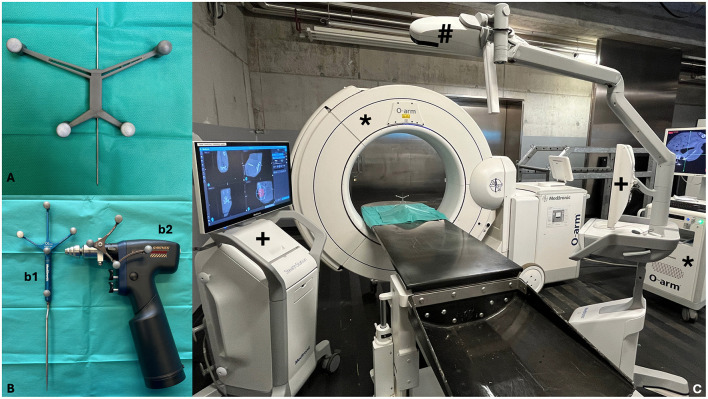 Figure 1
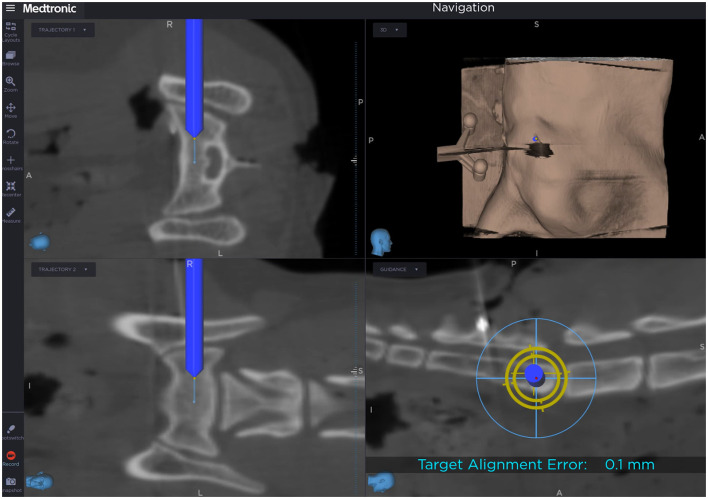 Figure 2
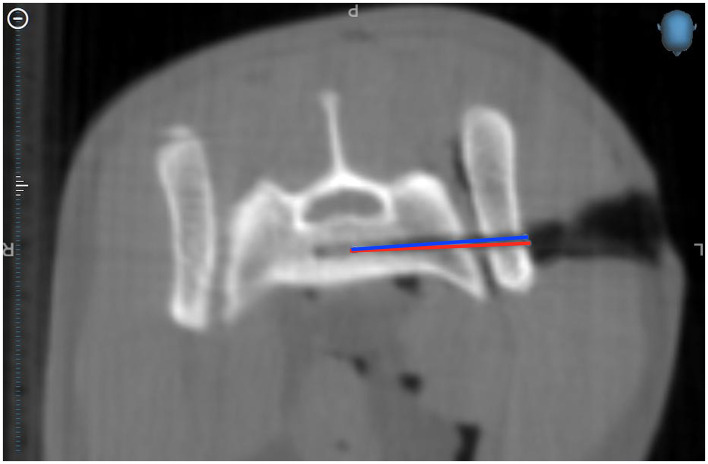 Figure 3
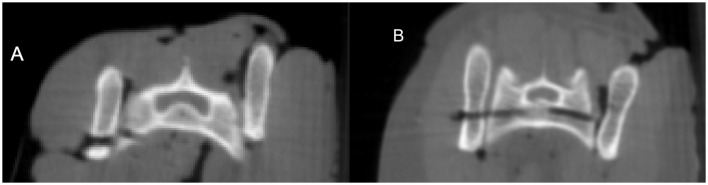 Figure 4
Peer Reviews
No public reviews on file for this paper yet. If you reviewed it on a platform where reviews are public (OpenReview, ICLR, NeurIPS, ICML), you can paste yours below so the community can read it here.
Videos
No videos yet. Explain this paper in a talk, walkthrough, or lecture? Add one.
Taxonomy
TopicsPelvic and Acetabular Injuries · Veterinary Orthopedics and Neurology · Spine and Intervertebral Disc Pathology