Evaluation of Pulse Oximetry Accuracy in a Commercial Smartphone and Smartwatch Device During Human Hypoxia Laboratory Testing
Sara H. Browne, Michael Bernstein, Philip E. Bickler

TL;DR
This study tests how accurately a Samsung smartphone and smartwatch measure blood oxygen levels in a lab setting with controlled oxygen levels.
Contribution
The study evaluates pulse oximetry accuracy in commercial devices under FDA/ISO standards, including skin tone variations.
Findings
Smartphone and smartwatch RMSD values were 2.6% and 1.8%, meeting FDA/ISO standards.
More testing is needed for individuals with darker skin tones.
Abstract
Background: The US Food and Drug Administration (FDA) and International Organization for Standardization (ISO) clearance standards for the clinical use of smart device pulse oximetry require in-laboratory human hypoxemia testing in healthy human individuals using arterial blood gas analysis. Methods: We evaluated the SpO2 measurements of the Samsung smartphone (Galaxy S9/10) and smartwatch (Galaxy 4) at stable arterial oxygen saturations (SaO2) between 70 and 100% in 24 healthy participants. Testing followed FDA/ISO-stipulated procedures for pulse oximetry performance validation, which include questionnaire estimation of skin tone based on Fitzpatrick estimation of skin types I–VI. During testing, inspired oxygen, nitrogen, and carbon dioxide partial pressures were monitored and adjusted via partial rebreathing circuits to achieve stable target arterial blood oxygen (SaO2) plateaus…
Genes, proteins, chemicals, diseases, species, mutations and cell lines named across the full text — each resolved to its canonical identifier and authoritative record.
Click any figure to enlarge with its caption.
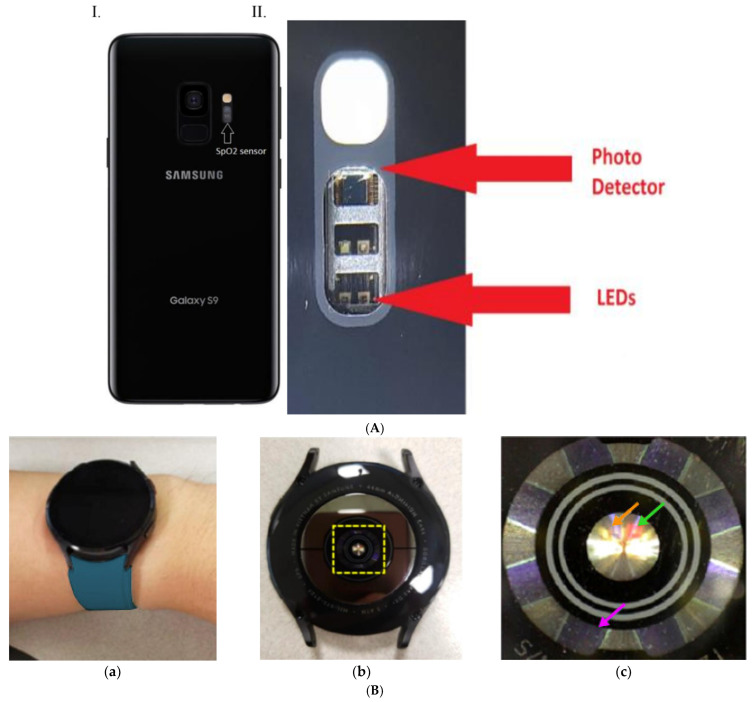 Figure 1
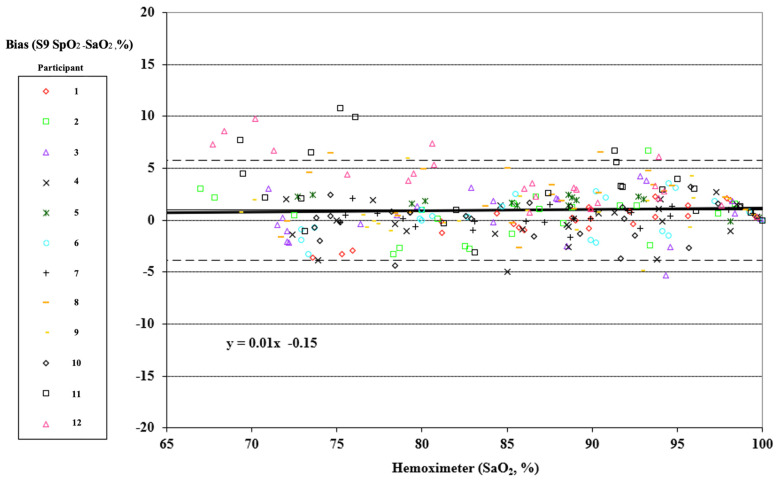 Figure 2
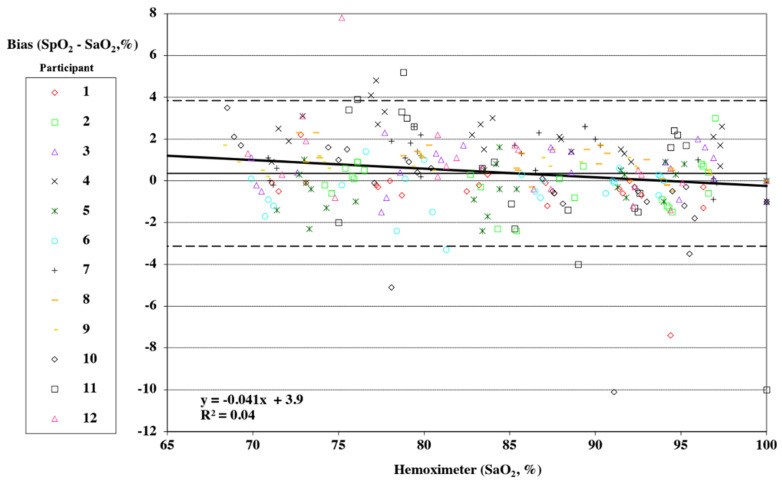 Figure 3
Peer Reviews
No public reviews on file for this paper yet. If you reviewed it on a platform where reviews are public (OpenReview, ICLR, NeurIPS, ICML), you can paste yours below so the community can read it here.
Videos
No videos yet. Explain this paper in a talk, walkthrough, or lecture? Add one.
Taxonomy
TopicsNon-Invasive Vital Sign Monitoring · Chronic Obstructive Pulmonary Disease (COPD) Research · Heart Rate Variability and Autonomic Control