Rapid and Efficient Polymer/Contaminant Removal from Single-Layer Graphene via Aqueous Sodium Nitrite Rinsing for Enhanced Electronic Applications
Kimin Lee, Juneyoung Kil, JaeWoo Park, Sui Yang, Byoungchoo Park

TL;DR
A new method using sodium nitrite solution rapidly removes contaminants from single-layer graphene, preserving its electronic properties for advanced devices.
Contribution
A novel and efficient aqueous sodium nitrite rinsing method is introduced for rapid removal of polymer and ionic contaminants from single-layer graphene.
Findings
The sodium nitrite rinse effectively removes PMMA polymers and Cl− ions in less than 10 minutes.
The treatment restores the work function of graphene to near-pristine levels (~4.79 eV).
The method improves structural integrity and reduces doping effects, as confirmed by Raman spectroscopy.
Abstract
The removal of surface residues from single-layer graphene (SLG), including poly(methyl methacrylate) (PMMA) polymers and Cl− ions, during the transfer process remains a significant challenge with regard to preserving the intrinsic properties of SLG, with the process often leading to unintended doping and reduced electronic performance capabilities. This study presents a rapid and efficient surface treatment method that relies on an aqueous sodium nitrite (NaNO2) solution to remove such contaminants effectively. The NaNO2 solution rinse leverages reactive nitric oxide (NO) species to neutralize ionic contaminants (e.g., Cl−) and partially oxidize polymer residues in less than 10 min, thereby facilitating a more thorough final cleaning while preserving the intrinsic properties of graphene. Characterization techniques, including atomic force microscopy (AFM), Kelvin probe force microscopy…
Genes, proteins, chemicals, diseases, species, mutations and cell lines named across the full text — each resolved to its canonical identifier and authoritative record.
Click any figure to enlarge with its caption.
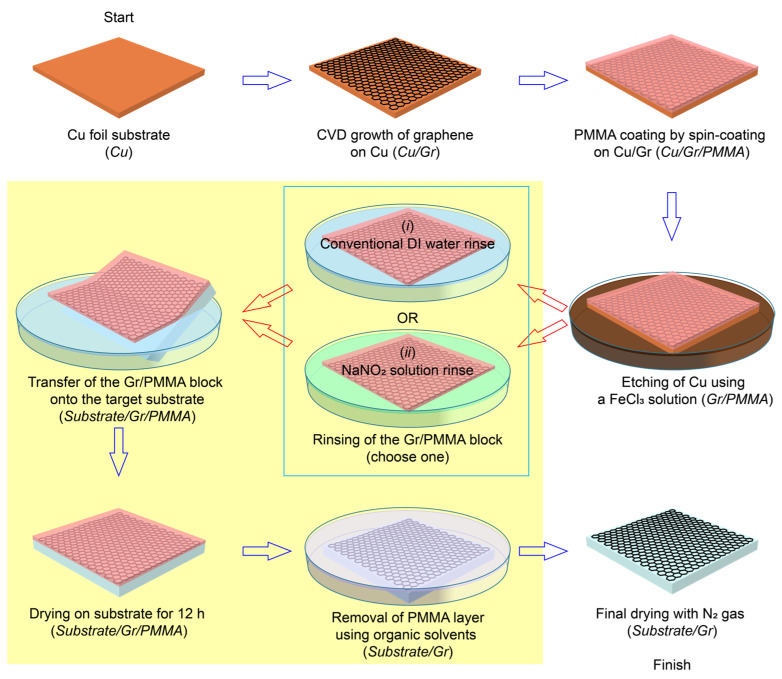 Figure 1
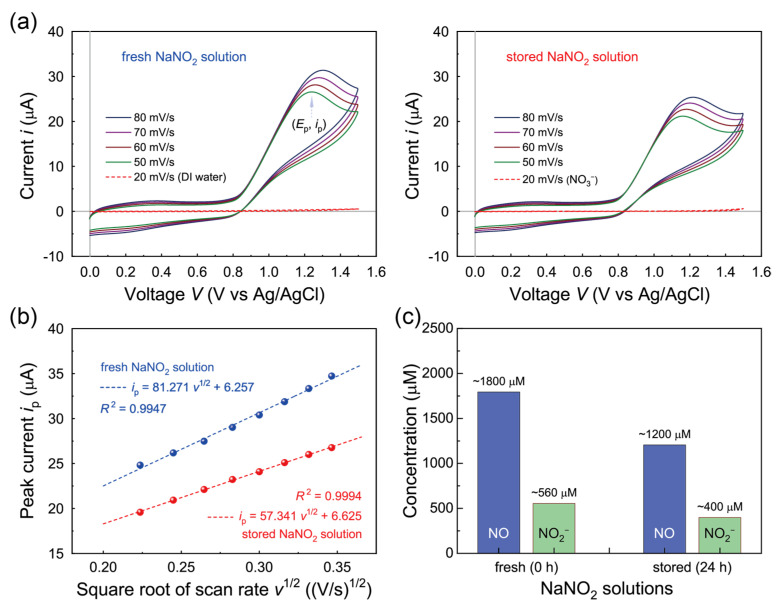 Figure 2
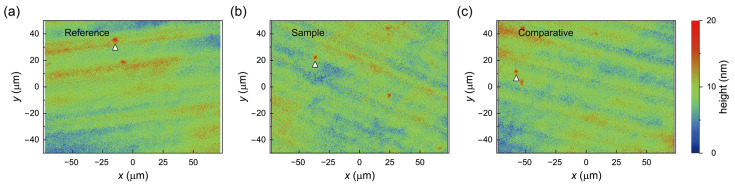 Figure 3
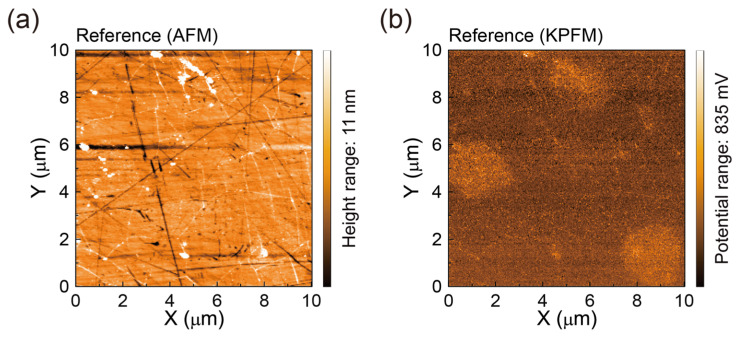 Figure 4
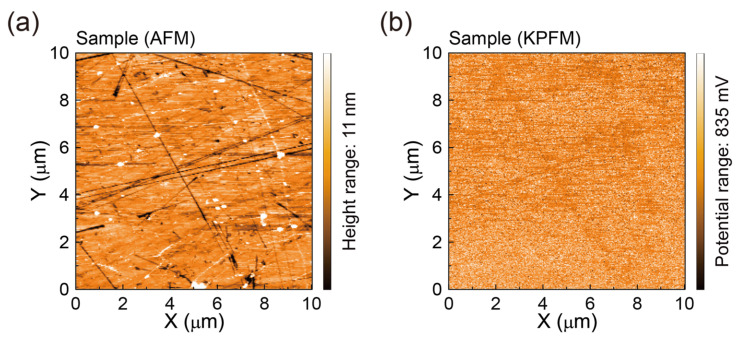 Figure 5
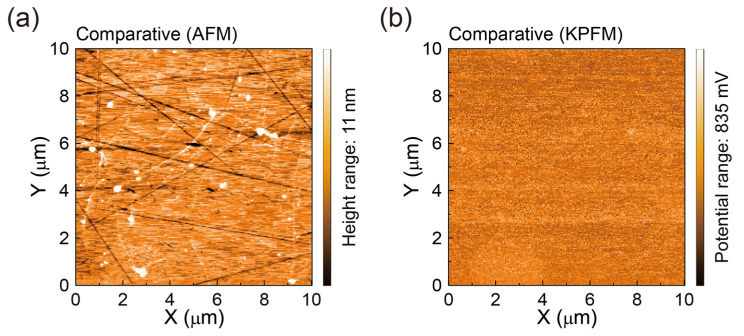 Figure 6
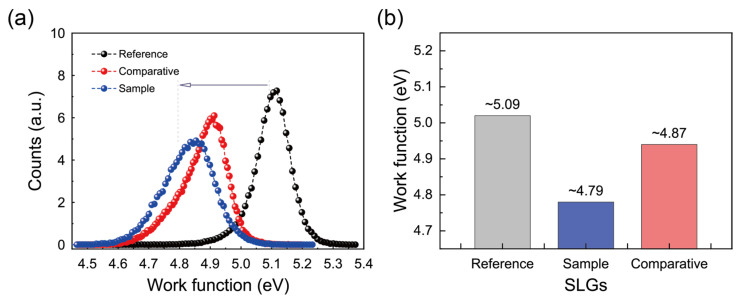 Figure 7
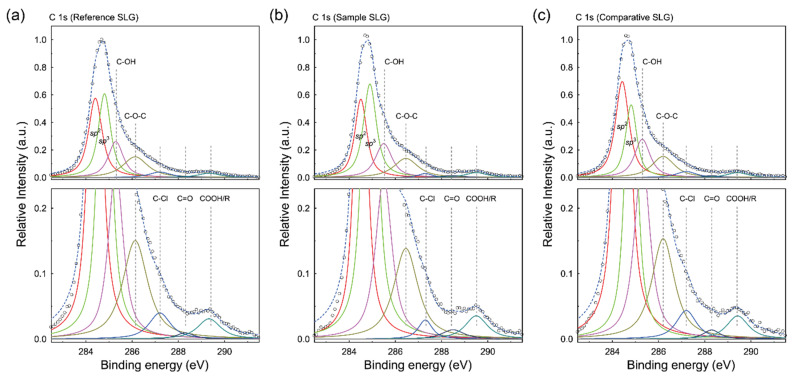 Figure 8
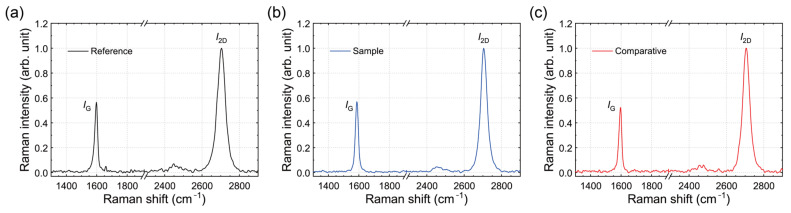 Figure 9
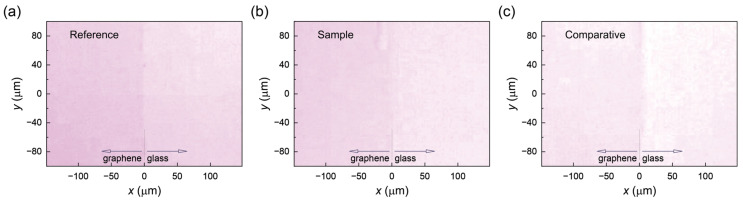 Figure 10
Peer Reviews
No public reviews on file for this paper yet. If you reviewed it on a platform where reviews are public (OpenReview, ICLR, NeurIPS, ICML), you can paste yours below so the community can read it here.
Videos
No videos yet. Explain this paper in a talk, walkthrough, or lecture? Add one.
Taxonomy
TopicsGraphene research and applications · Graphene and Nanomaterials Applications · Advanced Memory and Neural Computing