Utilization of long-acting contraceptive methods and associated factor among women of reproductive age in East Africa: A multi-level analysis of recent Demographic and Health Surveys
Habtu Kifle Negash, Ayenew Molla Lakew, Gebretsadik Endeshaw Molla, Adhanom Gebreegziabher Baraki, Yitbarek Fantahun Mariye, Winta Tesfaye, Bezawit Habtamu Bekele, Biruk Lelisa Eticha

TL;DR
This study finds that long-acting contraceptive use is low in East Africa, with factors like education, income, and marriage increasing its use.
Contribution
The study provides a multi-level analysis of LAC utilization determinants across 11 East African countries using recent demographic data.
Findings
LAC utilization is 14.87% among reproductive-age women in East Africa.
Educated, married, and higher-income women are more likely to use LACs.
Country-level factors like lower illiteracy and poverty correlate with higher LAC use.
Abstract
Comprehensive family planning is essential for reproductive health, allowing individuals to make informed choices about family size and enhancing maternal and child health. Long-acting contraceptives (LACs) are known for their high efficacy and consistent use. This study examines the prevalence and determinants of LAC utilization among women of reproductive-age in 11 East African countries. Secondary data from Demographic and Health Surveys (2015-2022) across 11 East African nations were pooled and analyzed. The study sample included 144,414 women aged 15–49. Bivariate and multivariate regression analyses were conducted using Stata 17 to explore factors associated with LAC utilization. Results are presented as adjusted odds ratios (AOR), with statistical significance at p < 0.05. The prevalence of LAC utilization among reproductive-age women in East Africa is 14.87%. Women from…
Genes, proteins, chemicals, diseases, species, mutations and cell lines named across the full text — each resolved to its canonical identifier and authoritative record.
Click any figure to enlarge with its caption.
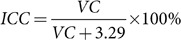 Figure 1
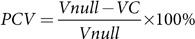 Figure 2
 Figure 3
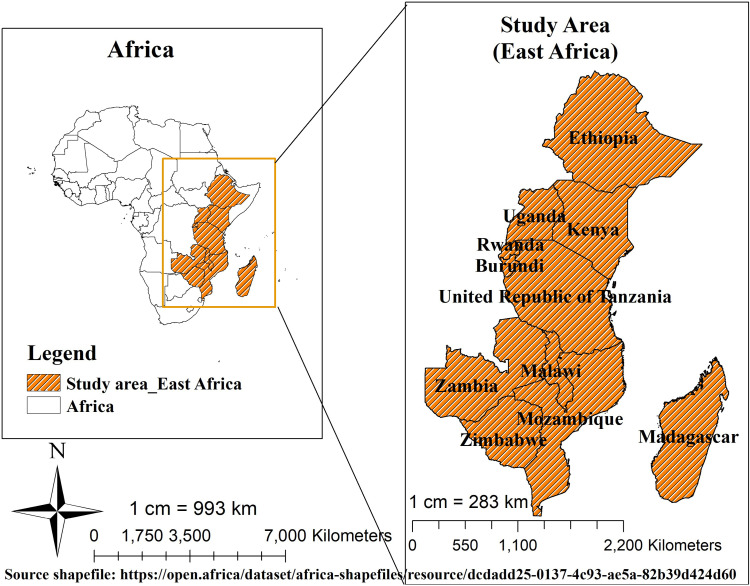 Figure 4
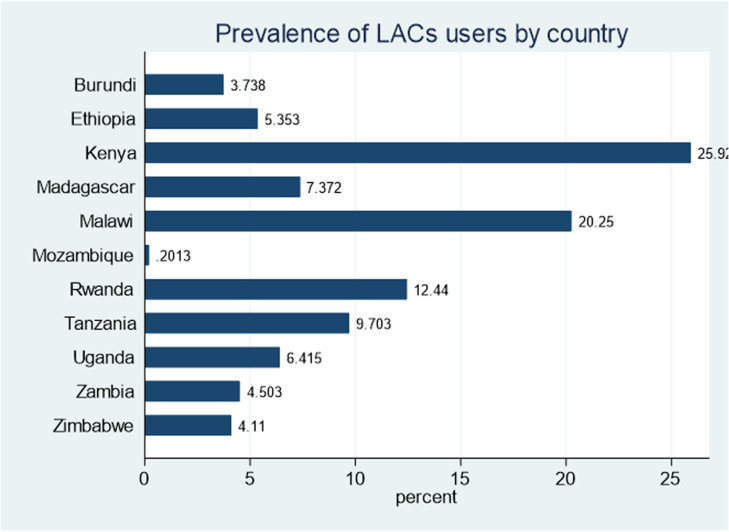 Figure 5
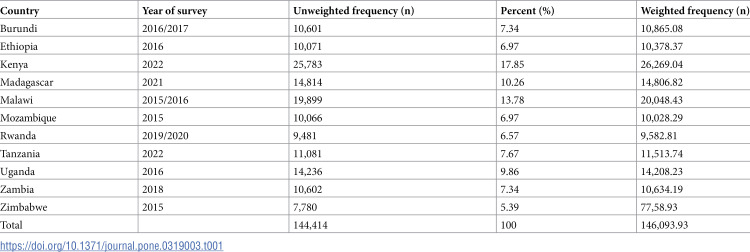 Figure 6
 Figure 7
 Figure 8
 Figure 9
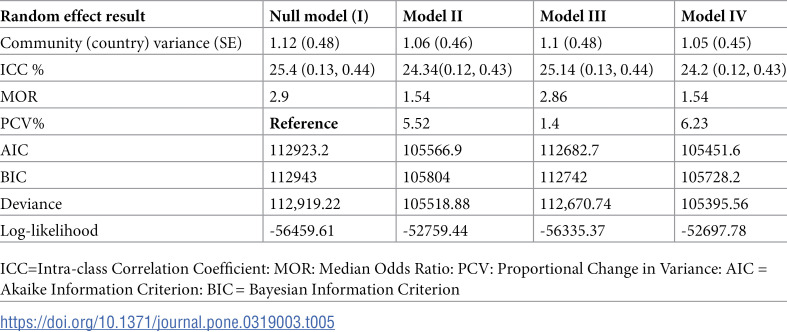 Figure 10
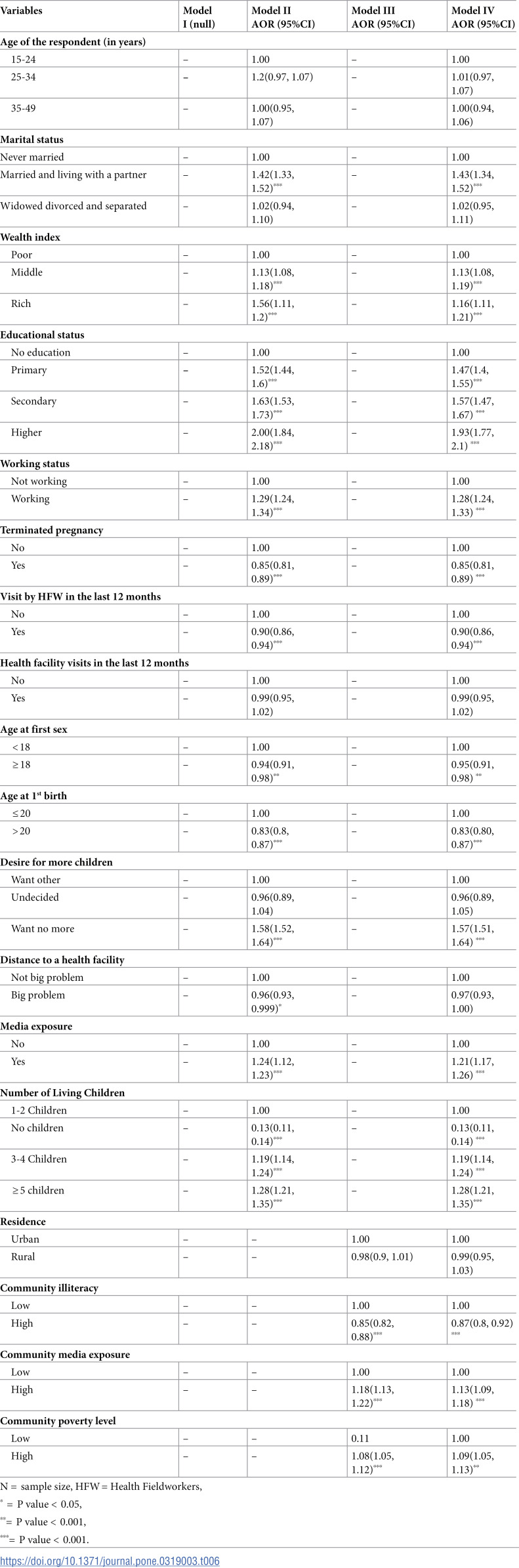 Figure 11
Peer Reviews
No public reviews on file for this paper yet. If you reviewed it on a platform where reviews are public (OpenReview, ICLR, NeurIPS, ICML), you can paste yours below so the community can read it here.
Videos
No videos yet. Explain this paper in a talk, walkthrough, or lecture? Add one.
Taxonomy
TopicsGlobal Maternal and Child Health · Reproductive Health and Contraception · Adolescent Sexual and Reproductive Health