Highly Sensitive Temperature Sensing in Biological Region with Ratiometric Fluorescent Response
Yan Li, Han Yu, Hongjuan Li, Shiguo Sun, Ruijin Yu, Yongqian Xu

TL;DR
This paper introduces a new thermometer using biocompatible polymers that can measure temperature changes in living cells with high sensitivity and accuracy.
Contribution
The novel contribution is the development of a ratiometric fluorescent thermometer using POx, TPE, and HBO for precise biological temperature sensing.
Findings
The thermometer achieves ultrahigh sensitivity and good reversibility in biological temperature measurements.
It enables accurate temperature monitoring in living cells with a large fluorescence difference.
The device uses a phase transition mechanism for ratiometric fluorescence response.
Abstract
Poly(2-oxazoline) (POx), a typical thermoresponsive polymer with good biocompatibility, was conjugated with environment-sensitive tetraphenylenethene (TPE) and hydroxyphenylbenzoxazole (HBO) to achieve unique thermometer readings. Through phase transition induced by temperature, the thermometers can measure temperature in biologic range with ratiometric fluorescence response, ultrahigh sensitivity and good reversibility. Moreover, the thermometer can be used to measure the change in temperature with large fluorescence difference in living cells.
Genes, proteins, chemicals, diseases, species, mutations and cell lines named across the full text — each resolved to its canonical identifier and authoritative record.
Click any figure to enlarge with its caption.
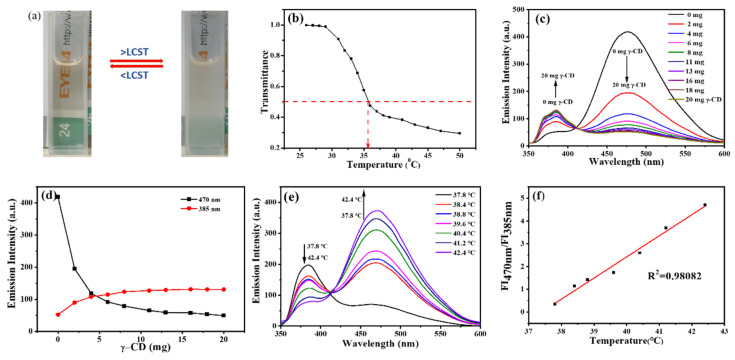 Figure 1
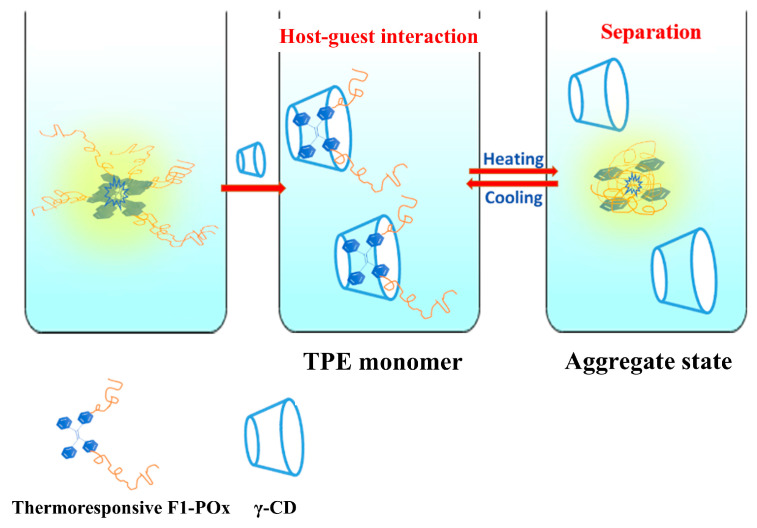 Figure 2
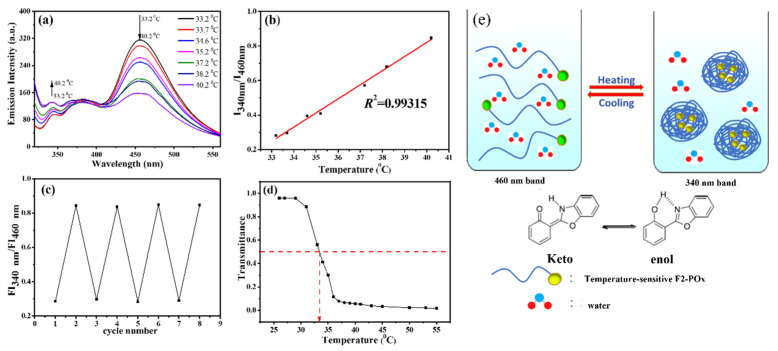 Figure 3
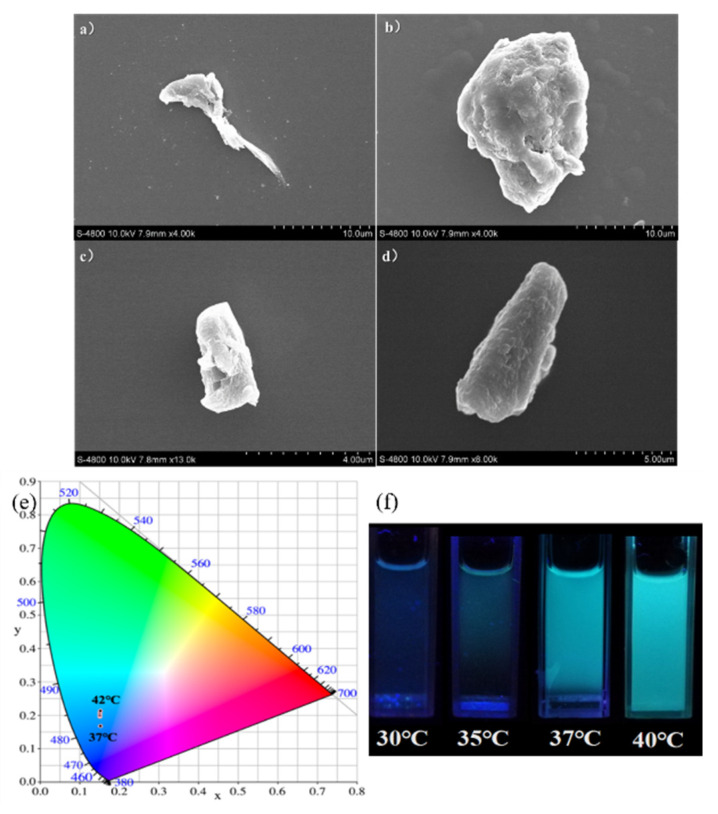 Figure 4
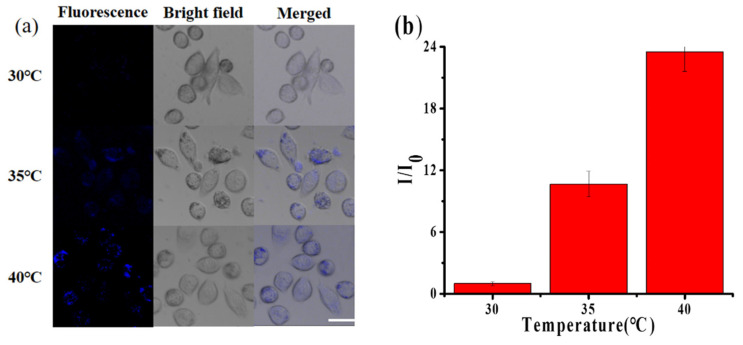 Figure 5
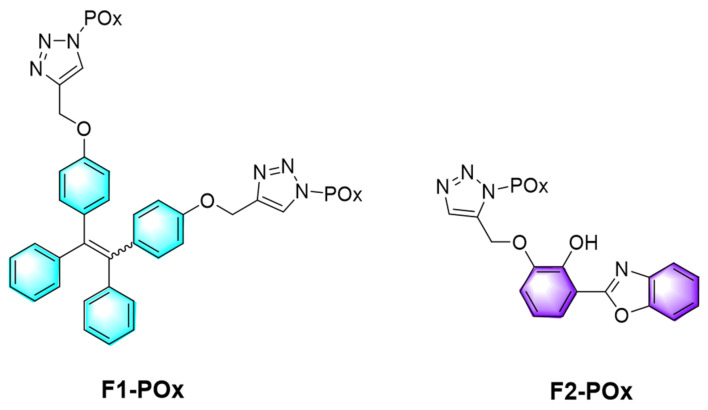 Figure 6
Peer Reviews
No public reviews on file for this paper yet. If you reviewed it on a platform where reviews are public (OpenReview, ICLR, NeurIPS, ICML), you can paste yours below so the community can read it here.
Videos
No videos yet. Explain this paper in a talk, walkthrough, or lecture? Add one.
Taxonomy
TopicsLuminescence and Fluorescent Materials · Analytical Chemistry and Sensors · Molecular Sensors and Ion Detection