Changes and Correlation Between Hormones, Immunoglobulins, and Minerals in Blood Serum and Hair of Tianzhu White Yaks of Different Ages and Gender
Yunqi Deng, Bingang Shi, Youpeng Qi, Zhihao Luo, Changze Cui, Shaopeng Chen, Xuelan Zhou, Zhidong Zhao, Xiaolan Zhang, Jiang Hu

TL;DR
This study examines how hormones, immune proteins, and minerals in blood and hair change with age and gender in Tianzhu white yaks, showing that younger yaks have higher levels of certain hormones and immune proteins linked to hair growth.
Contribution
The study identifies age- and gender-specific correlations between hormones, immunoglobulins, and minerals in yaks, offering a non-invasive method to assess their health.
Findings
Younger yaks (1–2 years) have significantly higher melatonin and dihydrotestosterone levels, which are important for hair growth.
IgA levels are higher in younger yaks, while IgG and IgM decline with age.
Calcium, magnesium, zinc, and iron levels in blood serum are higher in younger and older yaks compared to 3–4-year-olds.
Abstract
This study was designed to probe into the changes in the hormones, immune system proteins, and minerals in the blood and hair of Tianzhu white yaks across different age groups (ranging from 1–2, 3–4, and 5–6 years old) and genders. The results showed that compared with older yaks, younger ones had remarkably higher levels of melatonin and dihydrotestosterone, both of which are crucial for hair growth. Additionally, it was confirmed that the younger yaks contained a greater amount of immune protein IgA, while the levels of IgG and IgM gradually declined as they grew older. In terms of certain minerals in the blood serum, like calcium, magnesium, zinc, and iron, their concentrations were considerably higher in younger and older yaks than in the 3–4-year-old group. In contrast, significant differences in hair minerals were observed among all age ranges, with different change trends for…
Genes, proteins, chemicals, diseases, species, mutations and cell lines named across the full text — each resolved to its canonical identifier and authoritative record.
Click any figure to enlarge with its caption.
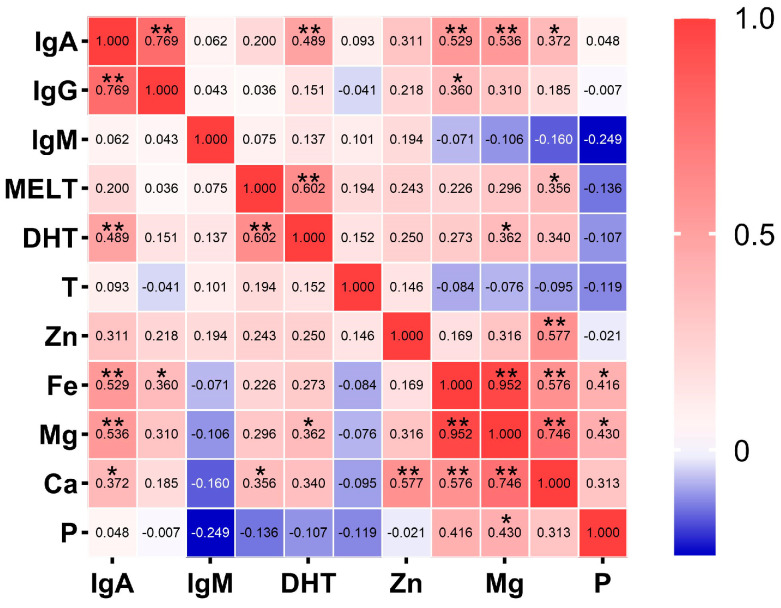 Figure 1
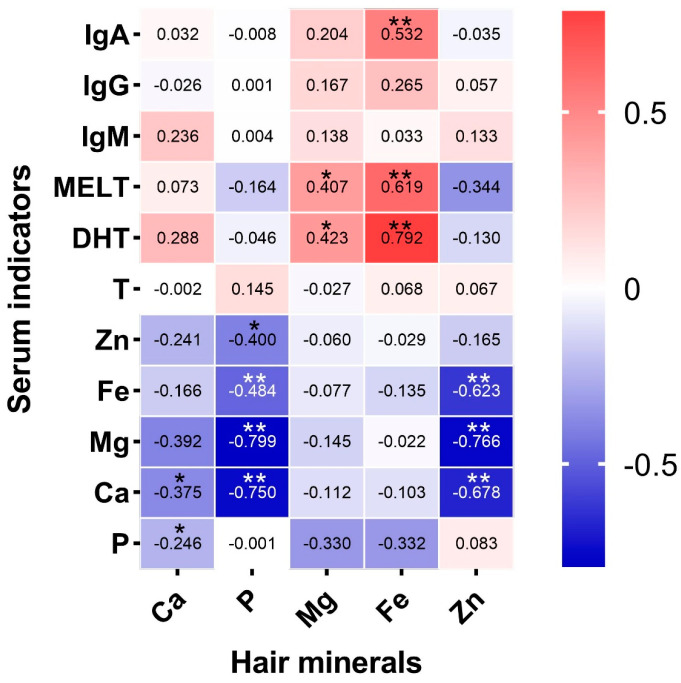 Figure 2
Peer Reviews
No public reviews on file for this paper yet. If you reviewed it on a platform where reviews are public (OpenReview, ICLR, NeurIPS, ICML), you can paste yours below so the community can read it here.
Videos
No videos yet. Explain this paper in a talk, walkthrough, or lecture? Add one.
Taxonomy
TopicsReproductive Physiology in Livestock · Effects of Environmental Stressors on Livestock · Genetic and phenotypic traits in livestock