Whole-Blood Longitudinal Molecular Profiling Maps the Road of Graft Versus Host Disease (GVHD)
Merav Bar, Mohammed El Anbari, Darawan Rinchai, Mohammed Toufiq, Dhanya Kizhakayil, Harshitha S. Manjunath, Rebecca Mathew, Irene Cavattoni, Sabine Forer, Marco Recla, Hani Bibawi, Ahmad Alater, Reem Yahia, Clarisa Brown, Nancy L. Miles, Phuong Vo, Davide Bedognetti, Sara Tomei

TL;DR
This study uses a minimally invasive blood test to track gene activity in transplant patients, revealing molecular patterns linked to graft versus host disease (GVHD) over time.
Contribution
A microfluidics-based method enables frequent, low-volume blood testing to map molecular changes associated with GVHD onset and progression.
Findings
Neutrophil activation and interferon signatures mark the start of acute GVHD.
Erythroid signatures distinguish acute and mild chronic GVHD.
Protein-synthesis and B-cell-related signatures are linked to late acute/overlap GVHD.
Abstract
With a method that measures the abundance of 264 genes from a few drops of fingerstick-collected blood, we analyzed blood changes in patients after allogeneic hematopoietic cell transplantation for the first time at high frequency: every week/second week. By correlating the results with patients’ health status, we discovered important biological processes conducive to graft versus host disease (GVHD). Such genes may suggest a way to prevent GVHD. Background: Graft versus host disease (GVHD) and the graft versus tumor (GVT) effect after allogeneic hematopoietic cell transplantation (allo-HCT) result from complex interactions between the donor immune system and the recipient environment. High-temporal longitudinal monitoring might be necessary to identify triggering events of GVHD and GVT and to intercept these events before their occurrence. But it would require an overall considerable…
Genes, proteins, chemicals, diseases, species, mutations and cell lines named across the full text — each resolved to its canonical identifier and authoritative record.
Click any figure to enlarge with its caption.
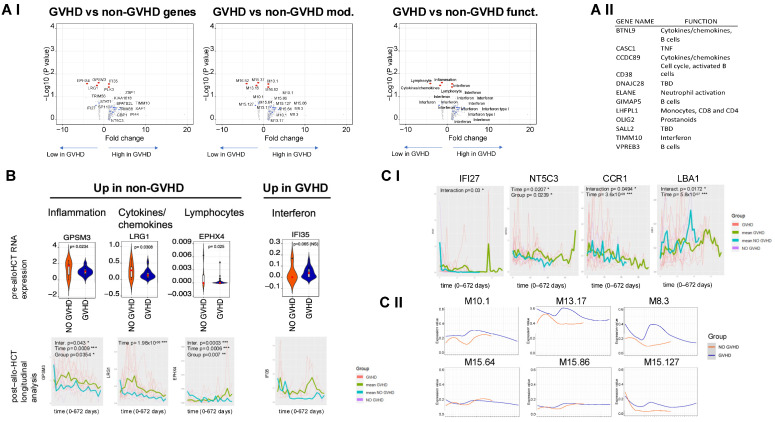 Figure 1
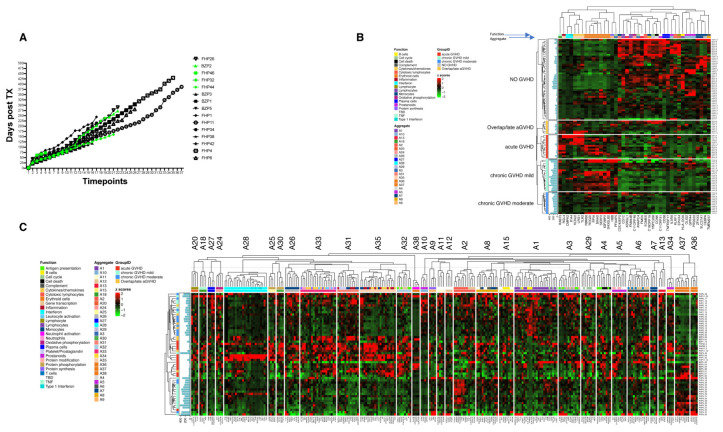 Figure 2
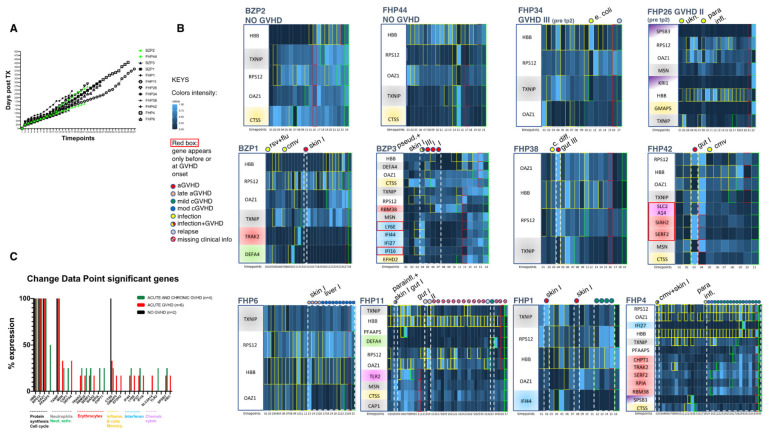 Figure 3
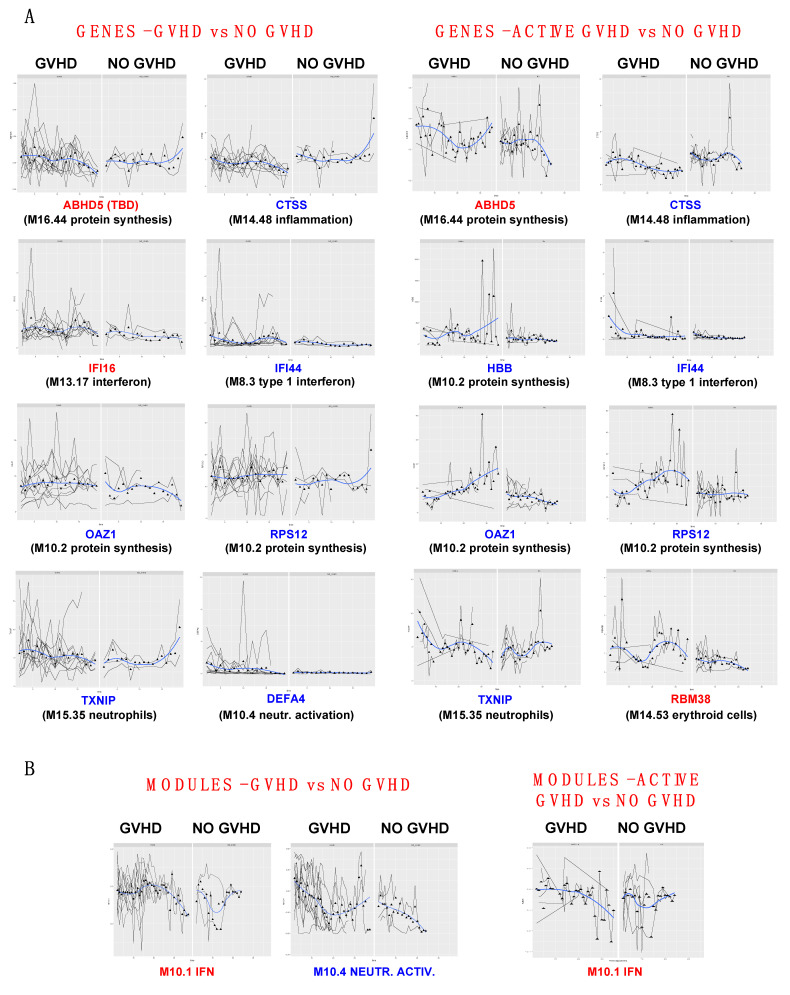 Figure 4
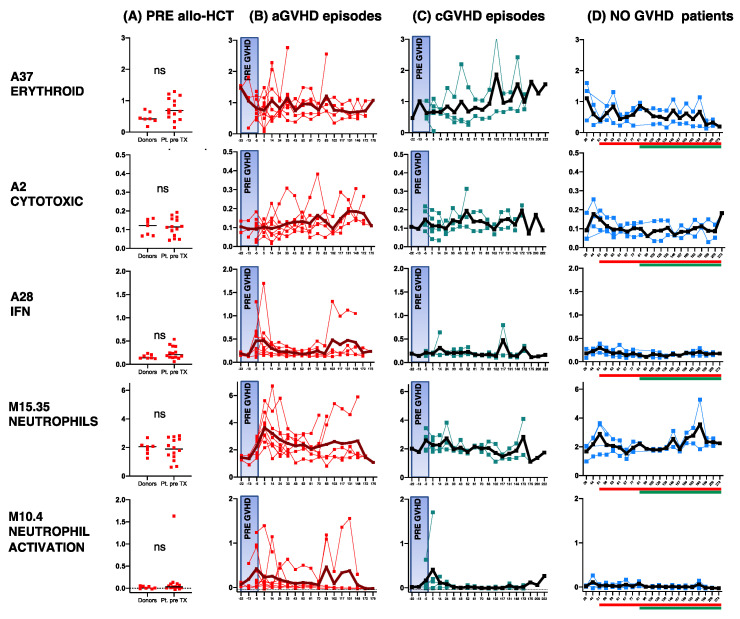 Figure 5
Peer Reviews
No public reviews on file for this paper yet. If you reviewed it on a platform where reviews are public (OpenReview, ICLR, NeurIPS, ICML), you can paste yours below so the community can read it here.
Videos
No videos yet. Explain this paper in a talk, walkthrough, or lecture? Add one.
Taxonomy
TopicsHematopoietic Stem Cell Transplantation · Single-cell and spatial transcriptomics · Erythrocyte Function and Pathophysiology