Motor Control Exercises and Their Design for Short-Term Pain Modulation in Patients with Pelvic Girdle Pain: A Narrative Review
Mirko Zitti, Alessandro Mantia, Fabiola Garzonio, Graziano Raffaele, Lorenzo Storari, Rachele Paciotti, Fabio Fiorentino, Rebecca Andreutto, Filippo Maselli

TL;DR
This review examines motor control exercises for short-term pain relief in pelvic girdle pain patients, finding limited evidence of their effectiveness due to inconsistent design.
Contribution
The paper evaluates how motor control exercises are designed for pelvic girdle pain and whether they align with motor control theories.
Findings
Most studies did not show significant pain reduction from motor control exercises.
Exercises were often not structured according to motor control principles.
Only one study demonstrated statistically significant pain improvement.
Abstract
Background: Pelvic girdle pain (PGP) is described in the literature as a subgroup of low back pain (LBP), characterized by pain localized between the posterior iliac crest and the gluteal fold, particularly near the sacroiliac joints. This condition can manifest in different forms non-specific PGP, occurring during pregnancy or postpartum (pregnancy-related PGP), which represents the most prevalent form and non-pregnancy-related PGP, resulting from mechanical alterations caused by trauma or microtrauma. Specific PGP, associated with identifiable causes such as fractures, infections, or arthritis. Over the years, research has focused on identifying the most effective approaches for managing this condition and addressing its associated biopsychosocial impairments. The aim of this narrative review is to determine the types of motor control exercises (MCEs) used to reduce short-term pain in…
Genes, proteins, chemicals, diseases, species, mutations and cell lines named across the full text — each resolved to its canonical identifier and authoritative record.
Click any figure to enlarge with its caption.
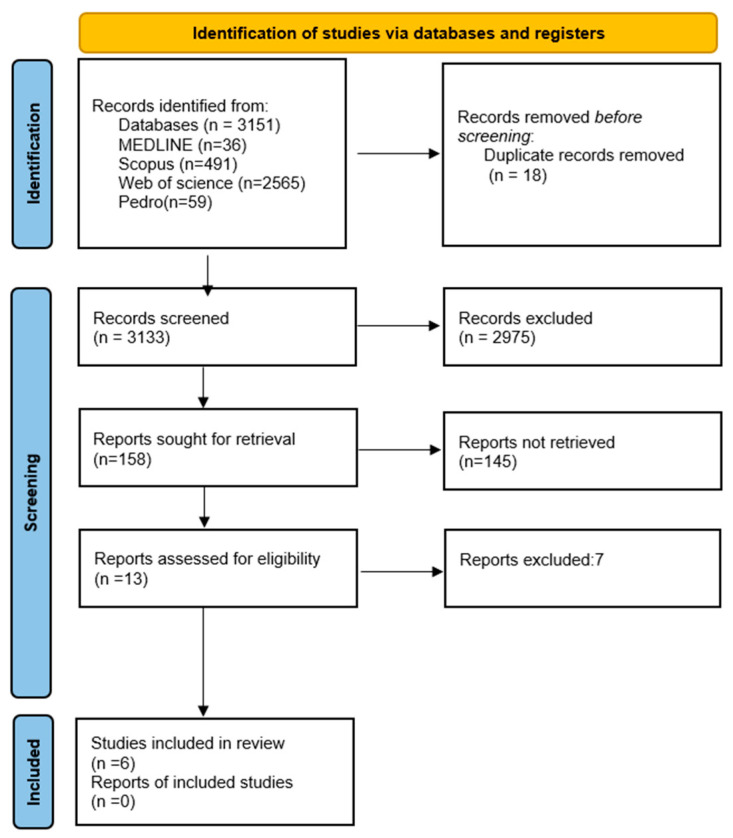 Figure 1
 Figure 2
 Figure 3
 Figure 4
 Figure 5
 Figure 6
 Figure 7
 Figure 8
 Figure 9
Peer Reviews
No public reviews on file for this paper yet. If you reviewed it on a platform where reviews are public (OpenReview, ICLR, NeurIPS, ICML), you can paste yours below so the community can read it here.
Videos
No videos yet. Explain this paper in a talk, walkthrough, or lecture? Add one.
Taxonomy
TopicsPregnancy-related medical research · Musculoskeletal pain and rehabilitation · Spine and Intervertebral Disc Pathology