Assessing Image Quality in Multiplexed Sensitivity-Encoding Diffusion-Weighted Imaging with Deep Learning-Based Reconstruction in Bladder MRI
Seung Ha Cha, Yeo Eun Han, Na Yeon Han, Min Ju Kim, Beom Jin Park, Ki Choon Sim, Deuk Jae Sung, Seulki Yoo, Patricia Lan, Arnaud Guidon

TL;DR
This study shows that deep learning improves image quality in bladder MRI using MUSE-DWI, enhancing lesion visibility and reducing noise.
Contribution
The novel application of a vendor-specific deep learning algorithm to MUSE-DWI for bladder imaging is evaluated for image quality improvements.
Findings
DL MUSE-DWI showed significantly better qualitative image quality, including sharper lesions and higher conspicuity.
Quantitative metrics like SNR, CNR, and SIR were higher in DL MUSE-DWI compared to conventional MUSE-DWI.
ADC values were significantly higher in DL MUSE-DWI, indicating potential clinical benefits.
Abstract
Background/Objectives: This study compared the image quality of conventional multiplexed sensitivity-encoding diffusion-weighted imaging (MUSE-DWI) and deep learning MUSE-DWI with that of vendor-specific deep learning (DL) reconstruction applied to bladder MRI. Methods: This retrospective study included 57 patients with a visible bladder mass. DWI images were reconstructed using a vendor-provided DL algorithm (AIRTM Recon DL; GE Healthcare)—a CNN-based algorithm that reduces noise and enhances image quality—applied here as a prototype for MUSE-DWI. Two radiologists independently assessed qualitative features using a 4-point scale. For the quantitative analysis, signal-to-noise ratio (SNR), contrast-to-noise ratio (CNR), signal intensity ratio (SIR), and apparent diffusion coefficient (ADC) of the bladder lesions were recorded by two radiologists. The weighted kappa test and intraclass…
Genes, proteins, chemicals, diseases, species, mutations and cell lines named across the full text — each resolved to its canonical identifier and authoritative record.
Click any figure to enlarge with its caption.
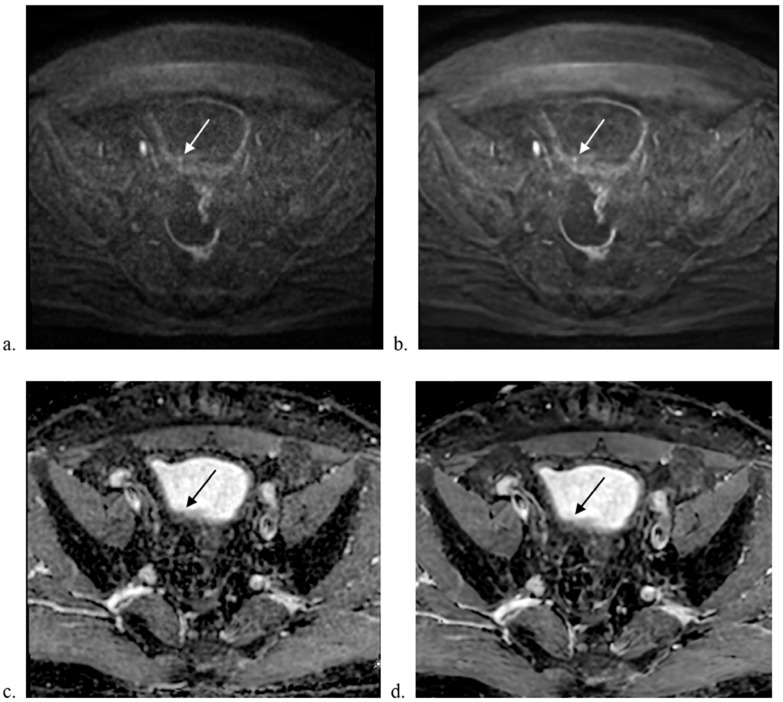 Figure 1
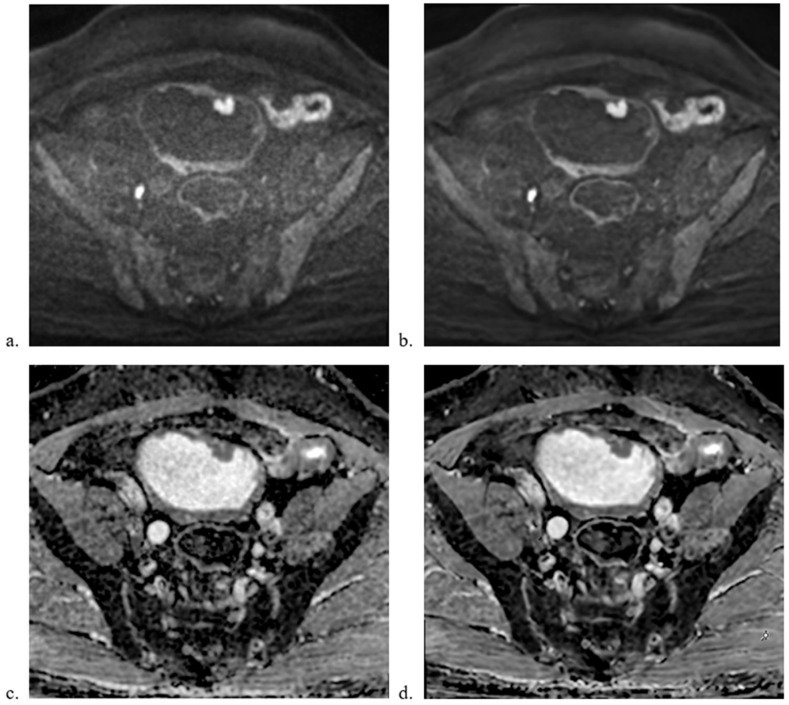 Figure 2
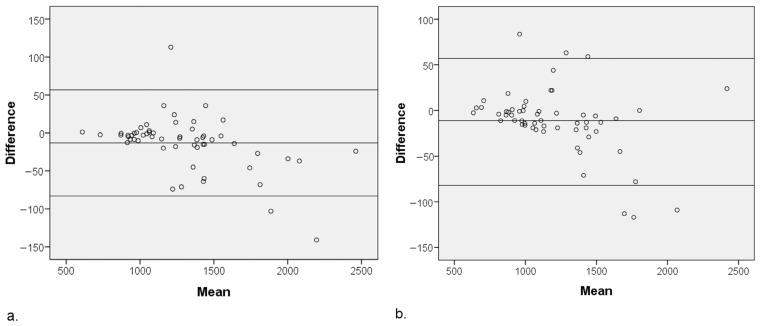 Figure 3
Peer Reviews
No public reviews on file for this paper yet. If you reviewed it on a platform where reviews are public (OpenReview, ICLR, NeurIPS, ICML), you can paste yours below so the community can read it here.
Videos
No videos yet. Explain this paper in a talk, walkthrough, or lecture? Add one.
Taxonomy
TopicsMRI in cancer diagnosis · Bladder and Urothelial Cancer Treatments · Urinary and Genital Oncology Studies