AOX Affects the Synthesis of Polysaccharides by Regulating the Reactive Oxygen Species in Ganoderma lucidum
Ruiying Zhu, Lele Zhang, Longxi Wu, Jingshuo Liu, Jie Zhang, Jian Li, Kejing Song, Peipei Han

TL;DR
This study shows how a protein called AOX affects the production of complex sugars in a type of mushroom by controlling harmful molecules inside cells.
Contribution
The novel finding is that AOX regulates reactive oxygen species, which in turn influences the synthesis and antioxidant properties of polysaccharides in Ganoderma lucidum.
Findings
AOX-silenced strains produced significantly more polysaccharides than wild-type strains.
AOX-overexpressed strains showed a dramatic decrease in polysaccharide production.
The acidic polysaccharide from AOX-silenced strains had the highest antioxidant activity.
Abstract
Alternative oxidase (AOX) is a terminal oxidase in the mitochondrial electron transport chain that does not contribute to the generation of ATP. It plays a critical role in maintaining the balance between reactive oxygen species (ROS) production and intracellular redox homeostasis within the mitochondria. In the study, overexpression and knockdown approaches were employed to investigate the function of AOX. AOX-silenced strains (AOXi3 and AOXi25) and AOX-overexpressed strains (OE-AOX2 and OE-AOX21) were constructed. The ROS level and transcription level of the antioxidant-system-related genes, including phosphoglucomutase (pgm) and phosphomannose isomerase (pmi), were differentially upregulated in silenced strains, whereas the opposite effect was observed in the AOX-overexpressed strains. Compared with the wild type (WT), the polysaccharide production of AOXi25 was significantly…
Genes, proteins, chemicals, diseases, species, mutations and cell lines named across the full text — each resolved to its canonical identifier and authoritative record.
Click any figure to enlarge with its caption.
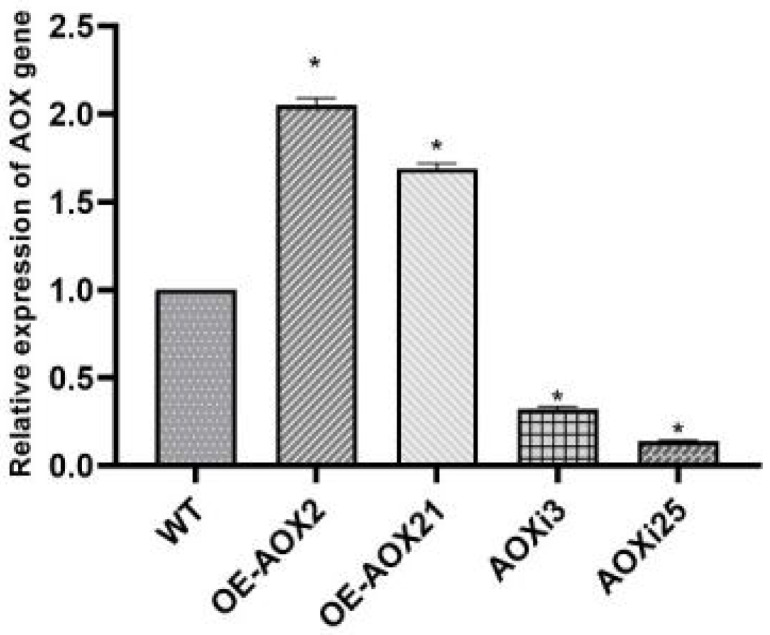 Figure 1
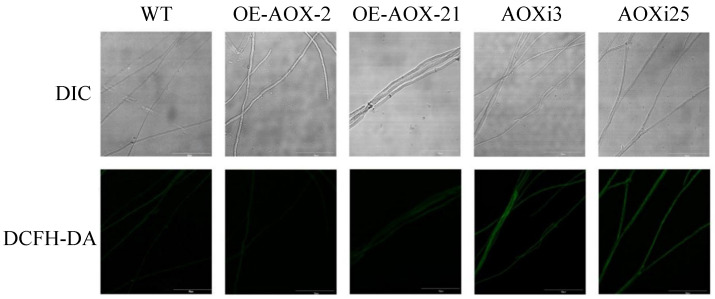 Figure 2
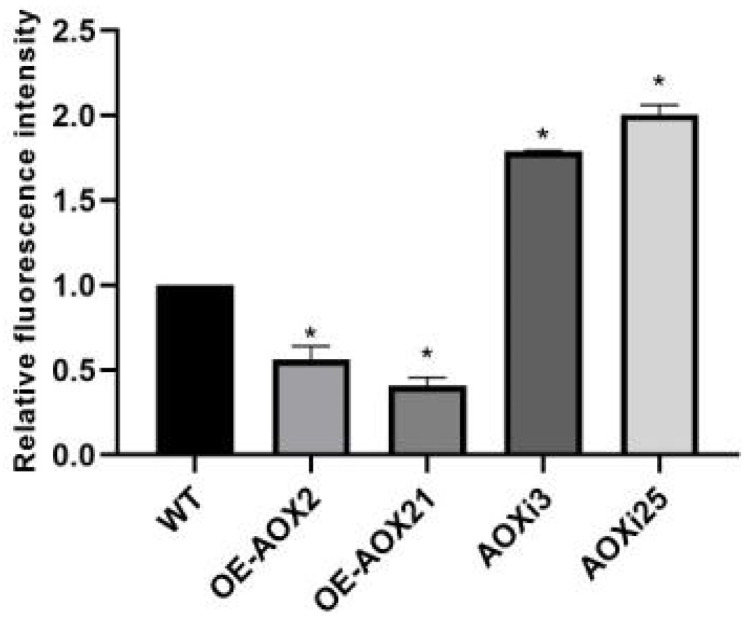 Figure 3
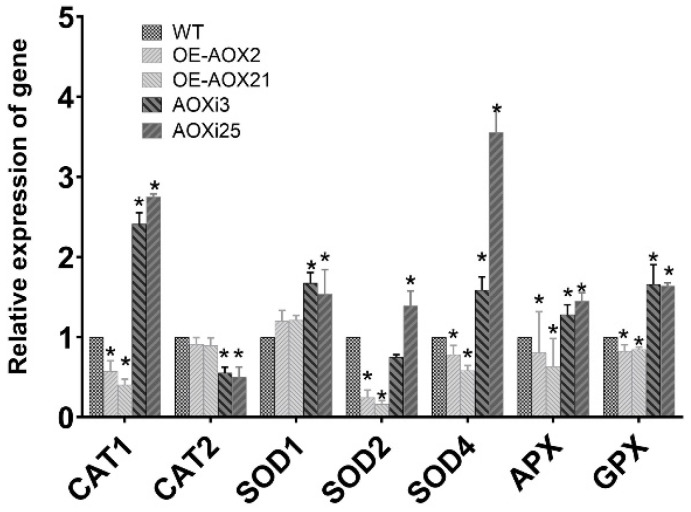 Figure 4
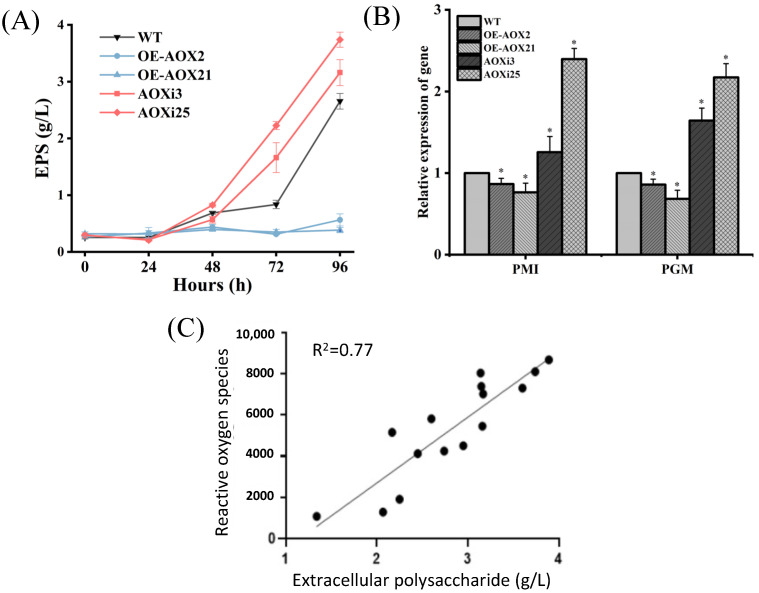 Figure 5
 Figure 6
 Figure 7
 Figure 8
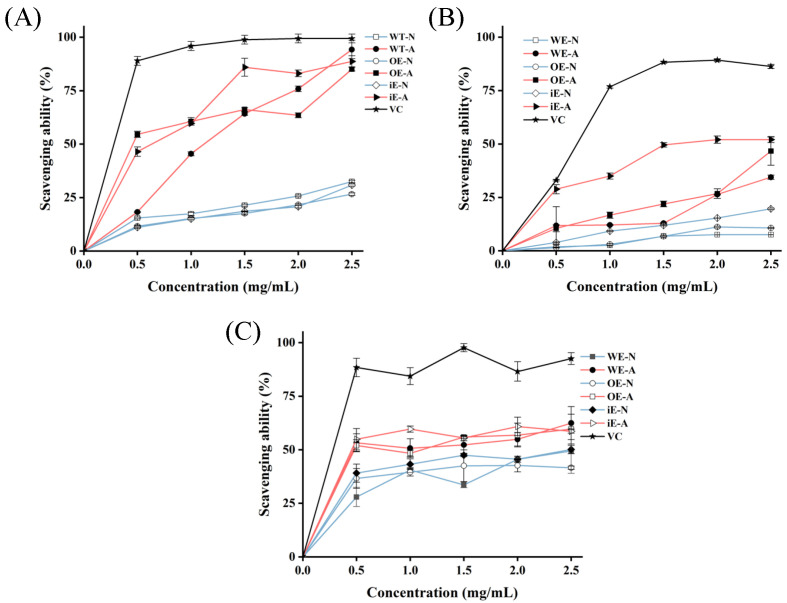 Figure 9
Peer Reviews
No public reviews on file for this paper yet. If you reviewed it on a platform where reviews are public (OpenReview, ICLR, NeurIPS, ICML), you can paste yours below so the community can read it here.
Videos
No videos yet. Explain this paper in a talk, walkthrough, or lecture? Add one.
Taxonomy
TopicsFungal Biology and Applications · Biocrusts and Microbial Ecology · Mycorrhizal Fungi and Plant Interactions