Rickettsial pathogen augments tick vesicular-associated membrane proteins for infection and survival in the vector host
Prachi Namjoshi, Jaydeep Kolape, Avni Patel, Hameeda Sultana, Girish Neelakanta

TL;DR
This study shows that tick proteins VAMP3 and VAMP4 help a rickettsial pathogen form vacuoles and survive in ticks, which is important for transmitting the disease to humans and animals.
Contribution
The study identifies VAMP3 and VAMP4 as key tick proteins involved in the formation and persistence of A. phagocytophilum vacuoles.
Findings
VAMP3 and VAMP4 are upregulated early during A. phagocytophilum infection in tick cells.
Silencing VAMP3 and VAMP4 impairs morulae formation and persistent infection in ticks.
These proteins are essential for bacterial acquisition from infected hosts to ticks.
Abstract
Anaplasma phagocytophilum is an obligate intracellular rickettsial pathogen that infects humans and animals. The black-legged tick Ixodes scapularis acts as a vector and transmits this bacterium to the vertebrate host. Upon entry into a host cell, A. phagocytophilum resides and multiplies in a host-derived vacuole called morulae. There is not much information available on the molecules that play an important role(s) in A. phagocytophilum entry and formation of these morulae in tick cells. In this study, we provide evidence that tick vesicular-associated membrane proteins, VAMP3 and VAMP4, play important roles in this phenomenon. Quantitative real-time polymerase chain reaction (QRT-PCR) analysis showed that both vamp3 and vamp4 transcripts are significantly upregulated at early time points of A. phagocytophilum infection in tick cells. We noted that both VAMP3 and VAMP4 predominantly…
Genes, proteins, chemicals, diseases, species, mutations and cell lines named across the full text — each resolved to its canonical identifier and authoritative record.
Click any figure to enlarge with its caption.
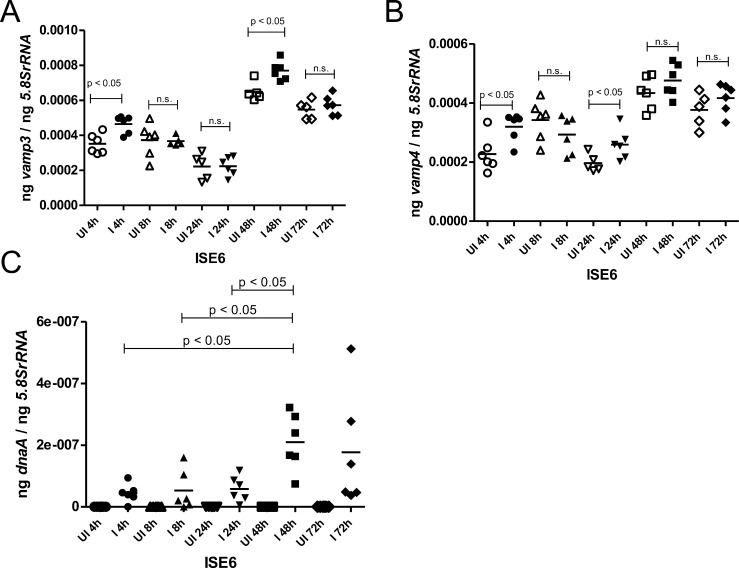 Figure 1
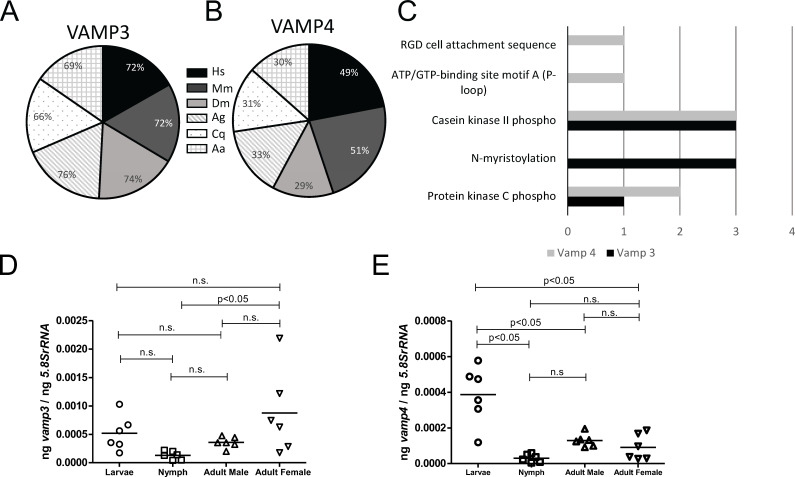 Figure 2
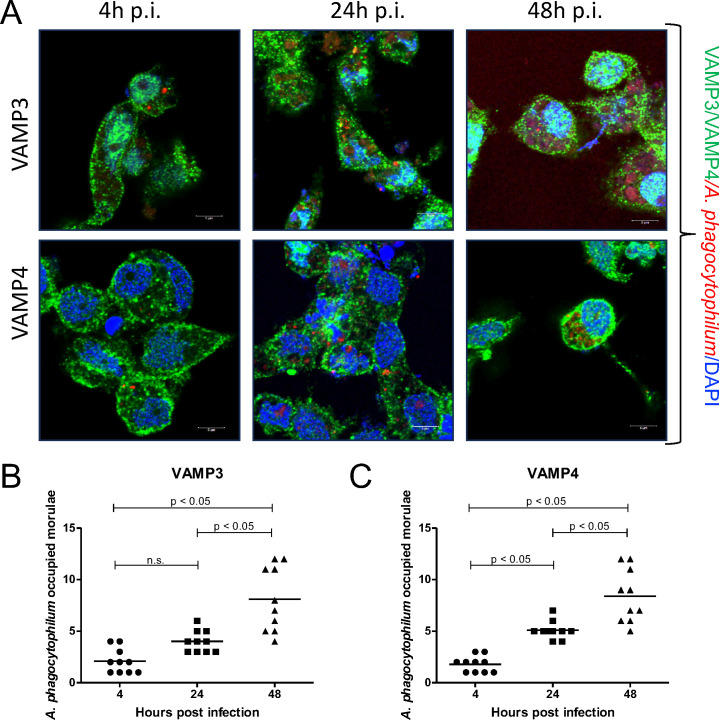 Figure 3
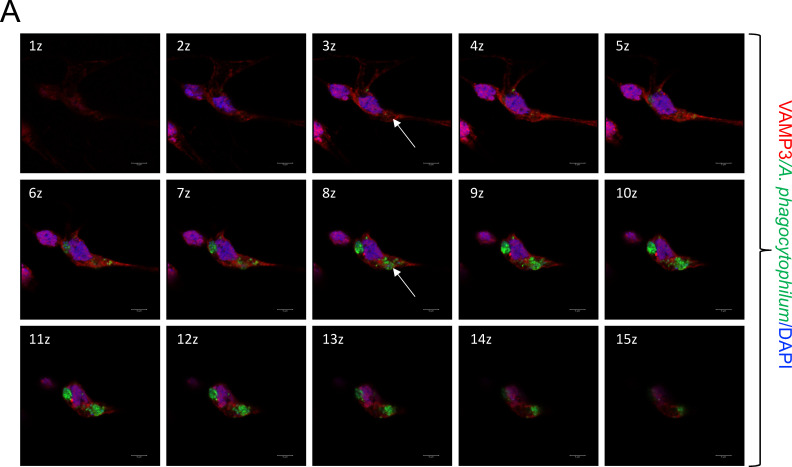 Figure 4
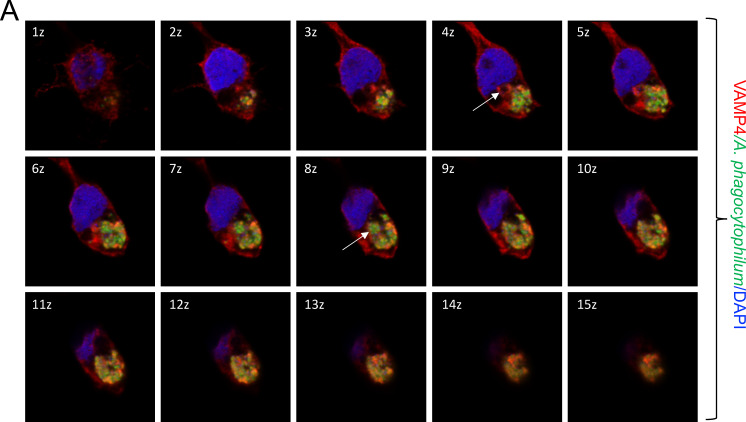 Figure 5
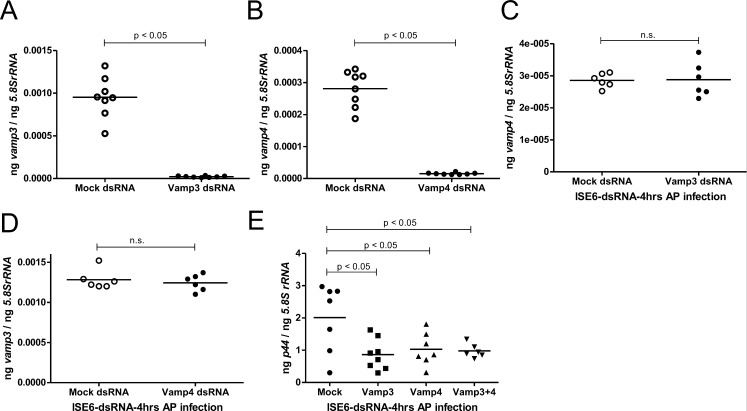 Figure 6
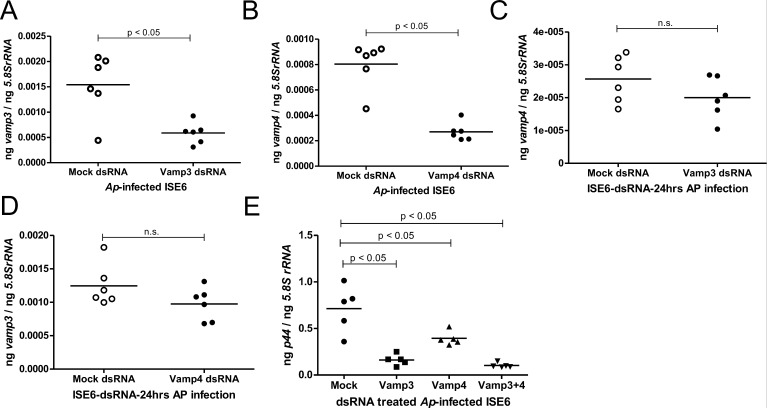 Figure 7
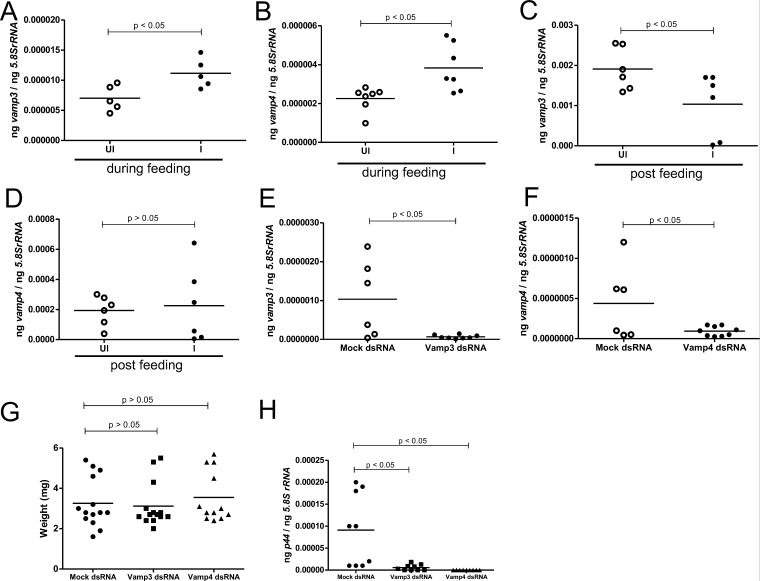 Figure 8
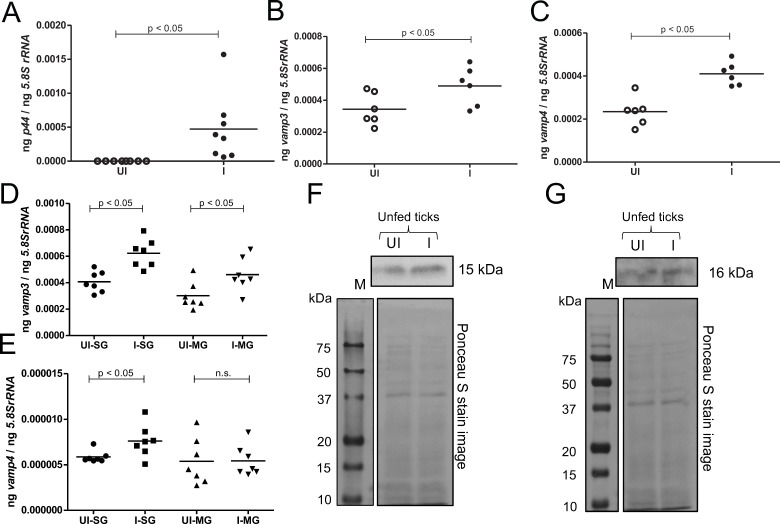 Figure 9
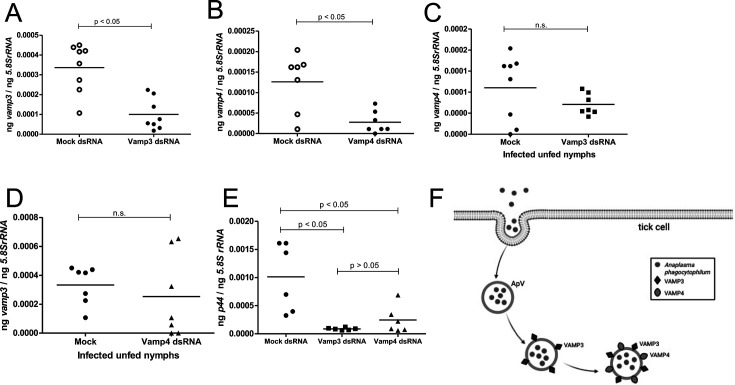 Figure 10
Peer Reviews
No public reviews on file for this paper yet. If you reviewed it on a platform where reviews are public (OpenReview, ICLR, NeurIPS, ICML), you can paste yours below so the community can read it here.
Videos
No videos yet. Explain this paper in a talk, walkthrough, or lecture? Add one.
Taxonomy
TopicsVector-borne infectious diseases · Mosquito-borne diseases and control · Insect symbiosis and bacterial influences