Absolute Quantification of Nucleotide Variants in Cell-Free DNA via Quantitative NGS: Clinical Application in Non-Small Cell Lung Cancer Patients
Guillaume Herbreteau, Marie Marcq, Chloé Sauzay, Maxime Carpentier, Elise Pierre-Noël, Elvire Pons-Tostivint, Audrey Vallée, Sandrine Théoleyre, Acya Bizieux, Jaafar Bennouna, Marc G. Denis

TL;DR
A new sequencing method allows precise measurement of tumor DNA in blood, helping track cancer treatment response without needing prior genetic information.
Contribution
A novel quantitative NGS method using UMIs and QSs enables absolute quantification of ctDNA variants without prior tumor genotype knowledge.
Findings
The qNGS method showed strong linearity and high correlation with dPCR in both spiked and clinical samples.
The method successfully quantified multiple ctDNA variants in a single plasma sample from NSCLC patients.
Significant reductions in ctDNA levels were observed after three weeks of therapy in NSCLC patients.
Abstract
Circulating tumor DNA (ctDNA) analysis offers a non-invasive method for tracking tumor burden and treatment response. Current quantification techniques face limitations: digital PCR (dPCR) requires prior knowledge of tumor-specific alterations, while next-generation sequencing (NGS) provides broader insights but is semi-quantitative. To address these challenges, a novel quantitative NGS (qNGS) method was developed, incorporating unique molecular identifiers (UMIs) and quantification standards (QSs). This approach enables the absolute quantification of nucleotide variants. Validated using spiked plasma samples and clinical samples from the ELUCID trial, the qNGS method demonstrated strong linearity and high correlation with dPCR. It successfully quantified multiple variants from a single plasma sample and revealed significant reductions in ctDNA levels after three weeks of therapy in…
Genes, proteins, chemicals, diseases, species, mutations and cell lines named across the full text — each resolved to its canonical identifier and authoritative record.
Click any figure to enlarge with its caption.
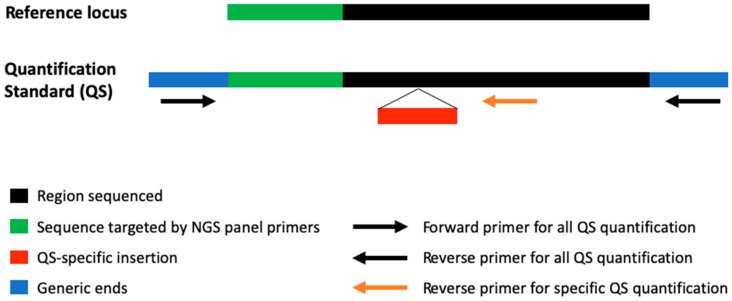 Figure 1
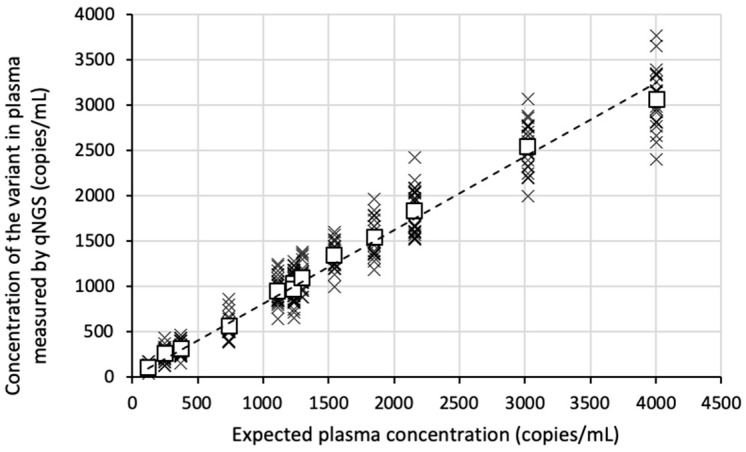 Figure 2
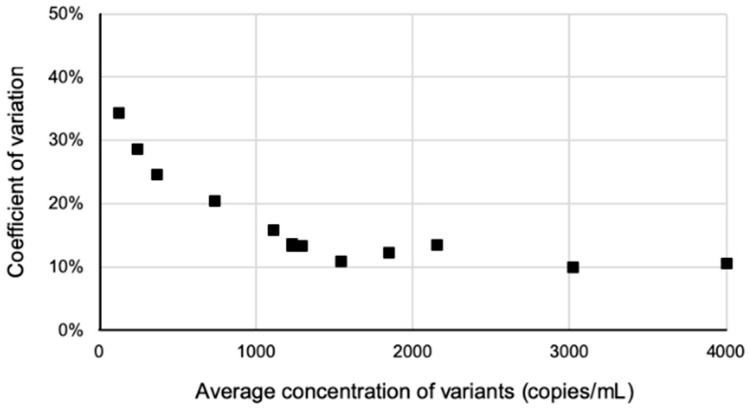 Figure 3
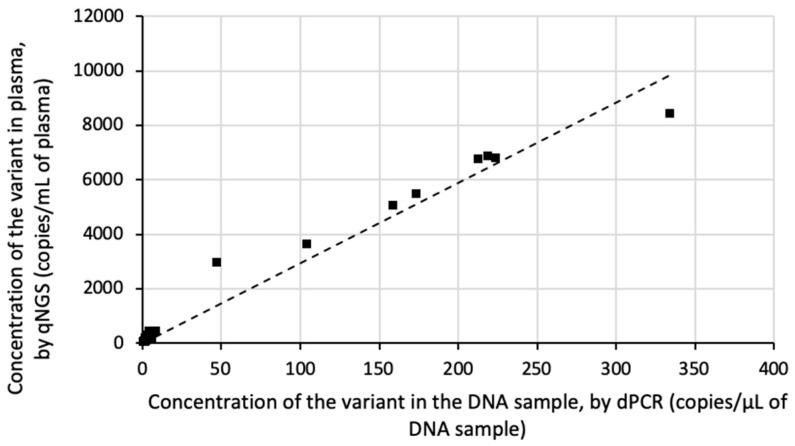 Figure 4
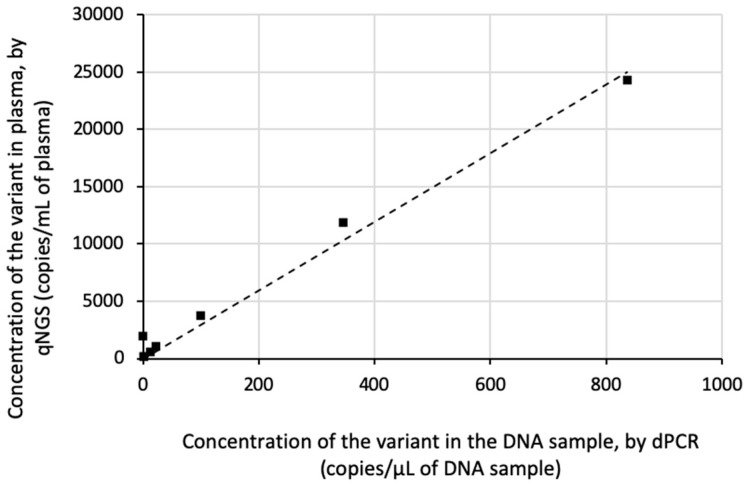 Figure 5
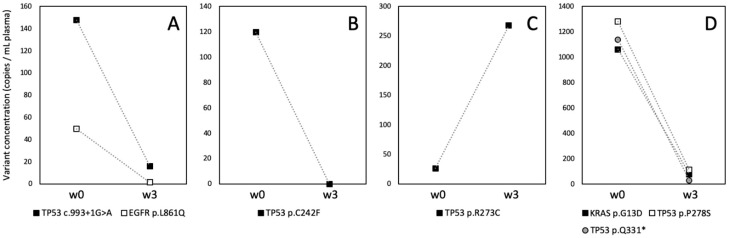 Figure 6
Peer Reviews
No public reviews on file for this paper yet. If you reviewed it on a platform where reviews are public (OpenReview, ICLR, NeurIPS, ICML), you can paste yours below so the community can read it here.
Videos
No videos yet. Explain this paper in a talk, walkthrough, or lecture? Add one.
Taxonomy
TopicsCancer Genomics and Diagnostics · Molecular Biology Techniques and Applications · CRISPR and Genetic Engineering