Immunohistochemical Characterization of Feline Giant Cell Tumor of Bone (GCTb): What We Know and What We Can Learn from the Human Counterpart
Ilaria Porcellato, Giuseppe Giglia, Leonardo Leonardi

TL;DR
This study compares feline and human giant cell tumors of bone, revealing similar immunohistochemical features and highlighting the need for better diagnostic criteria in veterinary medicine.
Contribution
The study provides the first immunohistochemical characterization of feline GCTb, showing similarities to the human form and emphasizing the importance of further research in veterinary medicine.
Findings
Multinucleated giant cells in feline GCTb are positive for Iba1, TRAP, and RANK, indicating an osteoclastic origin.
Mononuclear cells in feline GCTb show positivity for osteoblast markers like RUNX2, SATB2, and KPNA-2.
Diagnostic criteria for GCTb in cats are currently lacking, but this study enhances understanding for improved diagnosis.
Abstract
Giant cell tumor of bone (GCTb) is a benign tumor in human medicine, still, in veterinary medicine, where it is more commonly described in cats, its recognition and diagnosis are still a challenge. With this study, we provide new insights into the histological and immunohistochemical phenotype of the tumor, confirming similarity with the human tumor, and encouraging further studies on this neoplastic entity also in our pets. Giant cell tumor of bone (GCTb), formerly also known as osteoclastoma, is a pathological entity that in veterinary medicine is still undefined and, probably, underdiagnosed. In humans, GCTb is recognized as a primary benign bone tumor, locally aggressive, with high local recurrence rates, with controversial histogenesis that can rarely progress or present as a malignant form. In pets, this tumor is still considered rare, though the possibility of underdiagnosis is…
Genes, proteins, chemicals, diseases, species, mutations and cell lines named across the full text — each resolved to its canonical identifier and authoritative record.
Click any figure to enlarge with its caption.
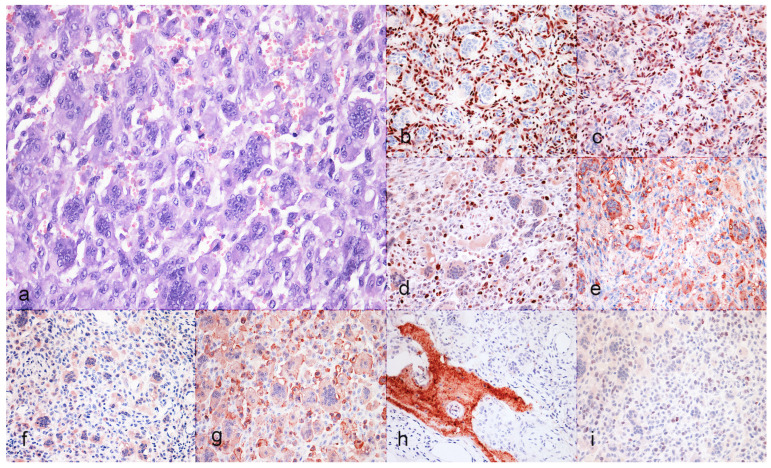 Figure 1
Peer Reviews
No public reviews on file for this paper yet. If you reviewed it on a platform where reviews are public (OpenReview, ICLR, NeurIPS, ICML), you can paste yours below so the community can read it here.
Videos
No videos yet. Explain this paper in a talk, walkthrough, or lecture? Add one.
Taxonomy
TopicsBone Tumor Diagnosis and Treatments · Sarcoma Diagnosis and Treatment · Oral and Maxillofacial Pathology