Aberrant Expression Levels of Androgen Receptor and SRD5A2 in Epididymal Epithelial Cells of Crossbred Infertile Cattle–Yak
Manita Wittayarat, Kimika Kawanishi, Haruka Ohata, Megumi Nagahara, Rentsenkhand Sambuu, Otgonjargal Sambuu, Maki Hirata, Fuminori Tanihara, Masayasu Taniguchi, Takeshige Otoi, Yoko Sato

TL;DR
This study finds that infertility in hybrid cattle–yaks may be caused by lower levels of SRD5A2 in the epididymis, not AR deficiency.
Contribution
The study identifies SRD5A2 deficiency in hybrid cattle–yaks as a potential cause of infertility, distinct from AR expression.
Findings
AR signal intensity was higher in hybrid cattle–yaks compared to yaks, ruling out AR deficiency as a cause of infertility.
SRD5A2 signal intensity was lower in hybrid cattle–yaks, suggesting a disruption in androgen signaling and sperm maturation.
Stable AR and SRD5A2 levels in yaks indicate normal epididymal function in fertile animals.
Abstract
This study explores the infertility observed in hybrid male cattle–yaks, focusing on the roles of the androgen receptor (AR) and 5α-reductase isoform 2 (SRD5A2) in the epididymis. Although both species belong to the same subfamily and share chromosome numbers, hybrid males are sterile due to abnormalities in sperm production. Recent analyses of gene expression in both the testis and epididymis have provided insights into the mechanisms underlying this infertility. The maturation of sperm, which is crucial for fertilisation, is believed to be dependent on androgens, with the AR being activated by dihydrotestosterone, a derivative of testosterone processed by SRD5A2 in epididymal cells. This research involved comparing the immuno-expression levels of the AR and SRD5A2 in the epididymal caput of yaks and hybrid cattle–yaks. The findings revealed that in yaks, AR signal intensity remained…
Genes, proteins, chemicals, diseases, species, mutations and cell lines named across the full text — each resolved to its canonical identifier and authoritative record.
Click any figure to enlarge with its caption.
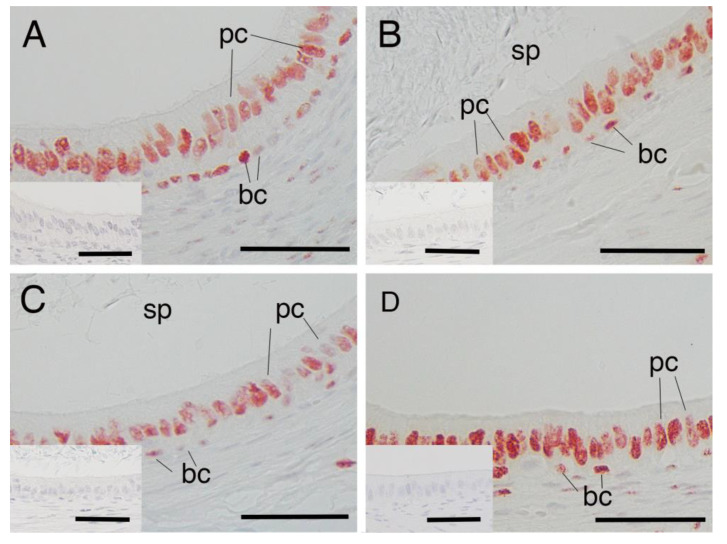 Figure 1
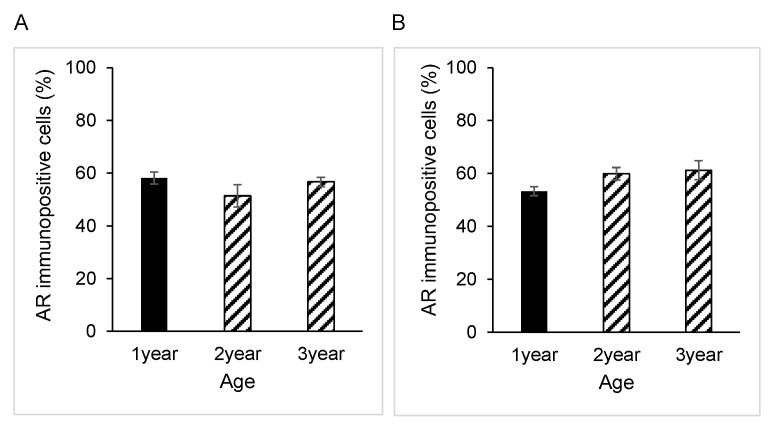 Figure 2
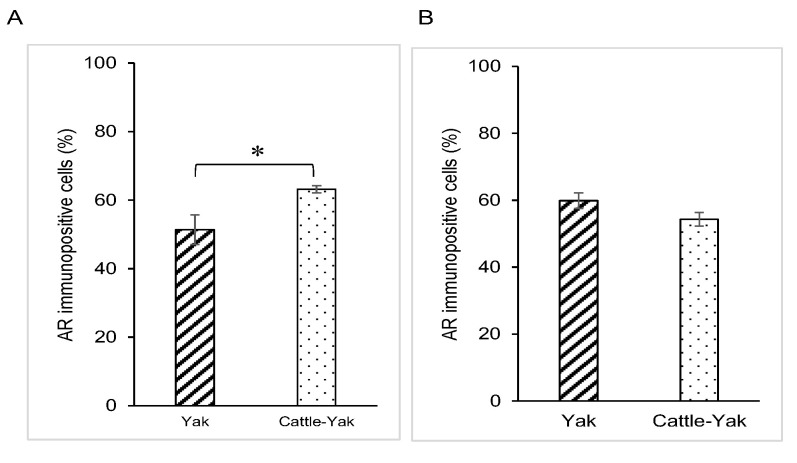 Figure 3
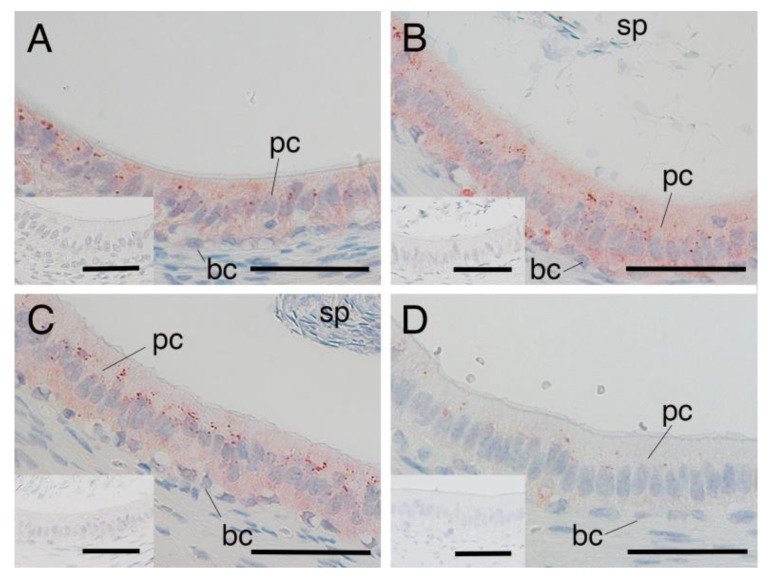 Figure 4
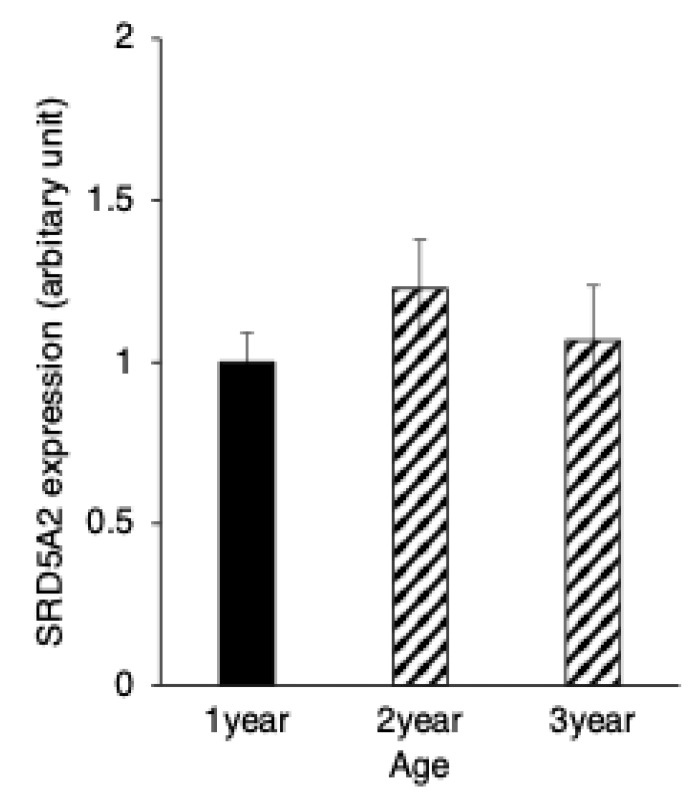 Figure 5
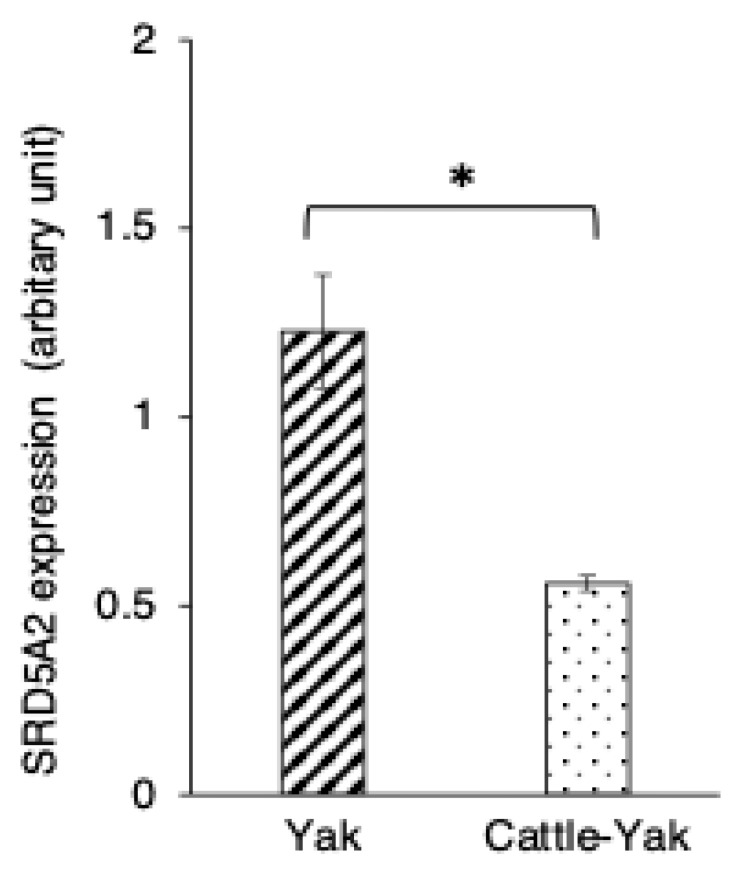 Figure 6
Peer Reviews
No public reviews on file for this paper yet. If you reviewed it on a platform where reviews are public (OpenReview, ICLR, NeurIPS, ICML), you can paste yours below so the community can read it here.
Videos
No videos yet. Explain this paper in a talk, walkthrough, or lecture? Add one.
Taxonomy
TopicsReproductive Biology and Fertility · Cancer-related molecular mechanisms research · Genetic and phenotypic traits in livestock