Diagnosis of Primary Trimethylaminuria in an Affected Patient With a Rare Genotype in Sub‐Saharan Africa
M. Dercksen, M. Perumal, E. Davoren, D. R. Reed, C. Murry‐Maritz, R. van der Sluis, S. Mason

TL;DR
This paper reports the first case of primary trimethylaminuria in sub-Saharan Africa, using biochemical and genetic tests to confirm the diagnosis and highlight the importance of accurate diagnosis for emotional well-being.
Contribution
The study reports the first primary trimethylaminuria case in sub-Saharan Africa with a novel homozygous genotype.
Findings
A direct TMA loading protocol combined with 1H-NMR spectrometry confirmed impaired FMO3 activity in the patient.
Genetic analysis revealed a homozygous missense variant c.23T>C (p.Ile8Thr) and two known variants in the FMO3 gene.
The combined biochemical and genetic approach helped distinguish primary from secondary trimethylaminuria.
Abstract
Primary trimethylaminuria (TMAU) is characterized by systemic accumulation of trimethylamine (TMA) due to the deficient activity of flavin‐containing monooxygenase 3 (FMO3). The disorder does not have detrimental pathophysiological consequences, but patients develop psychological symptoms due to the emotionally debilitating bodily odor defined as decaying fish that affects their quality of life. Here, we illustrate the utility of a diagnostic workup on an adolescent with primary TMAU, including biochemical and genetic investigations that confirm the diagnosis. A direct substrate (TMA) loading protocol was used, followed by the collection of urine samples at predetermined intervals. The conversion of TMA to trimethylamine oxide (TMAO), monitored by 1H‐NMR spectrometry, showed a compromised FMO3 metabolic capacity at baseline, becoming more pronounced after loading commenced. The eight…
Genes, proteins, chemicals, diseases, species, mutations and cell lines named across the full text — each resolved to its canonical identifier and authoritative record.
Click any figure to enlarge with its caption.
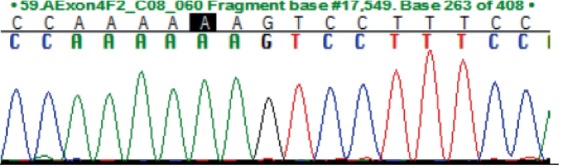 Figure 1
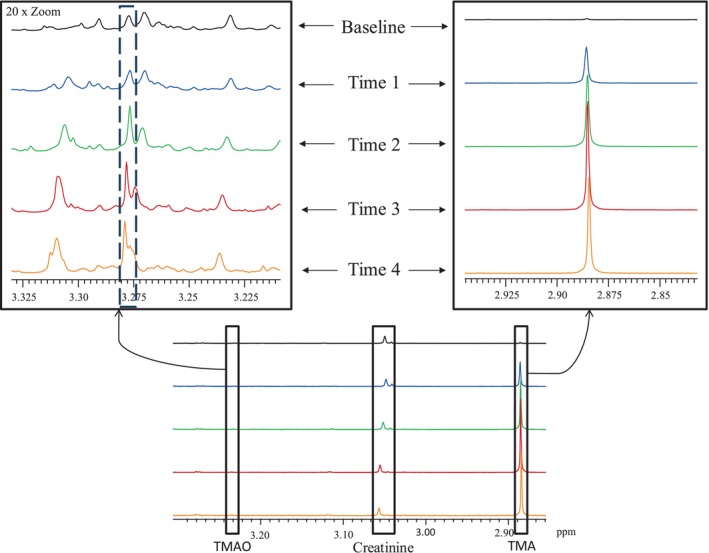 Figure 2
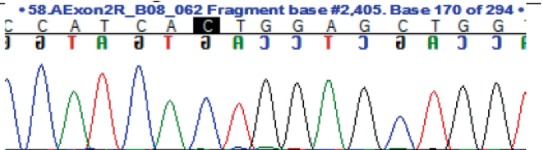 Figure 3
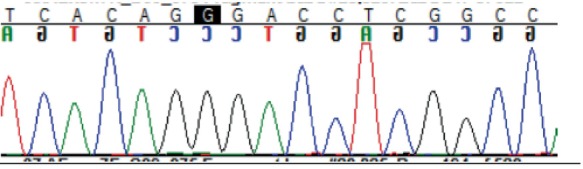 Figure 4
Peer Reviews
No public reviews on file for this paper yet. If you reviewed it on a platform where reviews are public (OpenReview, ICLR, NeurIPS, ICML), you can paste yours below so the community can read it here.
Videos
No videos yet. Explain this paper in a talk, walkthrough, or lecture? Add one.
Taxonomy
TopicsMetabolism and Genetic Disorders · Metabolomics and Mass Spectrometry Studies · Amino Acid Enzymes and Metabolism