Coordination in strictly metric-free swarms: evidence for the existence of biological diversity
Y. N. Jia, Y. Guo, W. L. Zhang

TL;DR
This study explores how biological diversity influences coordination in swarms without relying on distance metrics.
Contribution
The study introduces a new hierarchical metric-free model optimized with differential evolution to explore coordination in swarms.
Findings
Larger groups require subtler leadership gradients for coordination compared to smaller groups.
High coordination can be achieved without global perspective if the visual angle is at least 105 degrees.
Multi-layered frameworks with stochastic components outperform traditional models in coordination efficiency.
Abstract
Coordination serves as a crucial metric for analysing collective behaviour in complex systems. Given the prevalence of biological diversity, this study re-evaluated the coordination issue in strictly metric-free (SMF) swarms, incorporating both limited perceptual ranges and hierarchical dynamics. Initially, the study introduced a single-layer hierarchical SMF model that was optimized using differential evolution strategies. Our empirical findings suggest that the leader–follower set-up marginally enhances coordination uniformity, with larger groups requiring a subtler leadership gradient than smaller groups. In addition, a global perspective may not be necessary for effective swarming because a high level of coordination and consistency can be achieved regardless of the population size, as long as the visual angle is not less than 105∘. Furthermore, we examine how varying leadership…
Genes, proteins, chemicals, diseases, species, mutations and cell lines named across the full text — each resolved to its canonical identifier and authoritative record.
Click any figure to enlarge with its caption.
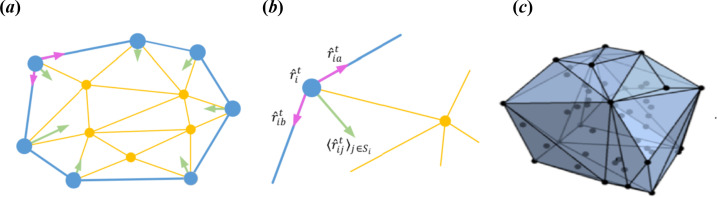 Figure 1
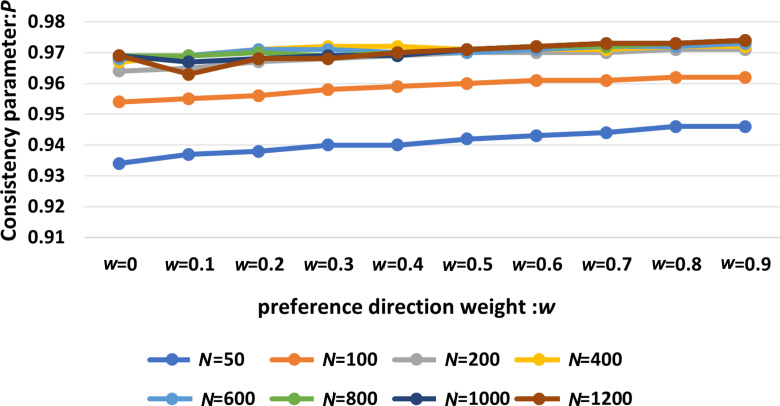 Figure 2
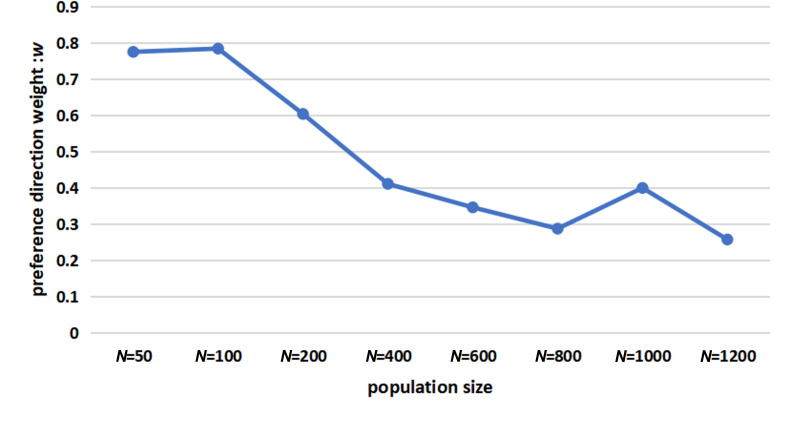 Figure 3
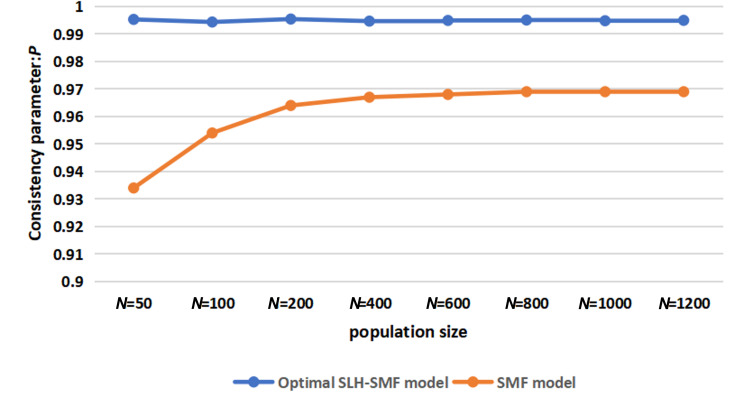 Figure 4
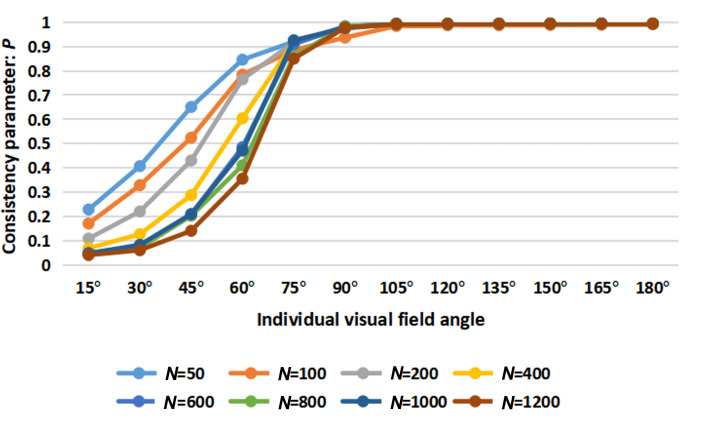 Figure 5
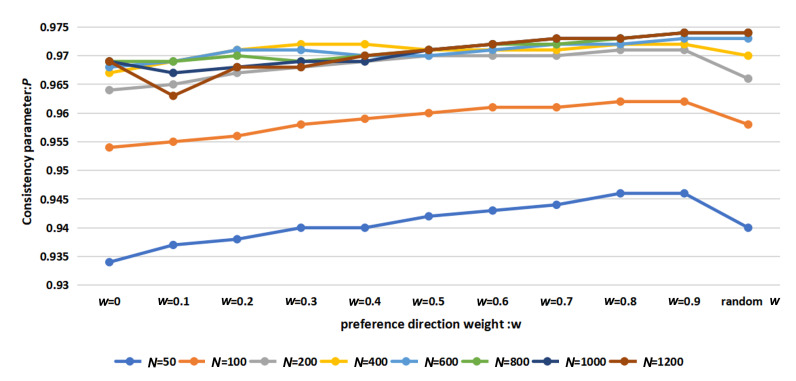 Figure 6
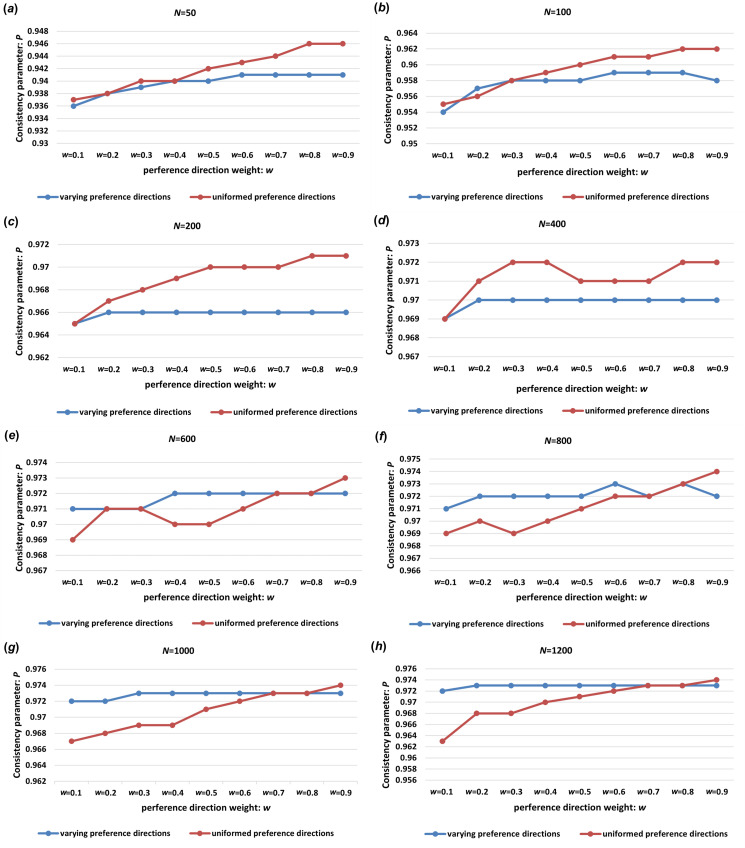 Figure 7
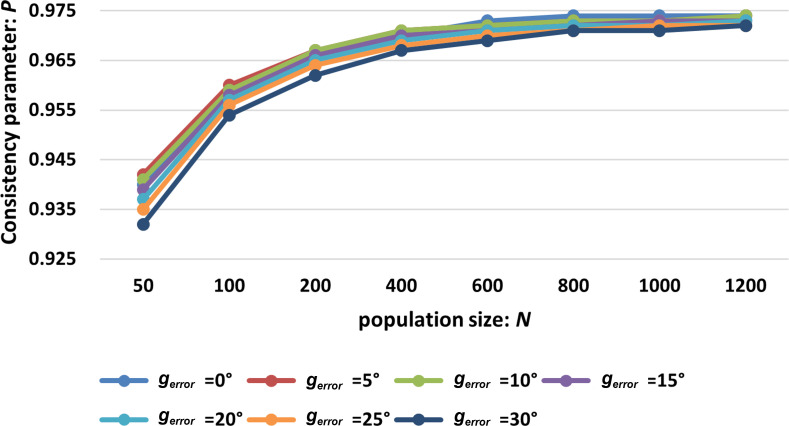 Figure 8
Peer Reviews
No public reviews on file for this paper yet. If you reviewed it on a platform where reviews are public (OpenReview, ICLR, NeurIPS, ICML), you can paste yours below so the community can read it here.
Videos
No videos yet. Explain this paper in a talk, walkthrough, or lecture? Add one.
Taxonomy
TopicsAnimal Behavior and Reproduction · Evolutionary Game Theory and Cooperation · Distributed Control Multi-Agent Systems