How a patient-led advocacy organization supports the road to diagnosis and treatment of creatine transporter deficiency
Heidi Wallis, Sangeetha Iyer, Emily K. Reinhardt

TL;DR
A patient-led organization is driving progress in diagnosing and treating rare creatine deficiency disorders by uniting caregivers, researchers, and industry partners.
Contribution
The paper highlights a patient advocacy organization's role in accelerating diagnosis, therapeutic development, and clinical trial readiness for ultra-rare diseases.
Findings
The organization has advanced diagnosis and created collaborative research and patient data resources.
It has invested in multiple therapeutic approaches and aims to enable newborn screening for early detection.
The unified CCDS community benefits from shared progress across related disorders.
Abstract
The current era of drug development has evolved significantly. Patient advocacy organizations are moving beyond simply supporting community members and are taking the reins to improve the speed of diagnoses, initiate therapeutic discoveries, and lay the groundwork to ensure successful clinical trials. The Association for Creatine Deficiencies (ACD) is an international parent-led patient advocacy organization focused on the three ultra-rare neurodevelopmental monogenic disorders resulting in Cerebral Creatine Deficiency Syndromes (CCDS). These include X-linked creatine transporter deficiency (CTD), guanidinoacetate methyltransferase (GAMT) deficiency, and l-arginine:glycine amidinotransferase (AGAT) deficiency. While each is rare in its own right, the unified CCDS community is effectively advancing the field of CCDS with each disorder benefiting from progress made in the other two…
Genes, proteins, chemicals, diseases, species, mutations and cell lines named across the full text — each resolved to its canonical identifier and authoritative record.
Click any figure to enlarge with its caption.
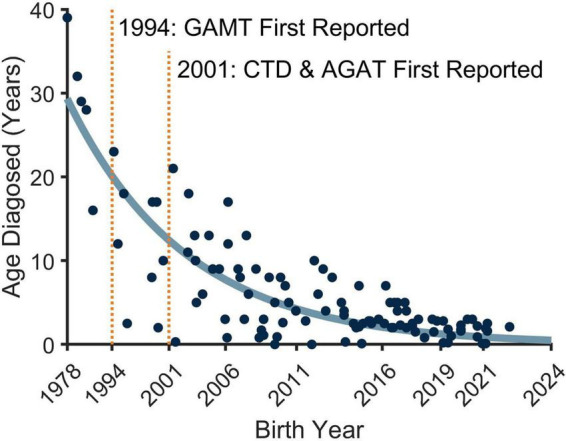 Figure 1
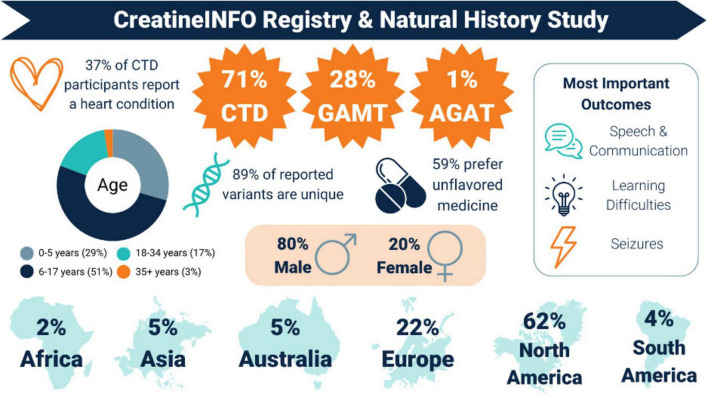 Figure 2
Peer Reviews
No public reviews on file for this paper yet. If you reviewed it on a platform where reviews are public (OpenReview, ICLR, NeurIPS, ICML), you can paste yours below so the community can read it here.
Videos
No videos yet. Explain this paper in a talk, walkthrough, or lecture? Add one.
Taxonomy
TopicsBiochemical and Molecular Research · Muscle metabolism and nutrition · Metabolism and Genetic Disorders