A Novel Variant of the FERMT3 Gene Associated With Leukocyte Adhesion Deficiency Type III (LAD-III) in a Saudi Family: A Case Series
Badriah G Alasmari, Somayah A Alghubishi, Syed Rayees, Arwa S AlDahmashi, Sami S Alamri, Daifulah AL Zahrani

TL;DR
A new mutation in the FERMT3 gene was found in a Saudi family, causing immune and bleeding issues across two generations.
Contribution
A novel homozygous FERMT3 gene mutation is identified as the cause of LAD-III in a consanguineous Saudi family.
Findings
A novel homozygous FERMT3 mutation (c.1683-22_1683-19del) was identified in multiple affected family members.
Clinical symptoms included ecchymosis, sepsis, and thrombocytopenia, consistent with LAD-III.
Whole exome sequencing confirmed the FERMT3 mutation in the proband and his relatives.
Abstract
Leukocyte adhesion deficiency type III (LAD-III) is a rare autosomal recessive disorder characterized by immune dysfunction and bleeding tendencies. The condition arises from mutations in the FERMT3 gene, which disrupts integrin activation on leukocytes and platelets. This case study focuses on a family with consanguineous parents and multiple affected individuals spanning two generations, all diagnosed with LAD-III due to a novel homozygous mutation in the FERMT3 gene (c.1683-22_1683-19del). Clinical manifestations ranged from mild ecchymosis to severe bleeding necessitating transfusions. The proband, a two-year-old male child, presented with recurrent ecchymosis, neonatal sepsis, and thrombocytopenia. His laboratory results included leukocytosis and microcytic hypochromic anemia with normal coagulation profiles. The diagnosis of LAD-III was confirmed through whole exome sequencing…
Genes, proteins, chemicals, diseases, species, mutations and cell lines named across the full text — each resolved to its canonical identifier and authoritative record.
Click any figure to enlarge with its caption.
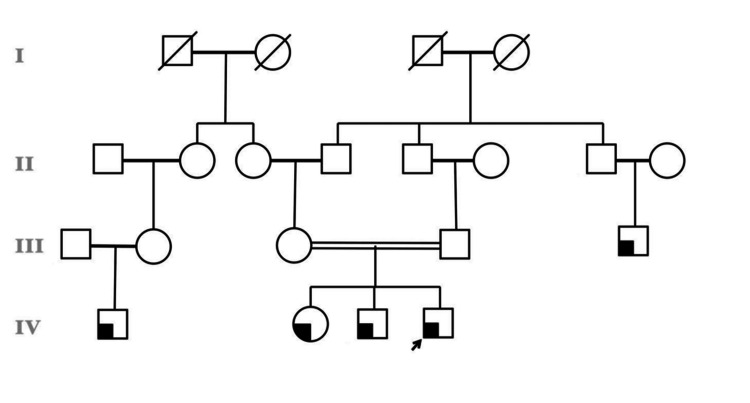 Figure 1
Peer Reviews
No public reviews on file for this paper yet. If you reviewed it on a platform where reviews are public (OpenReview, ICLR, NeurIPS, ICML), you can paste yours below so the community can read it here.
Videos
No videos yet. Explain this paper in a talk, walkthrough, or lecture? Add one.
Taxonomy
TopicsBlood disorders and treatments · Immunodeficiency and Autoimmune Disorders · Platelet Disorders and Treatments