Synthesis of the aggregation pheromone of Tribolium castaneum
Biyu An, Xueyang Wang, Ao Jiao, Qinghua Bian, Jiangchun Zhong

TL;DR
Scientists developed a new method to synthesize the aggregation pheromone of the red flour beetle, which could help in pest control.
Contribution
A novel synthetic strategy for the aggregation pheromone of Tribolium castaneum is introduced.
Findings
A new synthesis method involving ring-opening and stereospecific inversion was developed.
The pheromone was successfully synthesized using Li2CuCl4-catalyzed coupling and oxidation.
The method is effective for preparing the aggregation pheromone of Tribolium castaneum.
Abstract
Tribolium castaneum Herbst is a destructive stored product pest. The aggregation pheromone of this pest was prepared via a new and effective strategy. The key steps include the ring-opening reaction of chiral 2-methyloxirane, the stereospecific inversion of chiral secondary tosylate, Li2CuCl4-catalyzed coupling of tosylate with Grignard reagent, and oxidation with RuCl3/NaIO4.
Genes, proteins, chemicals, diseases, species, mutations and cell lines named across the full text — each resolved to its canonical identifier and authoritative record.
Click any figure to enlarge with its caption.
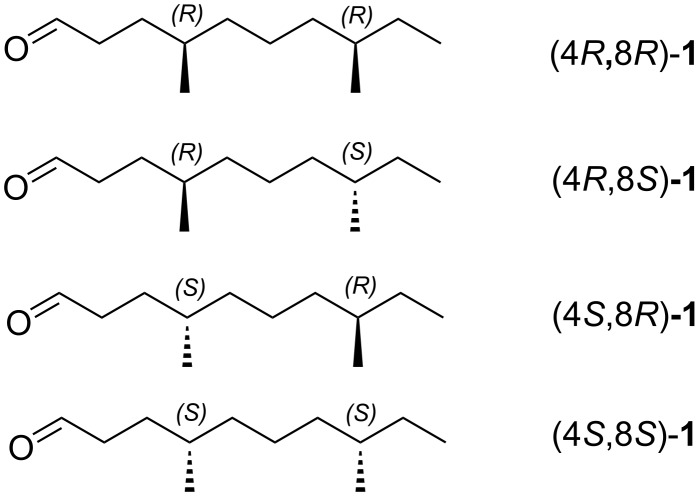 Figure 1
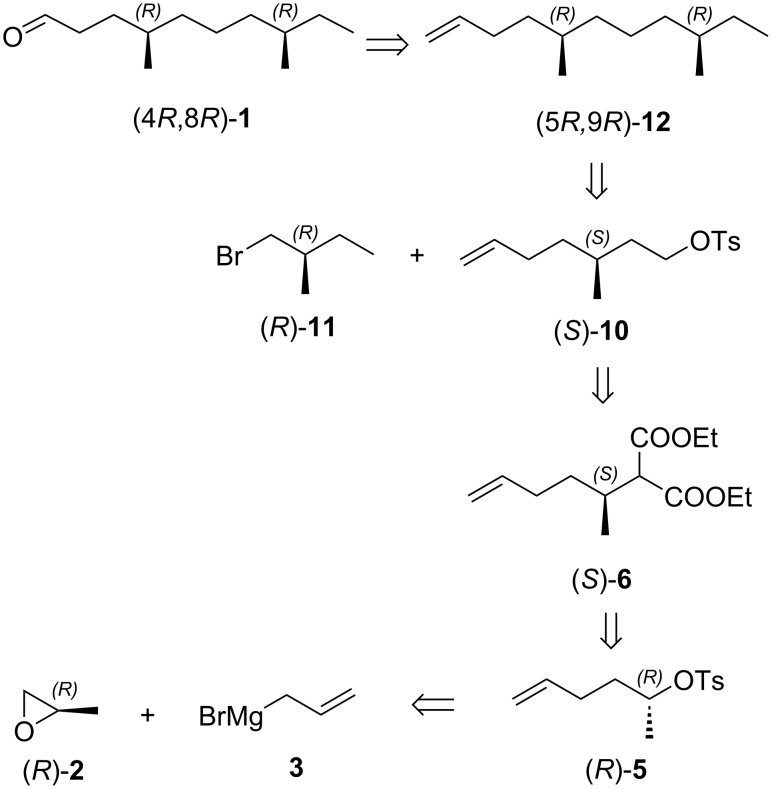 Figure 2
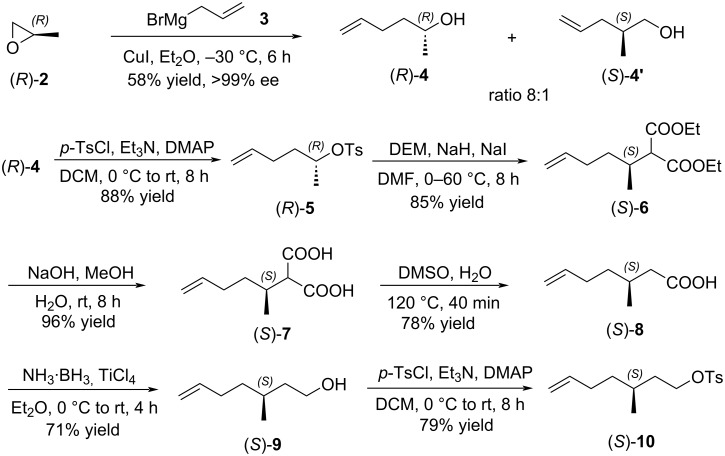 Figure 3
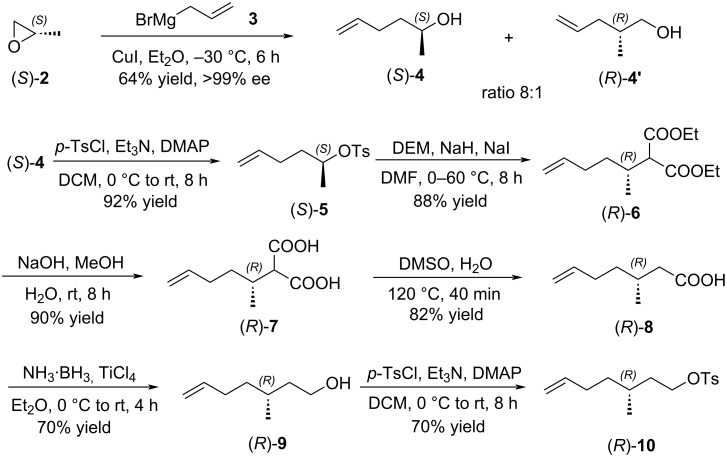 Figure 4
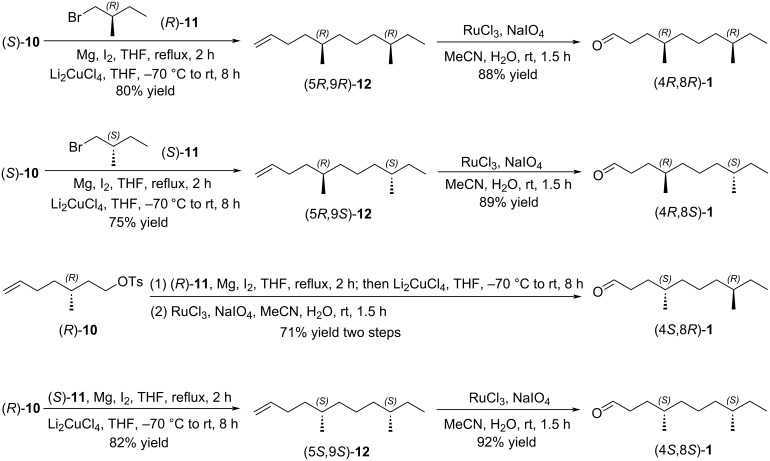 Figure 5
Peer Reviews
No public reviews on file for this paper yet. If you reviewed it on a platform where reviews are public (OpenReview, ICLR, NeurIPS, ICML), you can paste yours below so the community can read it here.
Videos
No videos yet. Explain this paper in a talk, walkthrough, or lecture? Add one.
Taxonomy
TopicsInsect Pheromone Research and Control · Insect and Pesticide Research · Insect Pest Control Strategies