Acetate and propionate vs. iTBS as a novel method for cognitive dysfunction and anxiety symptoms in delayed encephalopathy after acute carbon monoxide poisoning rat
Tianyu Meng, Xin Zhang, Jili Zhao, Hui Xue, Lehua Yu

TL;DR
This study compares the effectiveness of intermittent theta burst stimulation and short-chain fatty acids in treating cognitive and anxiety symptoms in rats with delayed encephalopathy after carbon monoxide poisoning.
Contribution
The study introduces a novel comparison of iTBS and SCFAs (acetate and propionate) for treating DEACMP symptoms.
Findings
Both iTBS and SCFAs significantly improved cognitive dysfunction and anxiety symptoms in DEACMP rats.
SCFAs also improved decreased levels of GPR41, GPR43, dopamine, and norepinephrine in the hippocampus.
The acetate/propionate–GPR41/GPR43–IL-1β/IL-6/TNF-α–dopamine/norepinephrine pathway may be a potential treatment mechanism for DEACMP.
Abstract
The optimal treatment methods for delayed encephalopathy after acute carbon monoxide (CO) poisoning (DEACMP) were not identified. Thus, this study was conducted to compare the efficacies of intermittent theta burst stimulation (iTBS) and short-chain fatty acids (SCFAs) in treating cognitive dysfunction and anxiety symptoms of DEACMP rat. In phase I, a DEACMP rat model was built to assess the inflammation levels in the hippocampus and levels of SCFAs in the serum of DEACMP rats. In phase II, DEACMP rats were randomly assigned into four groups: DEACMP + placebo, DEACMP + SCFAs, DEACMP + sham iTBS, and DEACMP + iTBS. The intervention was continued for 2 weeks. A Morris water maze and open field tests were used to assess cognitive function and anxiety symptoms, respectively. The levels of three inflammatory factors (IL-1β, IL-6, and TNF-α) and two SCFAs (acetate and propionate) were…
Genes, proteins, chemicals, diseases, species, mutations and cell lines named across the full text — each resolved to its canonical identifier and authoritative record.
Click any figure to enlarge with its caption.
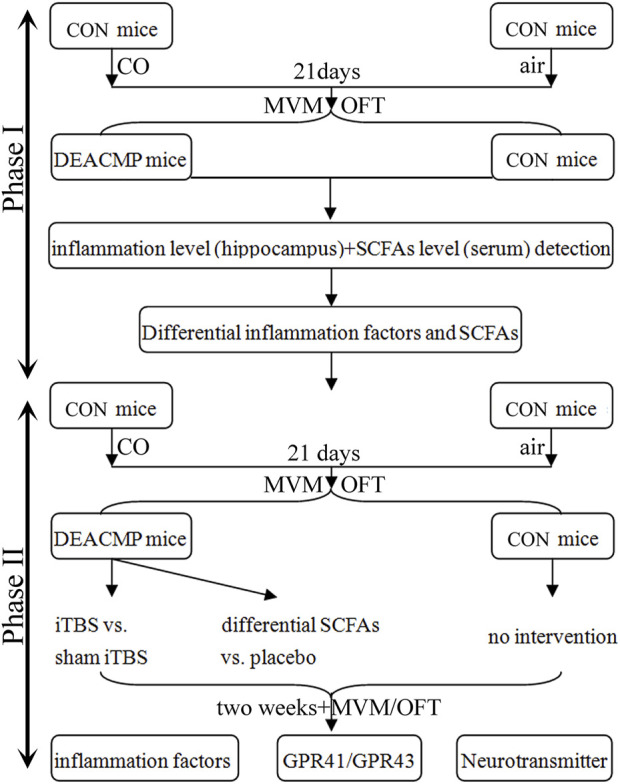 Figure 1
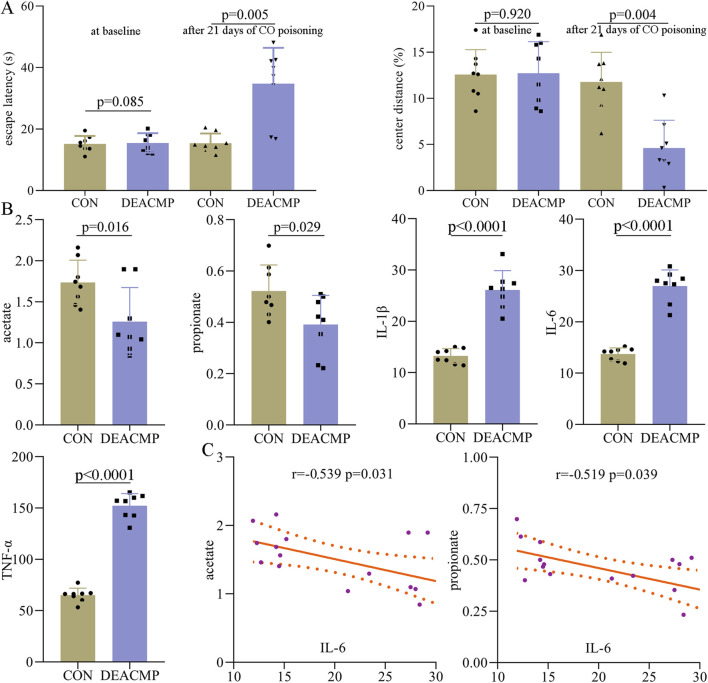 Figure 2
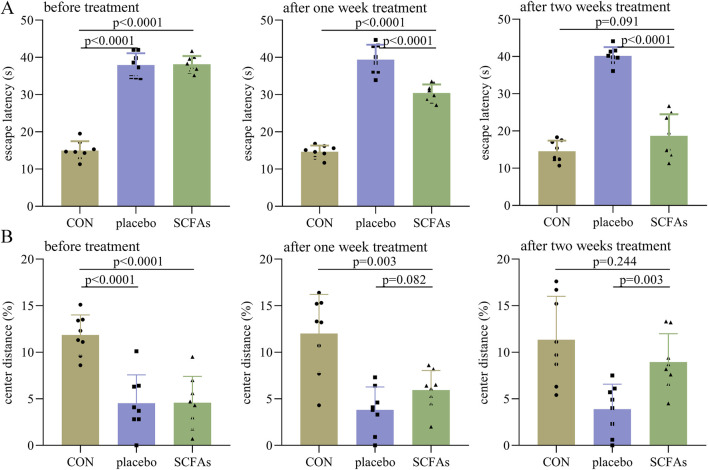 Figure 3
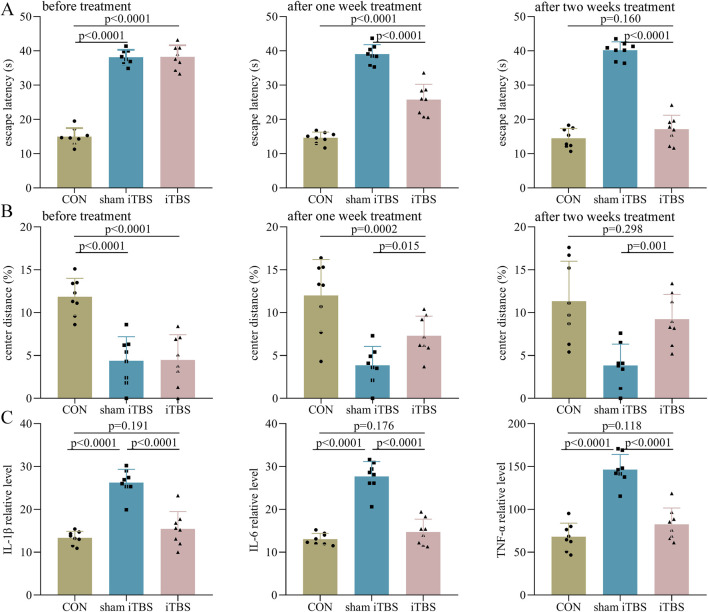 Figure 4
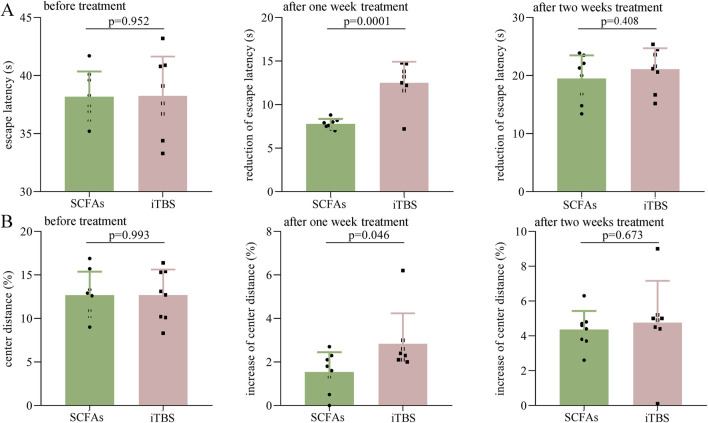 Figure 5
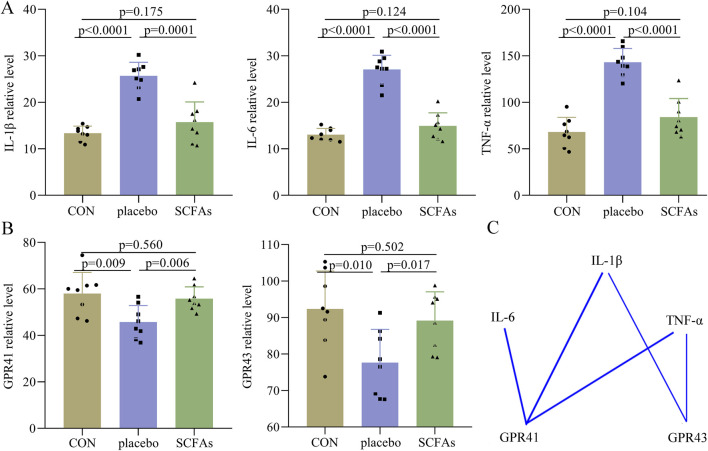 Figure 6
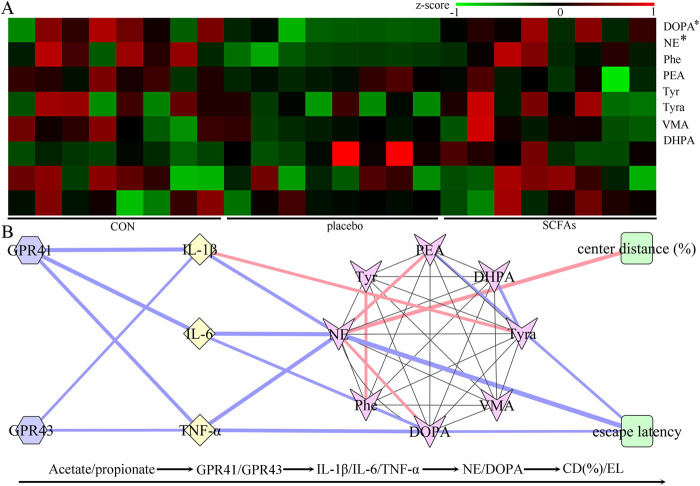 Figure 7
Peer Reviews
No public reviews on file for this paper yet. If you reviewed it on a platform where reviews are public (OpenReview, ICLR, NeurIPS, ICML), you can paste yours below so the community can read it here.
Videos
No videos yet. Explain this paper in a talk, walkthrough, or lecture? Add one.
Taxonomy
TopicsHeme Oxygenase-1 and Carbon Monoxide · Neuroscience of respiration and sleep · Neonatal Health and Biochemistry