The DEAD-box helicase eIF4A1/2 acts as RNA chaperone during mitotic exit enabling chromatin decondensation
Ramona Jühlen, Sabine C. Wiesmann, Anja Scheufen, Thilo Stausberg, Isabel Braun, Chantal Strobel, Carmen Llera-Brandt, Sabrina Rappold, Rabia Suluyayla, Marianna Tatarek-Nossol, Birgitt Lennartz, Hongqi Lue, Maximilian W. G. Schneider, Juan-Felipe Perez-Correa

TL;DR
The DEAD-box helicase eIF4A1/2 helps chromatin decondense during mitosis by acting as an RNA chaperone, regulating the perichromatin layer.
Contribution
eIF4A1/2's RNA chaperone role in chromatin decondensation during mitotic exit is newly identified.
Findings
eIF4A1/2 is crucial for chromatin decondensation in a cell-free assay.
eIF4A1/2 regulates the perichromatin layer's composition and fluidity.
Altering eIF4A1/2 levels affects the speed of chromatin decondensation.
Abstract
During mitosis, chromosomes condense and decondense to segregate faithfully and undamaged. The exact molecular mechanisms are not well understood. We identify the DEAD-box helicase eIF4A1/2 as a critical factor in this process. In a cell-free condensation assay eIF4A1/2 is crucial for this process, relying on its RNA-binding ability but not its ATPase activity. Reducing eIF4A1/2 levels in cells consistently slows down chromatin decondensation during nuclear reformation. Conversely, increasing eIF4A1/2 concentration on mitotic chromosomes accelerates their decondensation. The absence of eIF4A1/2 affects the perichromatin layer, which surrounds the chromosomes during mitosis and consists of RNA and mainly nucleolar proteins. In vitro, eIF4A1/2 acts as an RNA chaperone, dissociating biomolecular condensates of RNA and perichromatin proteins. During mitosis, the chaperone activity of…
Genes, proteins, chemicals, diseases, species, mutations and cell lines named across the full text — each resolved to its canonical identifier and authoritative record.
Click any figure to enlarge with its caption.
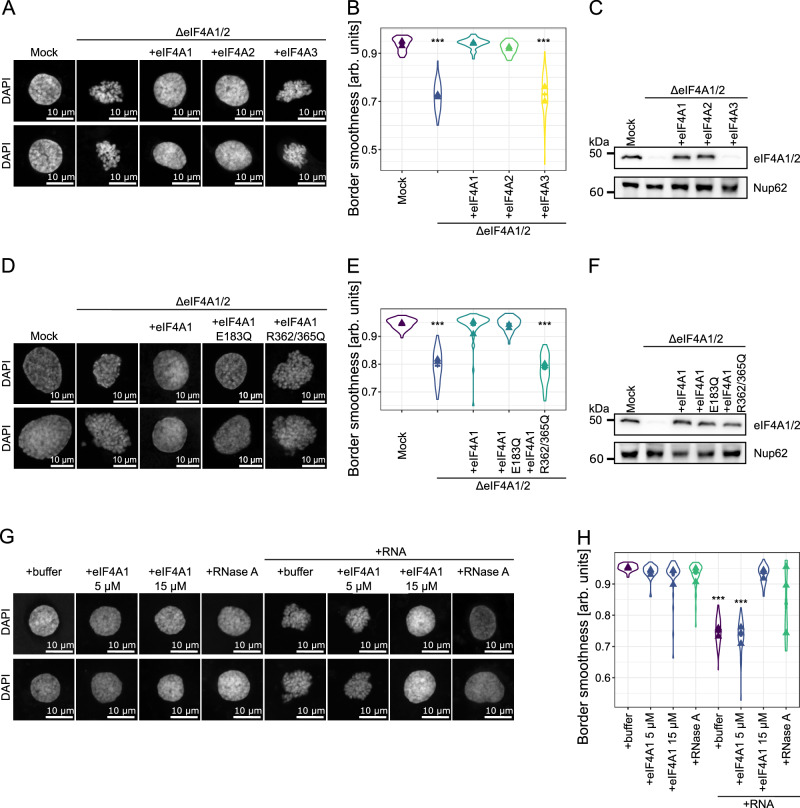 Figure 1
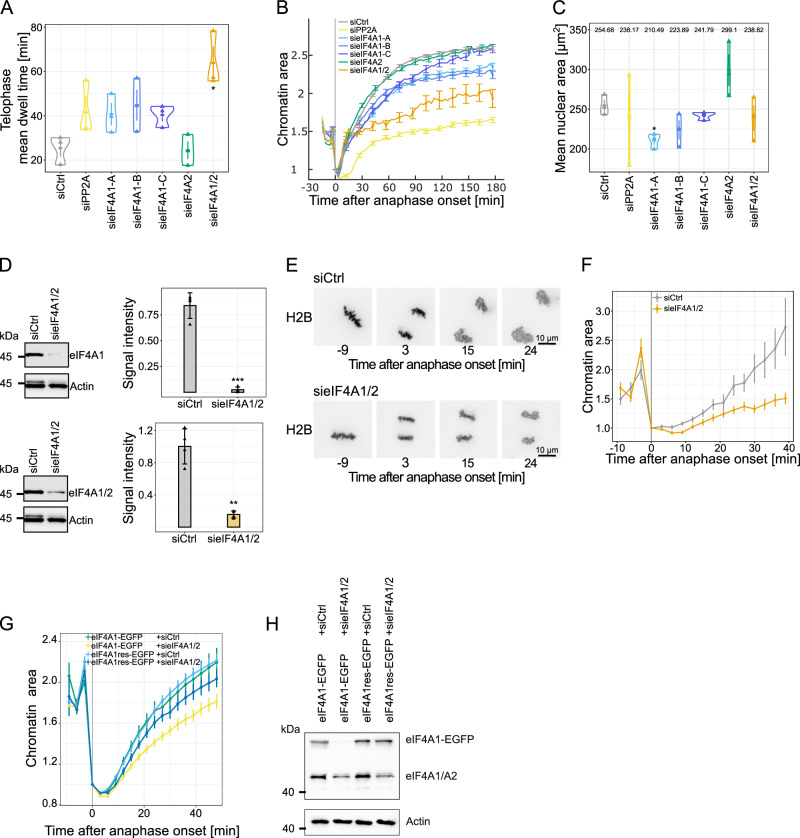 Figure 2
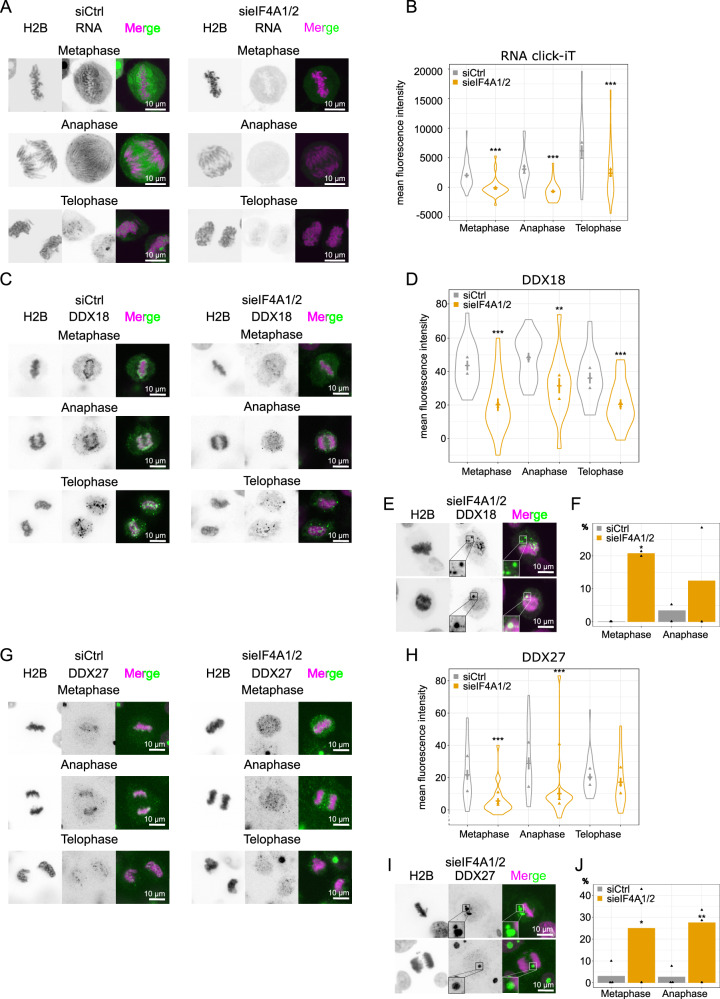 Figure 3
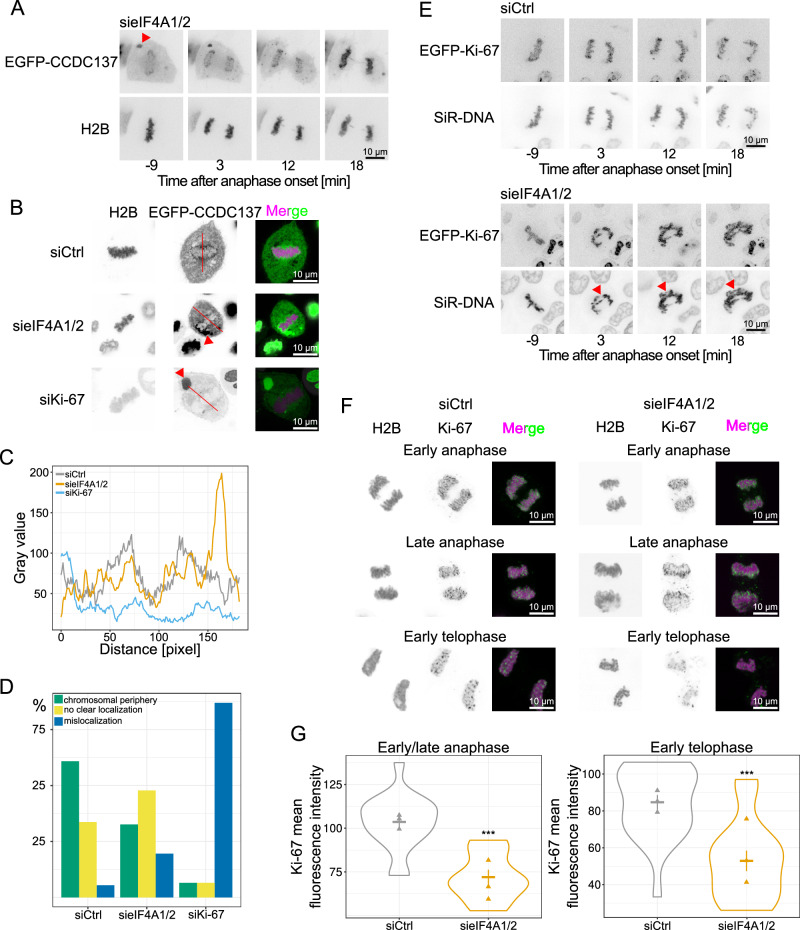 Figure 4
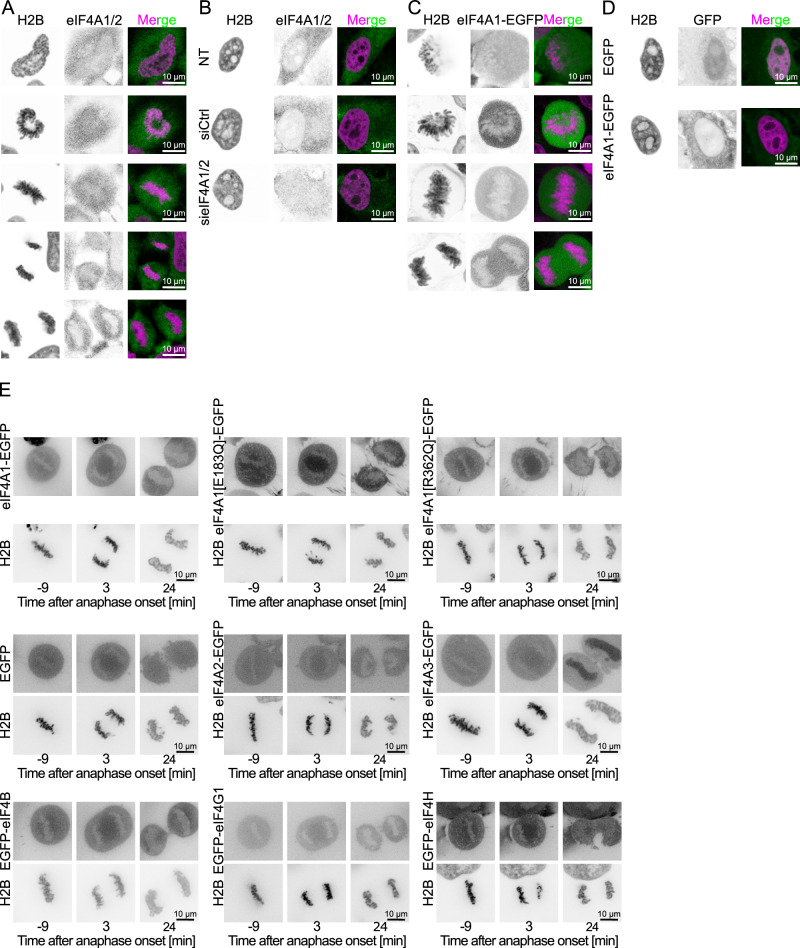 Figure 5
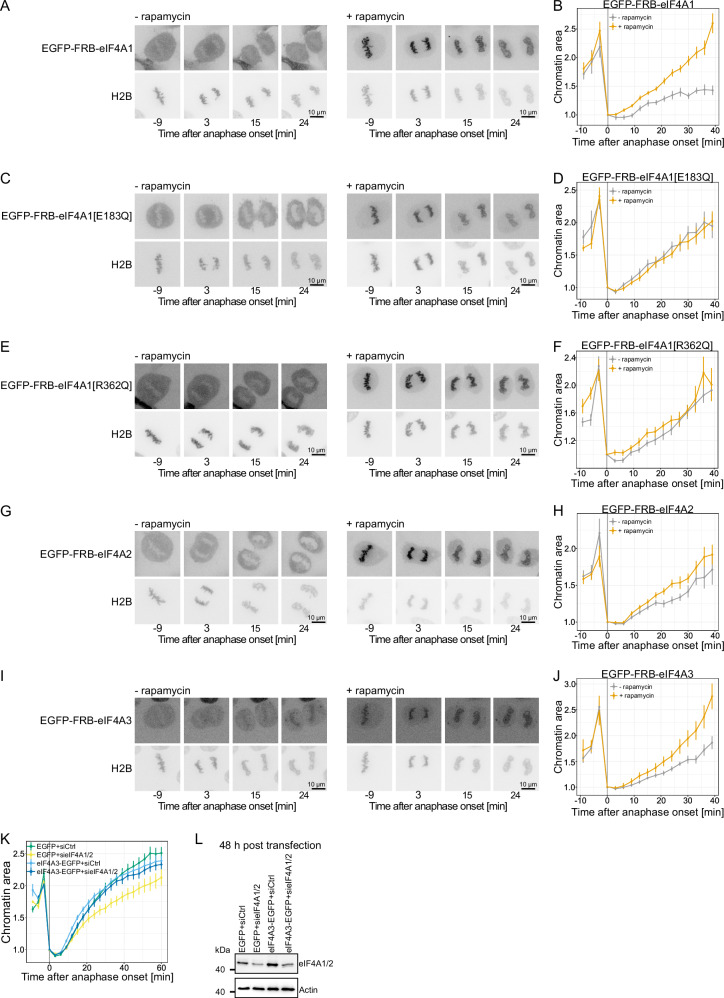 Figure 6
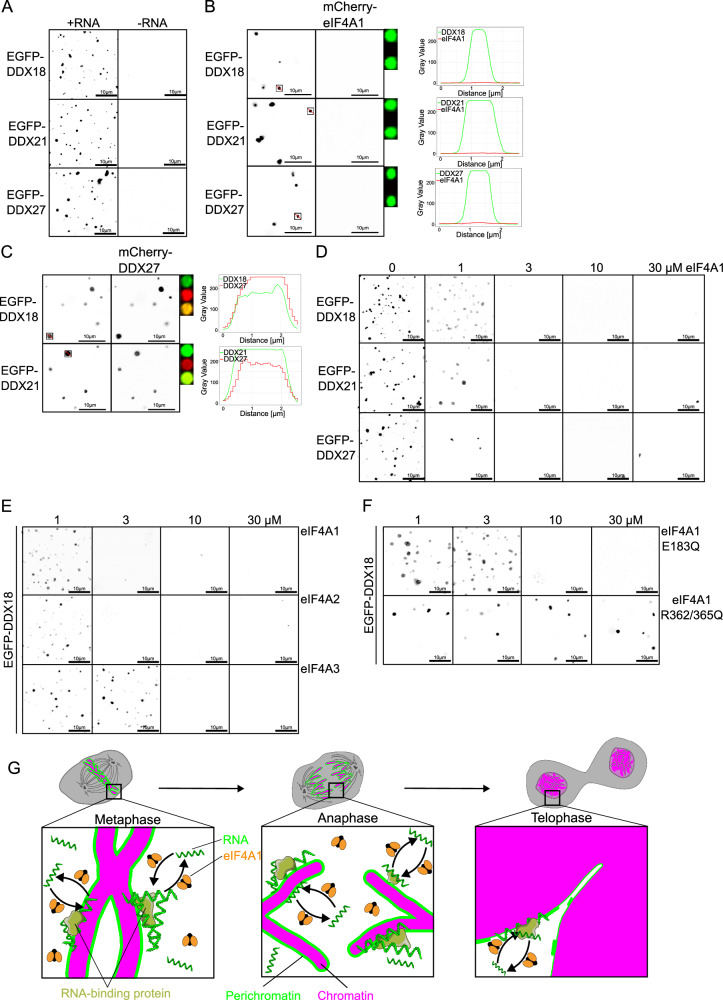 Figure 7
Peer Reviews
No public reviews on file for this paper yet. If you reviewed it on a platform where reviews are public (OpenReview, ICLR, NeurIPS, ICML), you can paste yours below so the community can read it here.
Videos
No videos yet. Explain this paper in a talk, walkthrough, or lecture? Add one.
Taxonomy
TopicsGenomics and Chromatin Dynamics · RNA Research and Splicing · Protein Degradation and Inhibitors