Morphosyntactic production and processing skills in relation to age effects and lexical-phonological levels among children with cochlear implants and typically hearing peers: a focus on vowel nasality
Sophie Fagniart, Brigitte Charlier, Véronique Delvaux, Bernard Georges Harmegnies, Anne Huberlant, Myriam Piccaluga, Kathy Huet

TL;DR
Children with cochlear implants show lower morphosyntactic skills compared to hearing peers, but differences disappear when accounting for auditory experience or language level.
Contribution
The study reveals how phonological accuracy and auditory experience influence morphosyntactic development in children with cochlear implants.
Findings
Children with CIs had lower morphosyntactic performance compared to hearing peers of the same age.
Differences disappeared when controlling for auditory age or phonological/lexical levels.
CI users showed distinct patterns in function word use and a strong link between MS skills and phonological accuracy.
Abstract
Significant variability in the language performance of children with cochlear implant (CI) is widely recognized in the literature, particularly concerning morphosyntactic (MS) skills. The perceptual limitations of the CI, which can lead to phonological difficulties, may be responsible for this increased vulnerability in grammatical abilities. In this context, the present study focuses on the morphophonemic processing of items distinguished by nasal and oral vowels in the French language – the feature of vowel nasality being known as challenging for the CI population. Links between these performances with chronological/auditory ages and phonological and grammatical production skills will also be explored. Nineteen children with CIs and 47 children with typical hearing (TH) were assessed for phonological skills through a picture-naming task, perceptual skills through a task involving the…
Genes, proteins, chemicals, diseases, species, mutations and cell lines named across the full text — each resolved to its canonical identifier and authoritative record.
Click any figure to enlarge with its caption.
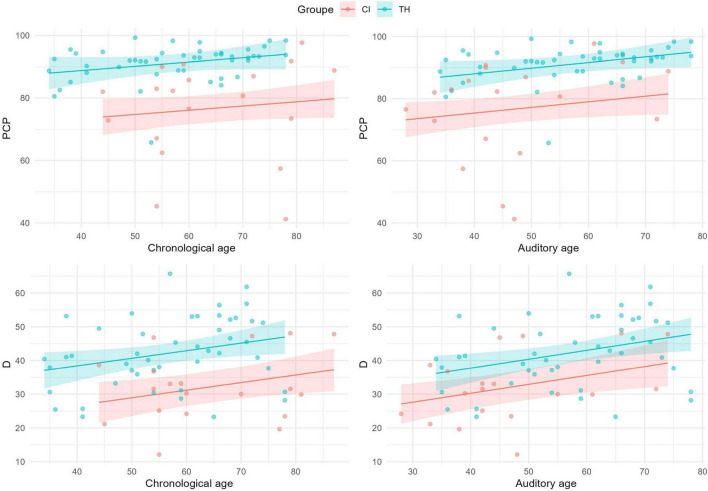 Figure 1
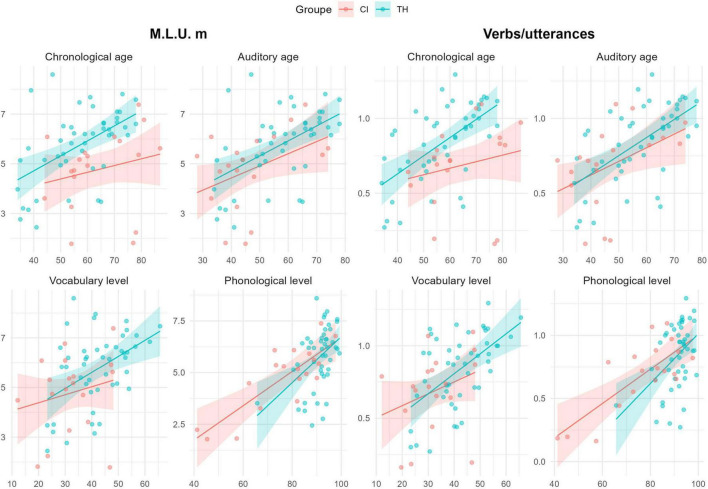 Figure 2
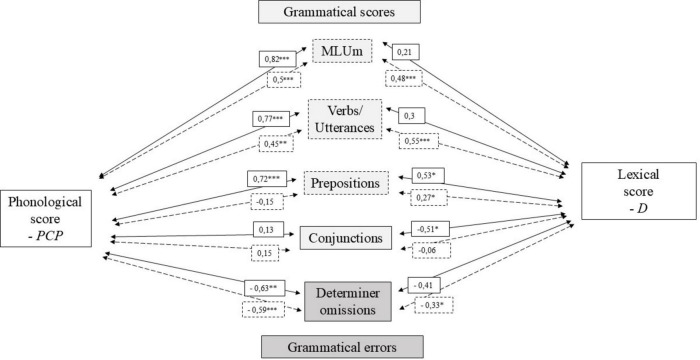 Figure 3
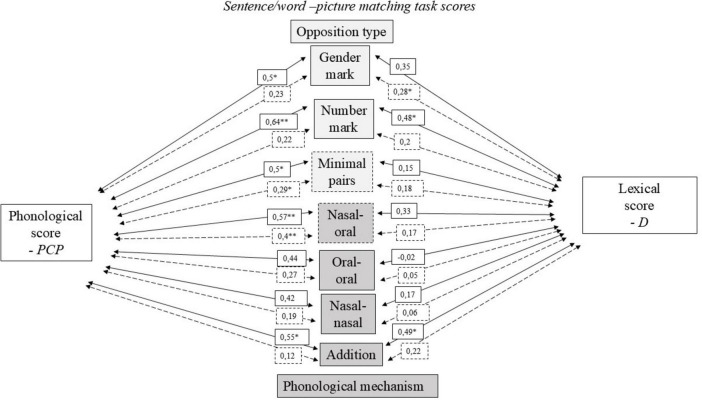 Figure 4
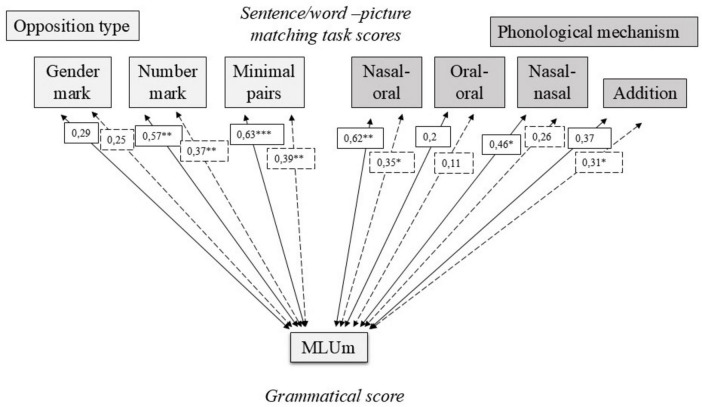 Figure 5
 Figure 6
 Figure 7
Peer Reviews
No public reviews on file for this paper yet. If you reviewed it on a platform where reviews are public (OpenReview, ICLR, NeurIPS, ICML), you can paste yours below so the community can read it here.
Videos
No videos yet. Explain this paper in a talk, walkthrough, or lecture? Add one.
Taxonomy
TopicsHearing Loss and Rehabilitation · Phonetics and Phonology Research · Language Development and Disorders