Dataset on passenger experience after riding an autonomous ferry
Erik Veitch, Taufik Akbar Sitompul, Ole Andreas Alsos

TL;DR
This paper shares a dataset of passenger experiences from an autonomous ferry in Norway, offering insights into user experience and attitudes toward autonomous transportation.
Contribution
The paper introduces a novel dataset of user experiences from an autonomous ferry, supporting research in transportation design and adoption.
Findings
The dataset includes 146 responses from passengers of an autonomous ferry in Norway.
The data covers demographics, experience, attitudes, and feedback on ferry design.
The dataset supports research in transportation design, engineering, and social sciences.
Abstract
Autonomous vehicles are being increasingly tested for transportation applications, yet investigations of user experience remain relatively rare. This paper presents a dataset of questionnaire responses (N = 146) investigating user experience of passengers on board an autonomous ferry in Norway. The ferry was the “milliAmpere2,” an autonomous urban ferry owned and operated by the Norwegian University of Science and Technology (NTNU). The dataset consisted of 46 question items across four categories: (i) demographics and background information, (ii) passenger experience, (iii) passenger attitudes, and (iv) feedback on the ferry's design characteristics. Responses were provided voluntarily using a digital survey tool during free-of-charge public trials held between 25 June and 24 August 2024. The dataset provides empirical data on passengers’ experience on board an autonomous ferry. This…
Genes, proteins, chemicals, diseases, species, mutations and cell lines named across the full text — each resolved to its canonical identifier and authoritative record.
Click any figure to enlarge with its caption.
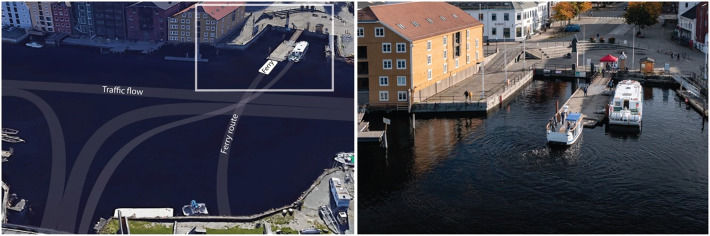 Figure 1
Peer Reviews
No public reviews on file for this paper yet. If you reviewed it on a platform where reviews are public (OpenReview, ICLR, NeurIPS, ICML), you can paste yours below so the community can read it here.
Videos
No videos yet. Explain this paper in a talk, walkthrough, or lecture? Add one.
Taxonomy
TopicsHuman-Automation Interaction and Safety · Maritime Navigation and Safety · Marine and Coastal Research
Specifications TableSubjectSocial Science, Safety ScienceSpecific subject areaUser experience of autonomous vehicles.Data formatDataset in .csv format (comma-separated text) and questionnaire in PDF/A format.Type of data.csv file (dataset containing questionnaire responses).pdf file (questionnaire in English and Norwegian)Data collectionA survey was distributed and administered digitally via the survey portal nettskjema.no, which is developed and hosted by the University of Oslo ([email protected]). The survey was accessible via mobile, tablet, or personal computer in Norwegian and English. Respondents (N = 146) voluntarily accessed and filled out the digital survey via QR code or hyperlink provided on a poster located on the autonomous ferry (convenience sampling). Respondents were entered into a draw for a gift card against voluntary entry of email address (any email address provided have been removed from the dataset). Question items in the survey were derived from twelve studies that investigated passenger experience after using autonomous vehicles in real-world settings. The data collection period was from 25 June to 24 August 2024. Original copies of the survey (in both English and Norwegian) are available in the data repository.Data source locationTrondheim, Norway (63.434106N, 10.392926S)Data accessibilityRepository name: DataverseNOData identification number: 10.18710/9BBPGGThe archive is supported by the Norwegian University of Science and Technology (NTNU) and is hosted by UiT The Arctic University of Norway.
Value of the Data
1
- •The most comprehensive survey of user experience of autonomous ferries undertaken to date, since there are 46 questions covering four categories: (i) demographics and background information, (ii) passenger experience, (iii) passenger attitudes, and (iv) feedback on ferry's design characteristics.
- •As the survey contains diverse topics, this dataset may benefit researchers from multiple fields, such as social science, computer science, design, engineering, business, and urban planning.
- •These data are useful in understanding the user experience of autonomous ferries as the technology evolves towards implementation in public transportation.
- •These data can also be used as an inspiration for other researchers who plan to conduct similar studies.
Background
2
The original motivation behind compiling this data was to make more informed design decisions through insights about passengers’ experience on board an autonomous ferry. Persistent knowledge gaps compelled us to formulate a detailed survey that sought answers to specific questions (e.g., Is it clear what passengers should do in case of an evacuation? Are passengers willing to use the ferry without a safety host on board?). In addition, the survey sought general information about passengers and their preference (e.g., demographics and attitudes towards public transportation). Survey questions were designed based on a literature review of peer-reviewed, survey-based investigations of passenger experience after using autonomous vehicles in real-world settings. A total of twelve studies were reviewed that focused on autonomous cars [[1], [2], [3]], buses [[4], [5], [6], [7]], and shuttles [[8], [9], [10], [11], [12]]. The reader is advised to see Table 5, Table 6, and Table 7 to find the specific information about which studies were used to develop the survey questions.
The ferry featured in this study was the “milliAmpere2,” which is an 8.6-meter-long autonomous urban passenger ferry owned and operated by NTNU (see Fig. 1; see [13] for details). A survey-based dataset was also generated in 2022 using the “milliAmpere2,” albeit with a narrow user experience scope [14]. The dataset herein follows up the previous one based on lessons learned [15]. The main differences between the dataset generated in 2022 [14] and the dataset presented in this paper can be found in Table 1.Fig. 1. The “milliAmpere2” autonomous ferry during a public trial in Trondheim, Norway (Left: Photo credit Google Maps; Right: Photo credit Mikael Sætereid).Fig. 1:Table 1. The main differences between the dataset generated in 2022 [14] and the dataset described in this paper.Table 1:CriteriaThe dataset generated in 2022 [14]The dataset described in this paperNumber of questions7 questions before the passengers took the ferry and 5 questions after the passengers took the ferry.46 questions that were filled after the passengers took the ferryData collectionThe data were collected twice: before and after taking the ferry. There were also on-site personnel administering the surveys to the passengersThe data were collected after taking the ferry only. The data collection was done voluntarily by passengers without the presence of any on-site personnel.Topics in the surveyTrust and safety perceptions before and after taking the ferryPassenger experience after taking the ferry, passenger attitudes towards the ferry, and feedback on the ferry's design characteristics.
Data Description
3
The questionnaire used to generate the dataset is available in the DataverseNO repository as a PDF/A file [16]. Both the English version (“Questionnaire-English.pdf”) and Norwegian version (“Questionnaire-Norwegian.pdf”) are available*.* All respondents completed the survey individually and immediately after using the autonomous ferry (N = 146). Responses are available as comma-separate text in “dataset-25,062,024-to-24,082,024.csv.” This dataset merges responses from Norwegian and English questionnaires into a single English translation. The responses are labeled and coded according to the four tables listed in Appendix A.
Basic demographics of the sample are listed in Table 2, with additional information (e.g., education, employment status, place of residence) available in the dataset. Although the sample age structure was generally representative of the population, the age group 20–29 was overrepresented by approximately 13.5 % (see Table 3). To avoid introducing age-related biases into the findings, Table 3 can be used to generate weights for analyses. Weights can be computed by dividing each age group's population proportion by the corresponding sample proportion (e.g., Weight_(20–29 years)_ = 18/31.5 = 0.57). Weights can then be applied as a multiplying factor to the data in each corresponding age group. Only individuals 18 years and older are included in the dataset.Table 2. Descriptive statistics of sample demographics (N = 146).Table 2:AgeMean (SD)41 (15)Mode25Minimum2025th percentile27Median4075th percentile52Maximum82GenderMale80Female65Other1Table 3Age structure for respondents and for population.Table 3:Age groupSamplePopulation*Sample (%)Population (%)0–9 years021 5630.0 %10.0 %10–19 years023 7860.0 %11.1 %20–29 years4638 67431.5 %18.0 %30–39 years2633 57517.8 %15.6 %40–49 years2727 12418.5 %12.6 %50–59 years2725 77318.5 %12.0 %60–69 years1620 35911.0 %9.5 %70–79 years315 6892.1 %7.3 %80–89 years16 6640.7 %3.1 %90–99 years01 3310.0 %0.6 %100 years and older0270.0 %0.0 %Total146214,565⁎Population of Trondheim municipality in Q2 of 2024 [17].
Experimental Design, Materials and Methods
4
A passenger survey campaign was conducted during a public trial of the “milliAmpere2,” held in Trondheim, Norway, from 25 June to 24 August 2024. The survey consisted of a questionnaire containing 46 questions, available in Norwegian and English. The questionnaire was distributed and administered digitally via the survey portal nettskjema.no, which is developed and hosted by the University of Oslo. Respondents voluntarily accessed and filled out the questionnaire via a QR code or hyperlink provided on a poster located on a ferry (convenience sampling). The median time to complete the questionnaire was approximately 7 min. Respondents were entered into a draw for a gift card against voluntary entry of email address (email addresses were removed from the dataset). The dataset does not contain identifiable personal data. A total of approximately 2300 passengers used the ferry during the trial, of which 146 individuals 18 years or older filled out the questionnaire. During the trial, the ferry crossed a 100-m canal and anyone could ride the ferry free of charge. Safety operators were on board during all crossings. Safety operators were individuals with the necessary certificates for operating the ferry, as prescribed by the Norwegian Maritime Authority (see [13] for details).
Appendix A lists all question items across four relevant categories: (i) demographics and background information (8 questions; Table 4), (ii) passenger experience (17 questions; Table 5), (iii) passenger attitudes (9 questions; Table 6), and (iv) feedback on the ferry's design characteristics (12 questions; Table 7).
Limitations
Some limitations stem from the sampling protocol and sample statistics. Specifically, convenience sampling may have resulted in an optimism bias because respondents were individuals who were willing to use the ferry in the first place (or perhaps actively sought it out). By comparison, a more representative sampling protocol could have selected individuals randomly and invited them to use the ferry. In addition, a relatively small sample size was collected over the two-month trial period (N = 146) compared to the potential user base. Moreover, overrepresentation of the age group 20–29 may also have introduced bias, which should be accounted for in any post-hoc analysis.
Ethics Statement
This study was audited and approved by the Norwegian Agency for Shared Services in Education and Research (Sikt), which oversees the ethical conduct and participant privacy of research at Norwegian institutions. The data collection and management plan described herein were assigned the Sikt project number 340097. The main measures in place to comply with Sikt's ethical research standards included informed consent and anonymity. Informed consent was obtained from all participants in the study. Anonymity was maintained by assigning participants numeric codes and by removing potentially de-anonymizing data (e.g., email addresses) from the dataset.
CRediT Author Statement
Erik Veitch: Writing—Original Draft, Conceptualization, Investigation. Taufik Akbar Sitompul: Methodology, Investigation, Writing—Review and Editing. Ole Andreas Alsos: Writing—Review and Editing, Supervision.
The reference list from the paper itself. Each links out to its DOI / PubMed record.
- 1Reig S.Norman S.Morales C.G.Das S.Steinfeld A.Forlizzi J.A field study of pedestrians and autonomous vehicles In: Proceedings of the 10th International Conference on Automotive User Interfaces and Interactive Vehicular Applications New York, NY, USA 2018 Association for Computing Machinery 19820910.1145/3239060.3239064 · doi ↗
- 2Pascale M.T.Rodwell D.Coughlan P.Kaye S.-A.Demmel S.Dehkordi S.G.Bond A.Lewis I.Rakotonirainy A.Glaser S.Passengers’ acceptance and perceptions of risk while riding in an automated vehicle on open, public roads Transport. Res. Part F: Traffic Psychol. Behav.83202127429010.1016/j.trf.2021.10.012 · doi ↗
- 3Christie D.Koymans A.Chanard T.Lasgouttes J.-M.Kaufmann V.Pioneering driverless electric vehicles in Europe: the City automated transport system (CATS)Transport. Res. Proc.132016303910.1016/j.trpro.2016.05.004 · doi ↗
- 4Yan Y.Zhong S.Tian J.Li T.Continuance intention of autonomous buses: an empirical analysis based on passenger experience Transp. Policy (Oxf.)1262022859510.1016/j.tranpol.2022.07.010 · doi ↗
- 5Ariza-Álvarez A.López-Lambas M.E.Soria-Lara J.A.Analysing the acceptance of autonomous buses in real-life traffic environments: pilot project with tourists in Malaga Spain, Transport. Plann. Technol.462023719210.1080/03081060.2022.2159407 · doi ↗
- 6Mouratidis K.Serrano V.C.Autonomous buses: intentions to use, passenger experiences, and suggestions for improvement Transport. Res. Part F: Traffic Psychol. Behav.76202132133510.1016/j.trf.2020.12.007 · doi ↗
- 7Bernhard C.Oberfeld D.Hoffmann C.Weismüller D.Hecht H.User acceptance of automated public transport: valence of an autonomous minibus experience Transport. Res. Part F: Traffic Psychol. Behav.70202010912310.1016/j.trf.2020.02.008 · doi ↗
- 8Nordhoff S.Stapel J.van Arem B.Happee R.Passenger opinions of the perceived safety and interaction with automated shuttles: a test ride study with ‘hidden’ safety steward Transport. Res. Part A: Policy Pract.138202050852410.1016/j.tra.2020.05.009 · doi ↗