Two new species of the subgenus Indoribates (Haplozetes) (Acari, Oribatida, Haplozetidae) from Tajikistan

Abstract
Genes, proteins, chemicals, diseases, species, mutations and cell lines named across the full text — each resolved to its canonical identifier and authoritative record.
Click any figure to enlarge with its caption.
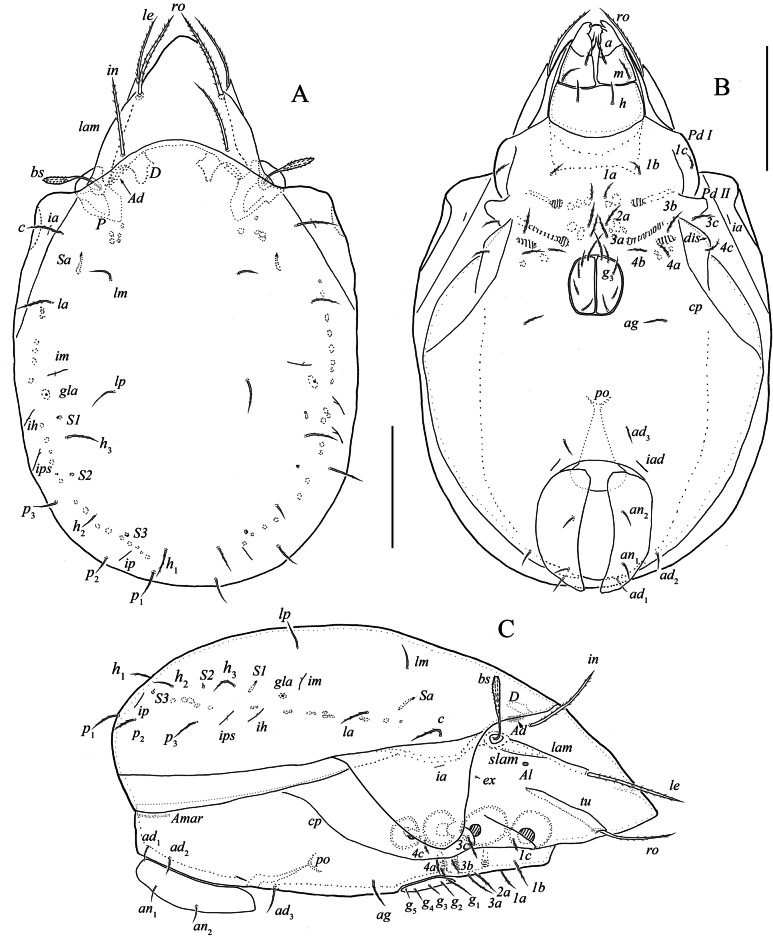 Figure 1
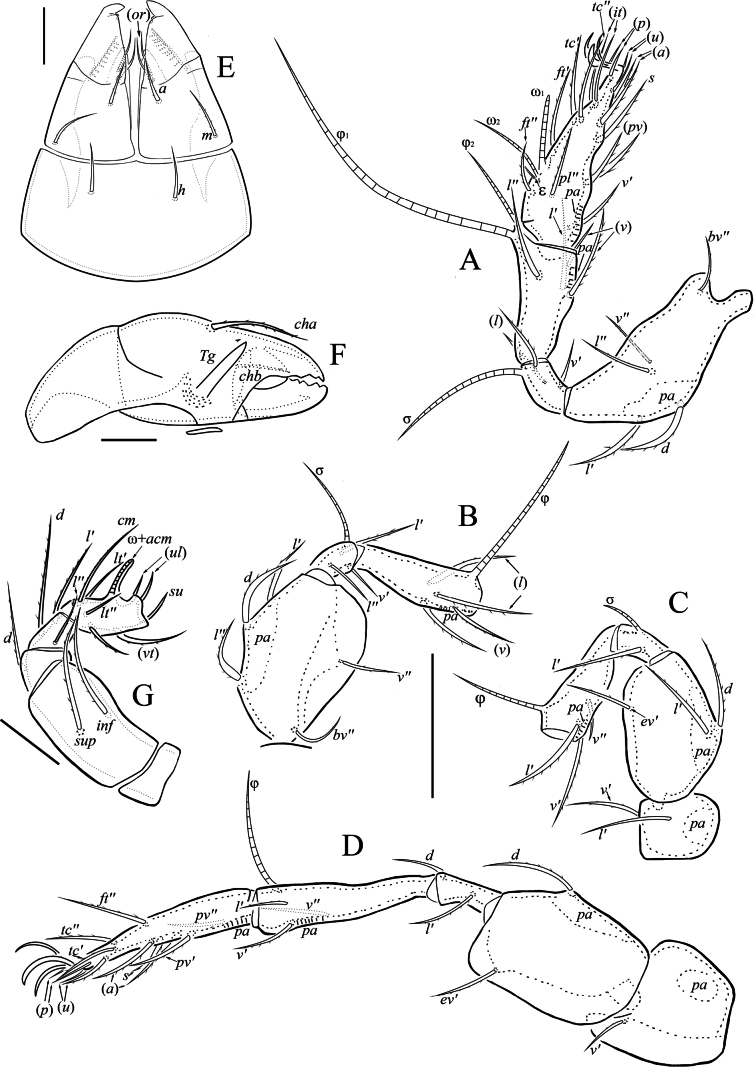 Figure 2
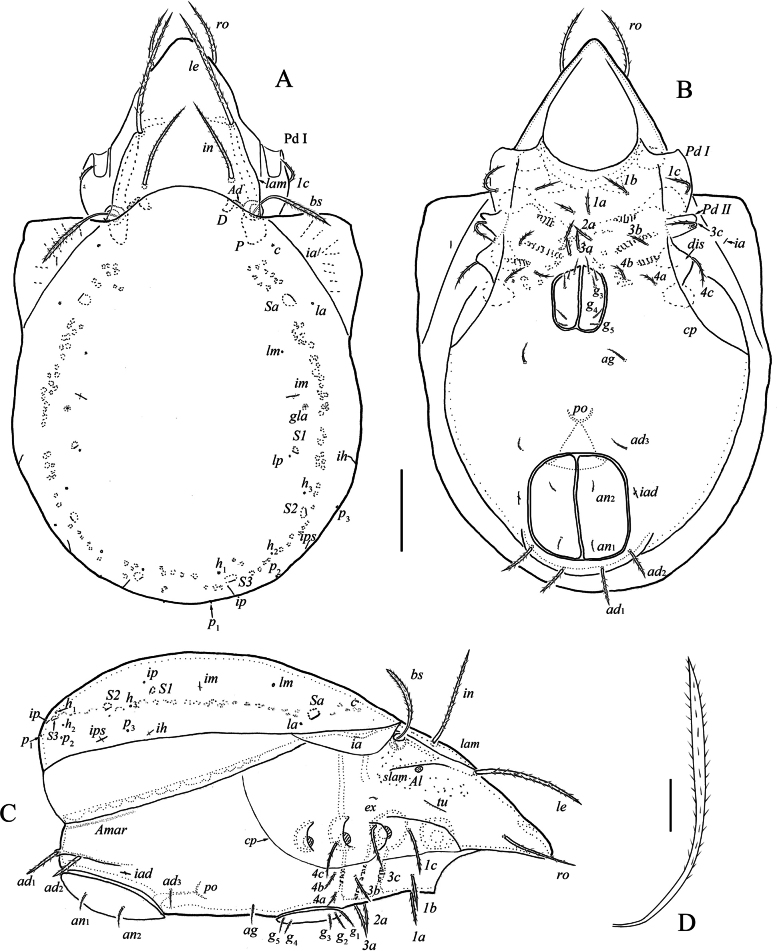 Figure 3
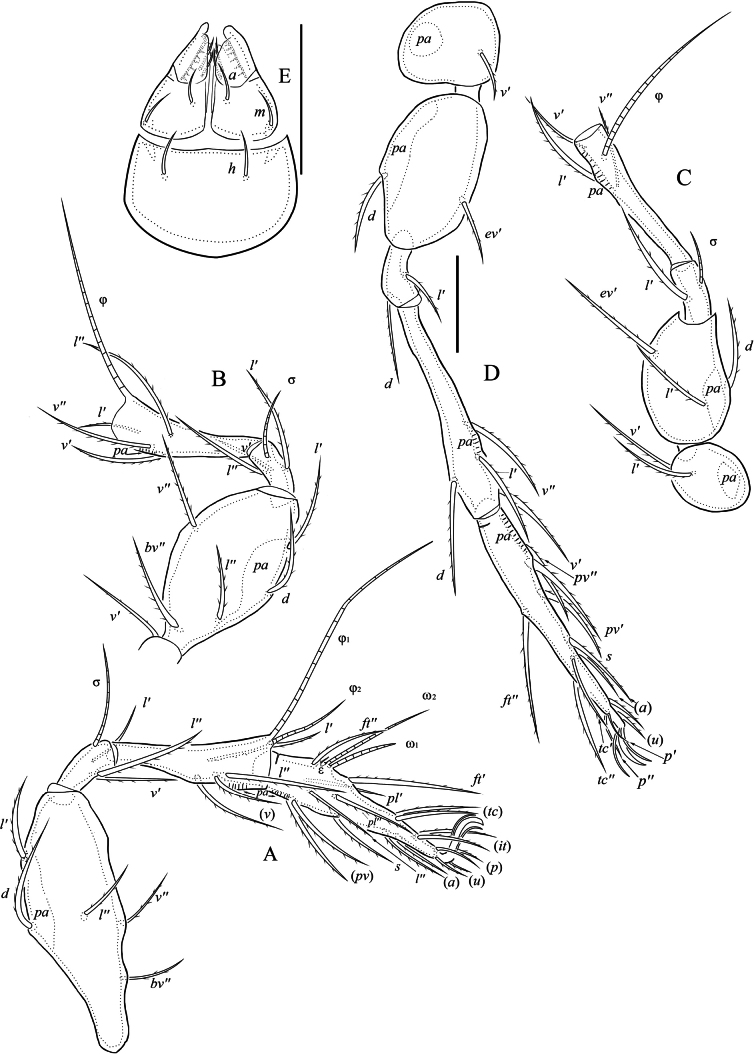 Figure 4
| leg |
|
|
|
|
|
|---|---|---|---|---|---|
| I | ( | ( | ( | ||
| II | ( | ( | ( | ||
| III | ( | ||||
| IV |
| leg |
|
|
|
|
|
|---|---|---|---|---|---|
| I | ( | ( | ( | ||
| II | ( | ( | ( | ||
| III | ( | ||||
| IV |
Peer Reviews
No public reviews on file for this paper yet. If you reviewed it on a platform where reviews are public (OpenReview, ICLR, NeurIPS, ICML), you can paste yours below so the community can read it here.
Videos
No videos yet. Explain this paper in a talk, walkthrough, or lecture? Add one.
Taxonomy
TopicsStudy of Mite Species · Viral Infections and Vectors · Collembola Taxonomy and Ecology Studies
Introduction
The genus Indoribates was proposed by Jacot (1929) with Protoribatespunctulatus Sellnick, 1925 as the type species. The main generic characters of this genus were summarized by Jacot (1929), Hammer (1979: as for Sundazetes Hammer, 1979), Mahunka (1977: as for Nixozetes Mahunka, 1977; 1997: as for Bolkiah Mahunka, 1997), Balogh and Balogh (1992) and Subías and Shtanchaeva (2023). At present, Subías’s world catalogue of oribatid mite records that the genus Indoribates includes five subgenera: the nominate subgenus; Bihaplozetes Subías, 2020; Haplozetes Willmann, 1935; Mancoribates Hammer, 1961, and Neoindoribates Subías, 2020 (Subías 2022, 2024 updated). Some authors support the independence of some genera (e.g. Indoribates, Haplozetes, Mancoribates; see Weigmann 2006; Ermilov and Behan-Pelletier 2024; Ermilov et al. 2024; Norton and Ermilov 2024), but we follow the world catalogue of Subías. Xu et al. (2024) proposed that Bihaplozetes is a junior synonym of the subgenus Indoribates to avoid identification confusion. The subgenus Indoribates (Haplozetes) includes 16 species and one subspecies, which have a nearly cosmopolitan distribution (except Antarctica) (Subías 2022, 2024 updated).
The first data on oribatid mite fauna (Acari, Oribatida) of Tajikistan were presented by Bulanova-Zachvatkina (1960a, 1960b). Subsequent studies of oribatids in Tajikistan during the next 64 years were fragmentary but include the works of Ilyasov (1963, 1970), Krivolutsky (1966, 1971), Khristov (1973), Sitnikova (1973), Ghilarov and Krivolutsky (1975), Gordeeva (1980), Karppinen et al. (1986), Ryabinin (1986), Shtanchaeva (2001), Penttinen and Gordeeva (2009), Niedbała (2012), Sidorchuk and Norton (2016), and Wei and Chen (2017).
During taxonomic survey of oribatid mites (Acari, Oribatida) collected from litter and upper soil stratum in Tajikistan, we found two new species of the subgenus Indoribates (Haplozetes), I. (H.) tajikistanensis sp. nov. and I. (H.) asetosus sp. nov. The main goal of this paper is to describe and illustrate these new species. Before the present study, the genus Indoribates had not been reported from Tajikistan.
Methods
Specimens were temporarily mounted in lactic acid on cavity slides for measurement and illustration. All specimens were examined under a differential interference contrast microscope (Leica DM 2500). Drawings were made with a camera lucida using a Leica transmission light microscope (Leica DM 2500). All specimens were stored in test tubes filled with 75% ethanol solution and deposited in the Institute of Zoology, Chinese Academy of Sciences, Beijing (IZAS).
Body length was measured in lateral (temporary cavity slides) or dorsal (permanent slides) view, from the tip of the rostrum to the posterior edge of the notogaster. Notogastral width refers to the maximum width of the notogaster in dorsal view (behind pteromorphs). Lengths of body setae were measured in lateral aspect. All body measurements are presented in micrometers (μm). Formulas for leg setation are given in parentheses according to the sequence trochanter-femur-genu-tibia-tarsus (famulus included). Formulas for leg solenidia are given in square brackets according to the sequence genu-tibia-tarsus.
Morphological terminology used in this paper mostly follows that of papers on Haplozetes (Grandjean 1936), and Norton (1977) for leg setal nomenclature. See Norton and Behan-Pelletier (2009) for an overview.
The following abbreviations are used: lam = lamella; slam = sublamella; tu = tutorium; ro, le, in, bs, ex = rostral, lamellar, interlamellar, bothridial and exobothridial setae, respectively; Al = sublamellar porose area; D = dorsophragma; P = pleurophragma; c, la, lm, lp, h, p = notogastral setae; Sa, S1, S2, S3 = notogastral saccules; ia, im, ip, ih, ips = notogastral lyrifissures; Ad = sejugal porose area; gla = opisthonotal gland opening; a, m, h = subcapitular setae; or = adoral seta; sup, inf, v, l, d, cm, acm, ul, su, vt, lt = palp setae; ω = palp solenidion; cha, chb = cheliceral setae; Tg = Trägårdh’s organ; Pd I, Pd II = pedotecta I, II, respectively; 1a, 1b, 1c, 2a, 3a, 3b, 3c, 4a, 4b, 4c = epimeral setae; dis = discidium; cp = circumpedal carina; g, ag, an, ad = genital, aggenital, anal and adanal setae, respectively; iad = adanal lyrifissure; Amar = marginal porose area; Tr, Fe, Ge, Ti, Ta = trochanter, femur, genu, tibia, and tarsus, respectively; ω, σ, φ = leg solenidia; ε = leg famulus; v, ev, bv, l, d, ft, tc, it, p, u, a, s, pv, pl = leg setae; pa = porose area.
Descriptions
Indoribates (Haplozetes) tajikistanensis
sp. nov.
Taxon classificationAnimaliaOribatidaHaplozetidae
428E9F2A-73BA-5D26-A2AB-393B35AF0AAF
https://zoobank.org/49B9B555-B32A-4EFA-90F8-9B4F24CB655B
Figs 1 , 2 Common name. 塔吉克单翼甲螨
Type material.
Holotype • (female CJ-16-036): Tajikistan, Sughd Region, Ghonchi District, Zarnisor Village; 39°55'27"N, 69°08'42"E; 1055 m; moss, grass, and soil; 21 May 2016; Jun Chen leg. Paratypes • (three females, two males, CJ-16-037): same data as for holotype.
Diagnosis.
Body size: 400–471 × 257–298. Rostrum rounded. Rostral, lamellar and interlamellar setae long, setiform, barbed; le>in>ro .Bothridial seta fusiform, with short stalk and slightly longer, barbed head. Tutorium long, with tooth distally. Notogastral setae short, setiform thin, slightly barbed. Four pairs of notogastral saccules with small opening; Sa channel elongate, other channels drop-like. All epimeral setae setiform, barbed. Genital and aggenital setae slightly barbed. Both anal setae and adanal setae ad1-2 roughened. Adanal lyrifissure immediately to anterolateral margin of anal opening.
Description.
Measurements. Body length 450 (holotype, female), 430–471 (five paratypes: two males, three females); body width 277 (holotype), 257–298 (five paratypes).
Integument. Body brown. Surface densely microfoveolate (visible only under high magnification in dissected specimens; × 1000); podosomal region and lateral part of prodorsum partially with dense microgranulate cerotegument.
Prodorsum (Fig. 1A, C). Rostrum rounded. Tutorium long, with tooth distally. Lamellae long, located dorsolaterally. Sublamella short. Sublamellar porose area (7) oval. Rostral (57–67), lamellar (73–80) and interlamellar (65–75) setae setiform, barbed. Bothridial seta (49–55) fusiform, with short stalk and slightly longer, barbed head. Exobothridial seta (9) setiform short, roughened. Sejugal porose area diffuse, located posterolateral to interlamellar seta, transversely elongate.
Indoribates (Haplozetes) tajikistanensis sp. nov. A dorsal view (legs not shown) B ventral view (gnathosoma and legs not shown) C lateral view (gnathosoma and legs not shown). Scale bar: 100 μm.
Notogaster (Fig. 1A, C). Anterior notogastral margin convex medially. Dorsophragma elongate. Pteromorph with distinct hinge. Ten pairs of notogastral setae (15–33) setiform, slightly barbed (visible under high magnification). Four pairs of saccules with small opening, Sa channel elongate, others channels drop-like. Opisthonotal gland opening and all lyrifissures clearly distinct.
Gnathosoma (Fig. 2E–G). Subcapitulum size: 88–93 × 69–73. Subcapitular setae setiform; m (15–17) longer than a (13–15) and h (12–13); a and m barbed, h smooth. Both adoral setae (7–10) setiform, roughened. Palp (length 59–65) with setation 0-2-1-3-9(+ω). Postpalpal seta (5) spiniform, roughened. Chelicera (length 105–112) with two setiform, barbed setae (cha: 34–36; chb: 21–23).
Epimeral and lateral podosomal regions (Fig. 1B, C). Epimeral setal formula: 3-1-3-3. All epimeral setae (11–19) setiform, barbed. Pedotectum II trapezoid, rounded apically. Discidium triangular, rounded apically. Circumpedal carina long, reaching to acetabulum II.
Anogenital region (Fig. 1B, C). Genital (g1 23, g2-g5 17–11), aggenital (14–16) setae and adanal seta ad3 setiform, slightly barbed. Both anal setae (9–11) and adanal setae ad1, ad2 (11–13) setiform, roughened. Adanal lyrifissure close and anterolateral to anal plate.
Legs (Fig. 2A–D). All legs tridactylous; median claw thick, lateral claws thin; all claws slightly barbed on dorsal side. Dorsoparaxial porose area on femora I–IV and on trochanters III, IV well visible. Formulas of leg setation and solenidia: I (1-5-3-4-18) [1-2-2], II (1-5-3-4-15) [1-1-2], III (2-3-1-3-15) [1-1-0], IV (1-2-2-3-12) [0-1-0]. Homology of setae and solenidia indicated in Table 1.
Indoribates (Haplozetes) tajikistanensis sp. nov. A leg I (without trochanter), right, antiaxial view B leg II (without trochanter and tarsi), right, antiaxial view C leg III (without tarsi), right, antiaxial view D leg IV, right, antiaxial view E subcapitulum, ventral view F chelicera, left, paraxial view G palp, right, antiaxial view. Scale bars: 50 μm (A–E); 20 μm (E–G).
Etymology.
The specific name tajikistanensis refers to the country encompassing the type locality of this new species.
Remarks.
Indoribates (Haplozetes) tajikistanensis sp. nov. is morphologically similar to I. (H.) vindobonensis (Willmann, 1935) (see also Grandjean 1936; Beck 1964; Kunst 1977; Mahunka 1982, 2001) from the Palaearctic, Ethiopian, Neotropical, and Oriental regions in having fusiform bothridial setae. However, the new species differs from I. (H.) vindobonensis by the position of the adanal lyrifissure iad (anterolateral margin of anal opening vs close and parallel to lateral margin of anal opening) and the shape of the saccule S2 (with not bilobed channel vs with bilobed channel).
Indoribates (Haplozetes) asetosus
sp. nov.
Taxon classificationAnimaliaOribatidaHaplozetidae
7FBACEF7-E316-512E-B669-50C1BDE1BFC5
https://zoobank.org/2033FE1A-4CC5-4C8B-BC4D-C4A46527CE4A
Figs 3 , 4 Common name. 无毛单翼甲螨
Type material.
Holotype • (female CJ-14-064): Tajikistan, Tavildara District, Hoja Pulod Village, 38°43'28"N, 70°27'14"E, 1730 m, grass and soil, 14 July 2014, Jun Chen leg. Paratypes • (one female, one male, CJ-14-064): same data as for holotype.
Diagnosis.
Body size: 620–740 × 414–480. Rostrum rounded. Rostral, lamellar and interlamellar setae long, setiform, barbed; le>in>ro. Bothridial seta long, with shorter stalk and longer, uniformly thickened, barbed head. Tutorium short, simple. Ten pairs of notogastral setae represented by alveoli. All epimeral setae setiform, slightly thickened, barbed. Genital, aggenital, anal and adanal setae setiform, barbed; adanal setae ad1 and ad2 long, thickened, inserted on semicircular protrusion. Solenidion φ on tibia IV absent, but seta d developed instead it.
Description.
Measurements. Body length 682 (holotype, female), 620–740 (two paratypes: one male, one female); body width 420 (holotype), 414–480 (two paratypes).
Integument. Body light brown. Surface densely microfoveolate (visible only under high magnification in dissected specimens; × 1000); podosomal region and lateral part of prodorsum partially with dense, microgranulate cerotegument.
Prodorsum (Fig. 3A, C). Rostrum rounded. Tutorium short, simple. Lamella about 1/2 length of prodorsum. Sublamella visible. Sublamellar porose area (7) oval. Rostral (86–97), lamellar (138–149) and interlamellar (108–116) setae setiform, barbed. Exobothridial seta (7–9) setiform, thin, smooth. Bothridial seta (100–112) long, with shorter stalk and longer, uniformly thickened, barbed head. Sejugal porose area distinct, located posterolateral to interlamellar seta, transversely elongate.
Indoribates (Haplozetes) asetosus sp. nov. A dorsal view (legs not shown) B ventral view (gnathosoma and legs not shown) C lateral view (gnathosoma and legs not shown) D bothridial seta. Scale bars: 100 μm (A–C); 20 μm (D).
Notogaster (Fig. 3A, C, D). Anterior notogastral margin convex medially. Dorsophragma nearly oval. Pteromorph with distinct hinge. Ten pairs of notogastral setae represented by alveoli. Four pairs of saccules with small opening and drop-like channel. Opisthonotal gland opening and all lyrifissures distinct.
Gnathosoma (Figs 4E). Subcapitulum size: 151–159 × 105–112. All subcapitular setae (h 22–26, m 24–26, a 24–25) setiform, smooth. Both adoral setae (7–10) setiform, barbed. Palp (length 85–91) with setation 0-2-1-3-9(+ω). Postpalpal seta (7) spiniform, roughened. Chelicera (length 150–162) with two setiform barbed setae (cha: 39–44; chb: 25–29).
Epimeral and lateral podosomal regions (Fig. 3B, C). Epimeral setal formula: 3-1-3-3. All epimeral setae (30–56) setiform, slightly thickened, barbed. Pedotectum II trapezoid. Discidium triangular, rounded apically. Circumpedal carinae long, reaching to acetabulum II.
Anogenital region (Fig. 3B, C). Genital (15–24), aggenital (21–23) and anal (21–25) setae setiform, barbed. All adanal setae barbed, ad1-2 (41–45) thicker, inserted on semicircular protrusion; ad3 (21–23) setiform. Adanal lyrifissure laterally located, adjacent to anal aperture.
Legs (Fig. 4A–D). All legs tridactylous; median claw thick, lateral claws thin; all claws slightly barbed on dorsal side. Dorsoparaxial porose area on femora I–IV and on trochanters III, IV well visible. Formulas of leg setation and solenidia: I (1-5-3-4-19) [1-2-2], II (1-5-3-4-15) [1-1-2], III (2-3-1-3-15) [1-1-0], IV (1-2-2-4-12) [0-0-0]. Homology of setae and solenidia indicated in Table 2. Solenidion φ on tibia IV absent, but seta d developed instead it.
Indoribates (Haplozetes) asetosus sp. nov. A leg I (without trochanter), right, antiaxial view B leg II (without tarsi), left, antiaxial view C leg III (without tarsi), right, antiaxial view D leg IV, right, antiaxial view E subcapitulum, ventral view. Scale bars: 50 μm (A–D); 20 μm (E).
Etymology.
The specific name asetosus refers to notogastral setae represented by alveoli.
Remarks.
Indoribates (Haplozetes) asetosus sp. nov. is morphologically similar to I. (H.) fusifer (Berlese, 1908) (see also Akrami and Behmanesh 2013) and I. (H.) triungulatus (Beck, 1964) in having long bothridial seta with narrowly elongate head, but differs from I. (H.) fusifer by the absence of φ on tibia IV (vs presence), and the thickened adanal setae ad1, ad2 (vs thin). Moreover, the new species is distinguished from I. (H.) triungulatus by the shape of the interlamellar seta (long, barbed vs short, smooth), the length of the adanal setae ad1-2 (long vs short) and tutorium (short vs long); and the shape of all notogastral setae (represented by alveoli vs short, setiform).
The most remarkable diagnosis of the new species is that solenidion φ on the leg tibia IV is absent, but represented by d. We examined the type specimens carefully and found no solenidion φ and no alveolus; there is a barbed d seta in the corresponding position. This feature is not typical for Haplozetidae, but it is typical for representatives of the related oripodoid family Parakalummidae.
Supplementary Material
XML Treatment for Indoribates (Haplozetes) tajikistanensis
XML Treatment for Indoribates (Haplozetes) asetosus
The reference list from the paper itself. Each links out to its DOI / PubMed record.
- 1Akrami MA Behmanesh M (2013) Complementary data on Haplozetesfusifer (Berlese, 1908) (Acari, Oribatida, Haplozetidae) collected from Iran.Graellsia 69(2): 147–152. 10.3989/graellsia.2013.v 69.072 · doi ↗
- 2Balogh J Balogh P (1992) The Oribatid Mite Genera of the world. Vol. I.Hungarian National Museum Press, Budapest, 263 pp.
- 3Beck L (1964) Beiträge zur Kenntnis der neotropischen Oribatidenfauna 4. Haplozetes und Peloribates (Arach, Acari).Senckenbergiana Biologica 45(2): 161–183.
- 4Bulanova-Zachvatkina EM (1960 a) New representatives of primitive oribatid mites from the superfamily Perlohmannoidea Grandjean, 1958 (Acariformes).Zoological Journal 39(12): 1835–1848. [in Russian]
- 5Bulanova-Zachvatkina EM (1960 b) On the fauna of oribatid mites of the Soviet Union (Acariformes, Oribatei). Nauchnye doklady vysshei shkoly.Biologicheskie nauki, Zoologia, Moscow 4: 27–39. [in Russian]
- 6Ermilov SG Behan-Pelletier VM (2024) Araguazetesluisi gen. nov., sp. nov.(Acari, Oribatida, Haplozetidae) from Henri Pittier National Park, Venezuela.Zootaxa 5556(1): 51–61. 10.11646/zootaxa.5556.1.5 · doi ↗
- 7Ermilov SG Subías LS Shtanchaeva UY Friedrich S (2024) Taxonomic contribution to knowledge of the oribatid mite genus Mancoribates.Spixiana 47(1): 121–127. 10.11646/zootaxa.5556.1.4 · doi ↗
- 8Ghilarov MS Krivolutsky DA (1975) Identification Keys to the Soil Oribatid Mites Sarcoptiformes. Nauka Press.Moscow, Russia, 490 pp. [In Russian]