Having a monk in the family and all-cause mortality: a seven-year prospective cohort study
Liqiong Zhou, Yuan Chen, Erhao Ge, Aijie Zhang, Yasi Zhang, Juan Du, Ruth Mace, Yiqiang Zhan

TL;DR
Having a religious monk in the household is linked to lower death risk for older non-monk Tibetans over seven years.
Contribution
This study is the first to show that household-level presence of celibate monks is associated with reduced mortality in older Tibetans.
Findings
Households with celibate monks had a 69% lower mortality risk compared to those without.
The association remained significant after adjusting for age, wealth, and other factors.
The protective effect suggests a potential social or spiritual benefit from monk presence.
Abstract
Religious celibate monks at the household level possibly reduce all-cause mortality risk among non-monk older Tibetans. This study aims to investigate the association between having a celibate monk in a family and the all-cause mortality of non-monk household members in a Tibetan population. Baseline interviews were conducted for 713 agropastoral Amdo Tibetans aged ≥50 years residing in the eastern Tibetan Plateau from 2016 to 2017. The Cox mixed-effects regression model was used to estimate the association between having a celibate monk in a household and the mortality risk of other non-monk household members. Potential confounders included age, sex, household size, educational attainment, household wealth (measured as the number of yaks), marital status, and annual expenditure. During a median follow-up of 7 years, 54 deaths were identified. The results showed that people living in…
Genes, proteins, chemicals, diseases, species, mutations and cell lines named across the full text — each resolved to its canonical identifier and authoritative record.
Click any figure to enlarge with its caption.
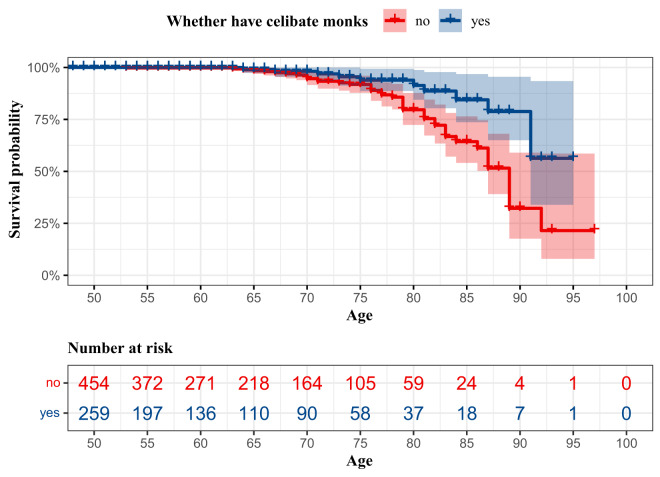 Figure 1
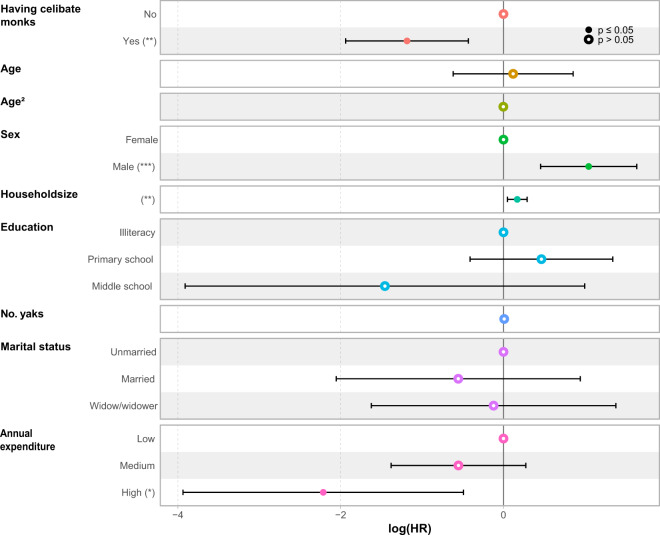 Figure 2
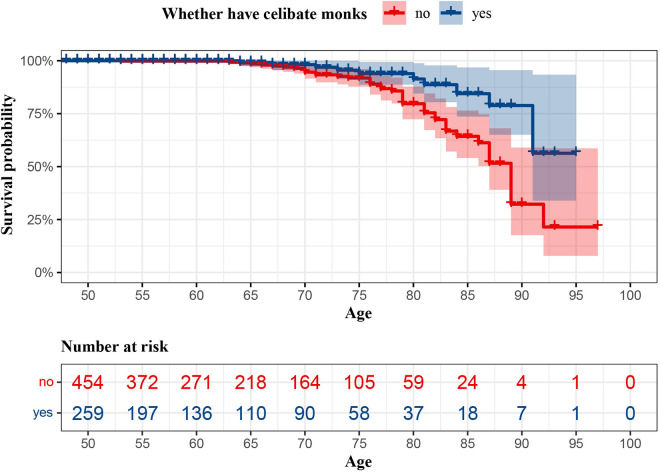 Figure 3
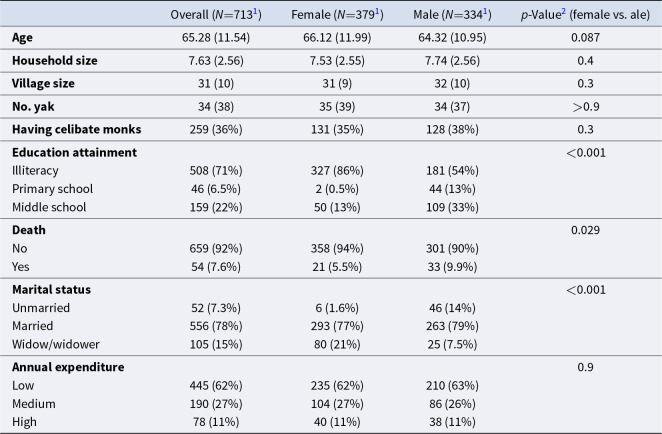 Figure 4
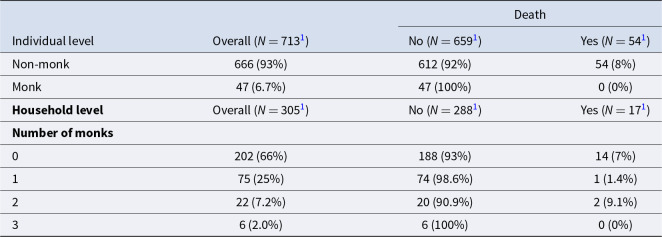 Figure 5
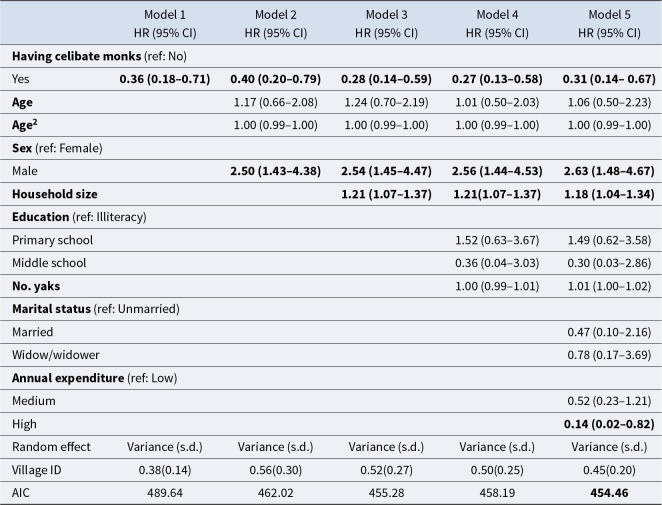 Figure 6
Peer Reviews
No public reviews on file for this paper yet. If you reviewed it on a platform where reviews are public (OpenReview, ICLR, NeurIPS, ICML), you can paste yours below so the community can read it here.
Videos
No videos yet. Explain this paper in a talk, walkthrough, or lecture? Add one.
Taxonomy
TopicsReligion, Spirituality, and Psychology · Grief, Bereavement, and Mental Health · Palliative Care and End-of-Life Issues