Relevance of Probabilistic Reversal Learning for Adolescent Drinking Trajectories
Juliane H. Fröhner, Maria Waltmann, Andrea M. F. Reiter, Anja Kräplin, Michael N. Smolka

TL;DR
This study explores how adolescents learn to adapt in changing situations and finds that risky drinking is linked to reduced brain activity during learning processes.
Contribution
The study links developmental changes in reversal learning with adolescent drinking behaviors using computational modeling and fMRI.
Findings
PReL performance improved with age, driven by enhanced reward sensitivity and reduced sensitivity to losses.
Risky drinking was associated with lower medial frontal activity during feedback processing.
Alcohol use showed a negative association with reversal learning adaptivity.
Abstract
One of the many human capabilities acquired during adolescence is the adaptivity in changing environments. In this longitudinal study, we investigated this adaptivity, as measured by probabilistic reversal learning (PReL) tasks, in N = 143 adolescents at ages 14, 16 and 18. Computational modelling and functional magnetic resonance imaging were applied to identify the neurocognitive processes underlying reversal learning and its development. Previous studies have demonstrated a correlation between heavy alcohol use and impaired reversal learning. Our hypothesis was that PReL is negatively associated with current and future alcohol use and that alcohol use impairs PReL by altering neurocognitive processes. Behaviourally, PReL performance improved, which was associated with a lower probability of switching choices and was considered an adaptive process. Computationally, this was accounted…
Genes, proteins, chemicals, diseases, species, mutations and cell lines named across the full text — each resolved to its canonical identifier and authoritative record.
Click any figure to enlarge with its caption.
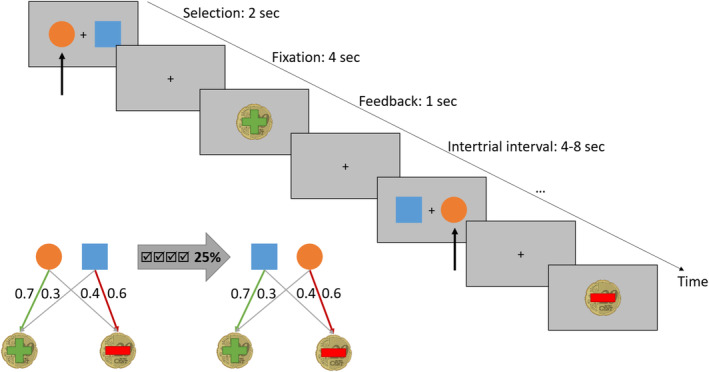 Figure 1
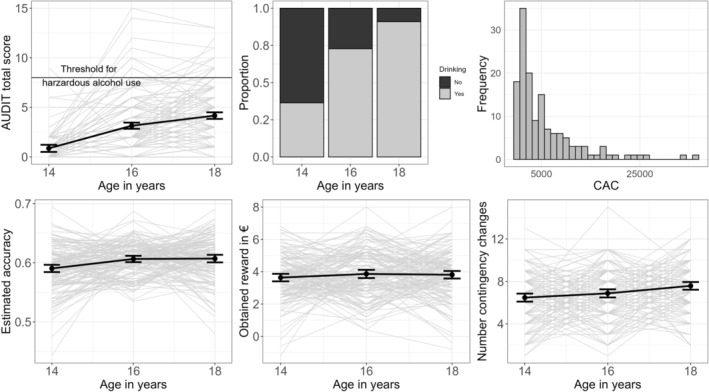 Figure 2
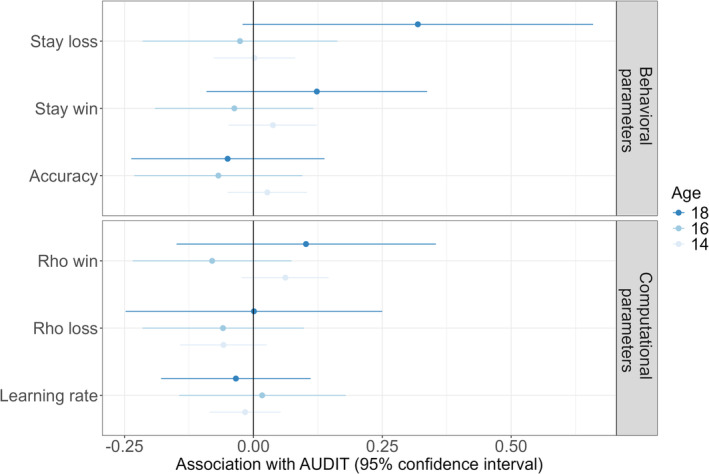 Figure 3
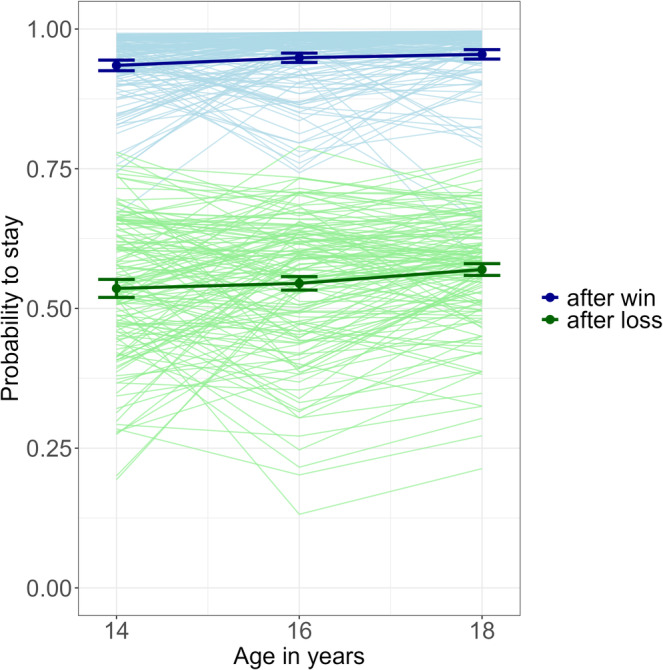 Figure 4
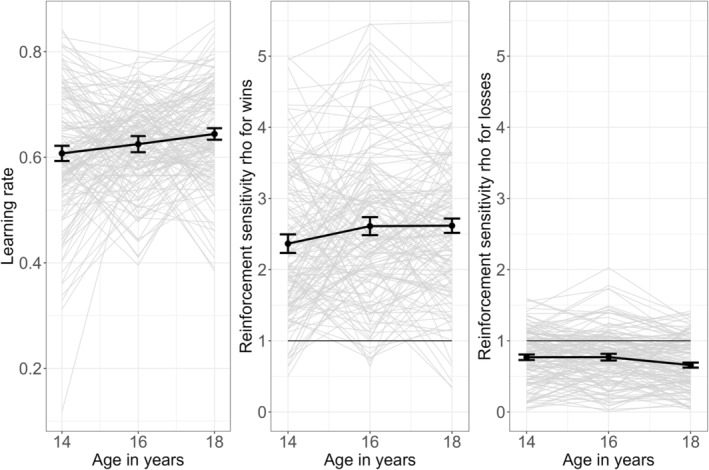 Figure 5
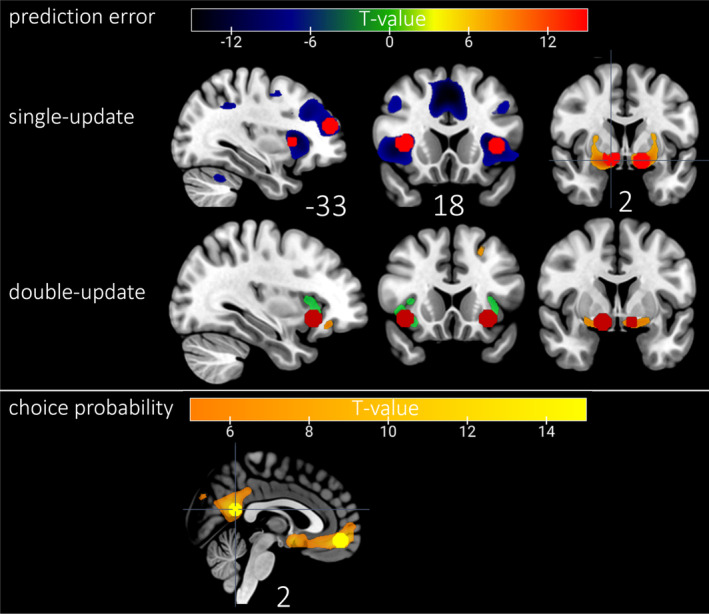 Figure 6
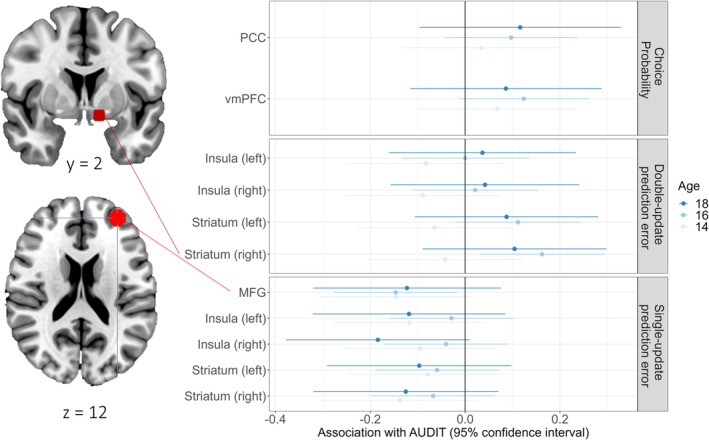 Figure 7
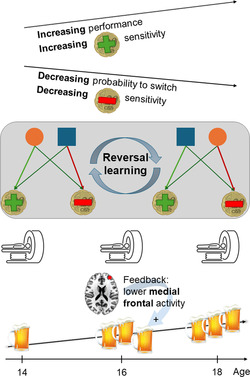 Figure 8
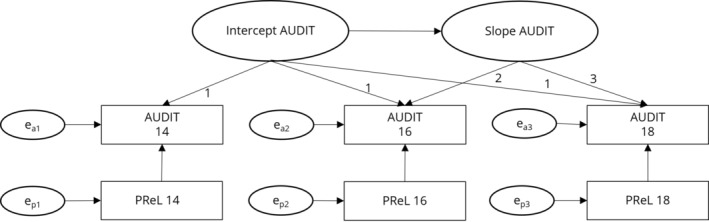 Figure 9
Peer Reviews
No public reviews on file for this paper yet. If you reviewed it on a platform where reviews are public (OpenReview, ICLR, NeurIPS, ICML), you can paste yours below so the community can read it here.
Videos
No videos yet. Explain this paper in a talk, walkthrough, or lecture? Add one.
Taxonomy
TopicsYouth Development and Social Support · Behavioral Health and Interventions · Child and Adolescent Psychosocial and Emotional Development