Advocating for Our Children: An Initiative Utilizing Verbal and Video Education to Increase Adverse Childhood Experiences Questionnaire Form Response Rate
Madison R. Tyle, Shainal Gandhi, Nikhita Nookala, Kelly A. Campbell, Melissa Chow, Marilyn Torres, Sarah A. Commaroto, Monica Khadka, Emily Coughlin, Vinita Kiluk

TL;DR
This study shows that using verbal and video education can boost response rates to a questionnaire that identifies childhood experiences linked to future health risks.
Contribution
The novel contribution is demonstrating the effectiveness of verbal and video education in increasing ACE-Q response rates in clinical settings.
Findings
Educational interventions significantly increased ACE-Q response rates in two PDSA cycles.
The second PDSA cycle showed a large jump in response rates from 15% to 45.2%.
Verbal and video education models are effective for improving ACE-Q completion rates.
Abstract
Negative experiences in childhood, Adverse Childhood Experiences, significantly increase the risk of adverse health outcomes in adulthood. Obtaining a better understanding of the experiences a child has been through during development allows providers to connect them with resources to improve health outcomes. We performed problem identification via PubMed and the Florida Department of Health web page. We used the plan-do-study-act (PDSA) quality improvement method. Intervention one involved teaching clinic staff about distributing the Adverse Childhood Experiences Questionnaire (ACE-Q) form during well-check visits. Intervention two involved a video education tool to explain the purpose and importance of the ACE-Q to caretakers. We conducted a retrospective chart review at the 17 Davis and HealthPark clinics 3 months preceding each PDSA cycle. We analyzed the data to assess the…
Genes, proteins, chemicals, diseases, species, mutations and cell lines named across the full text — each resolved to its canonical identifier and authoritative record.
Click any figure to enlarge with its caption.
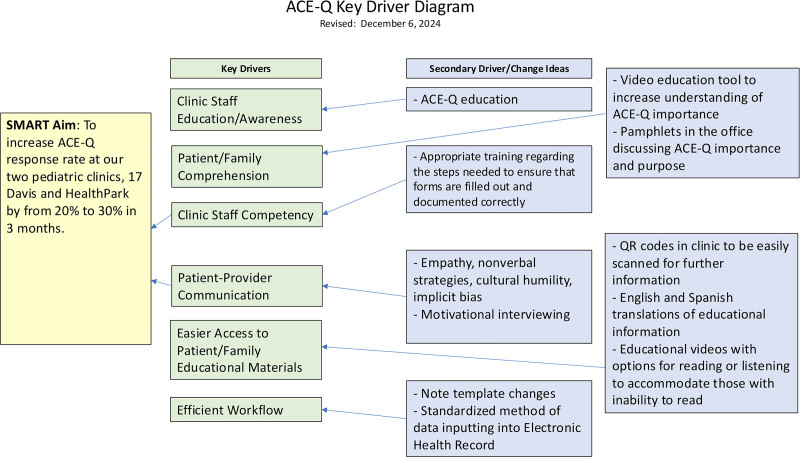 Figure 1
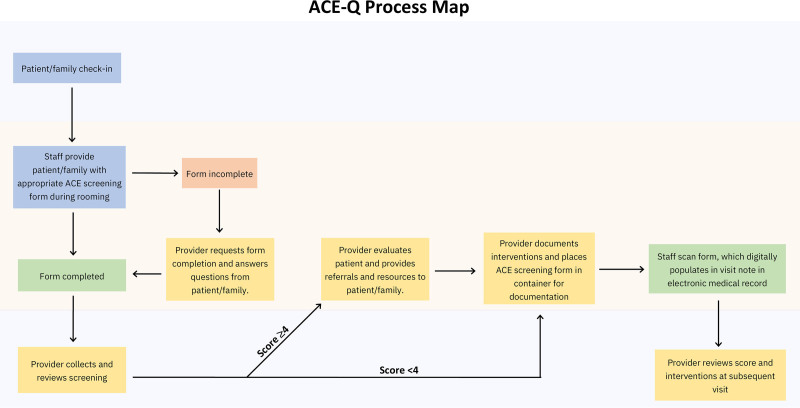 Figure 2
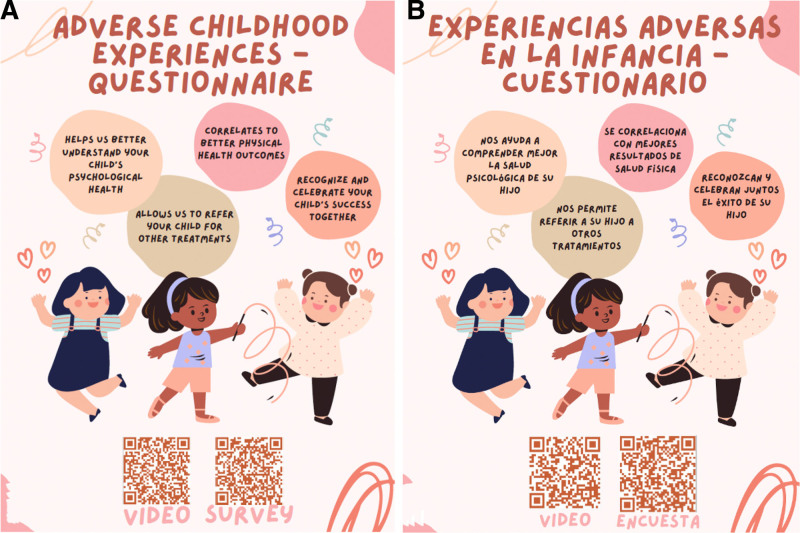 Figure 3
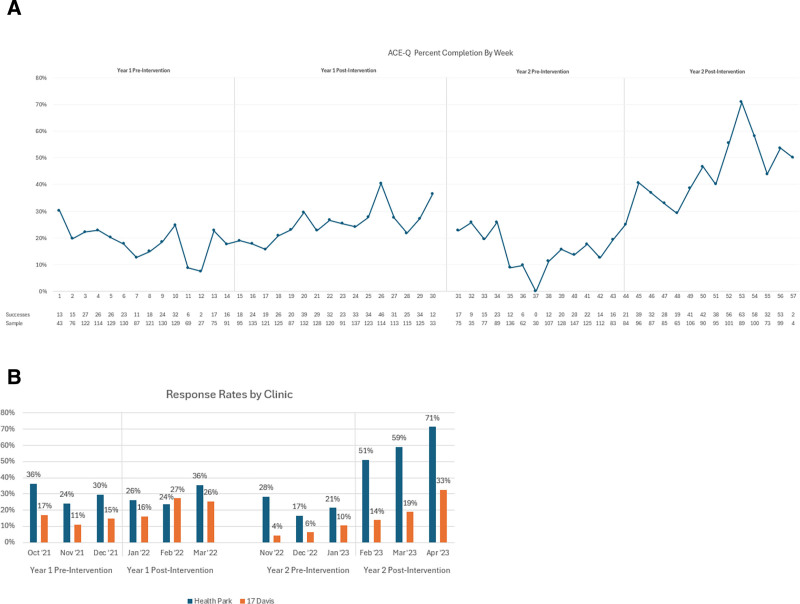 Figure 4
Peer Reviews
No public reviews on file for this paper yet. If you reviewed it on a platform where reviews are public (OpenReview, ICLR, NeurIPS, ICML), you can paste yours below so the community can read it here.
Videos
No videos yet. Explain this paper in a talk, walkthrough, or lecture? Add one.
Taxonomy
TopicsChild Abuse and Trauma · Child and Adolescent Psychosocial and Emotional Development · Child and Adolescent Health