Centrality nearest-neighbor projected-distance regression (C-NPDR) feature selection for correlation-based predictors with application to resting-state fMRI study of major depressive disorder
Elizabeth Kresock, Bryan Dawkins, Henry Luttbeg, Yijie (Jamie) Li, Rayus Kuplicki, B. A. McKinney

TL;DR
This paper introduces a new method for selecting important brain regions in fMRI data to study major depressive disorder, using correlations between brain regions.
Contribution
The novel contribution is extending NPDR to compute individual ROI importance from correlation-based features using centrality and correlation-difference methods.
Findings
The middle temporal gyrus, inferior temporal gyrus, and dorsal entorhinal cortex show strong network effects in MDD.
A new simulation method using random network theory was developed for generating artificial correlation data.
The proposed centrality NPDR approach improves feature selection for correlation-based predictors in resting-state fMRI studies.
Abstract
Nearest-neighbor projected-distance regression (NPDR) is a metric-based machine learning feature selection algorithm that uses distances between samples and projected differences between variables to identify variables or features that may interact to affect the prediction of complex outcomes. Typical tabular bioinformatics data consist of separate variables of interest, such as genes or proteins. In contrast, resting-state functional MRI (rs-fMRI) data are composed of time-series for brain regions of interest (ROIs) for each subject, and these within-brain time-series are typically transformed into correlations between pairs of ROIs. These pairs of variables of interest can then be used as inputs for feature selection or other machine learning methods. Straightforward feature selection would return the most significant pairs of ROIs; however, it would also be beneficial to know the…
Genes, proteins, chemicals, diseases, species, mutations and cell lines named across the full text — each resolved to its canonical identifier and authoritative record.
Click any figure to enlarge with its caption.
 Figure 1
 Figure 2
 Figure 3
 Figure 4
 Figure 5
 Figure 6
 Figure 7
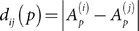 Figure 8
 Figure 9
 Figure 10
 Figure 11
 Figure 12
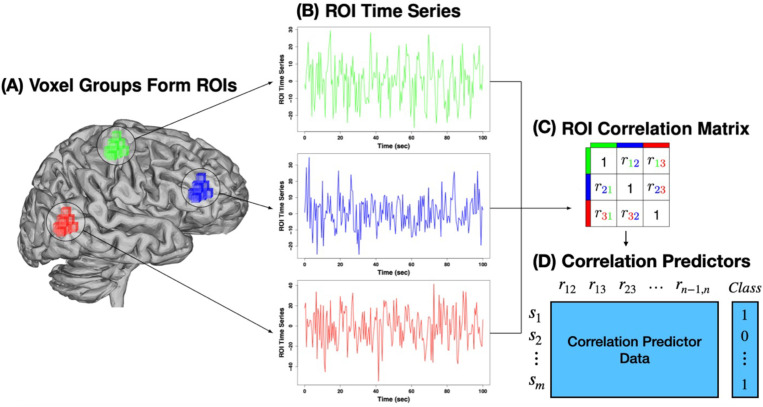 Figure 13
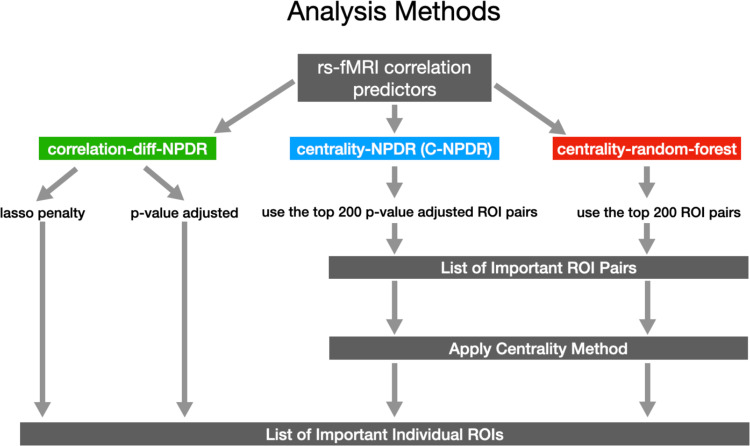 Figure 14
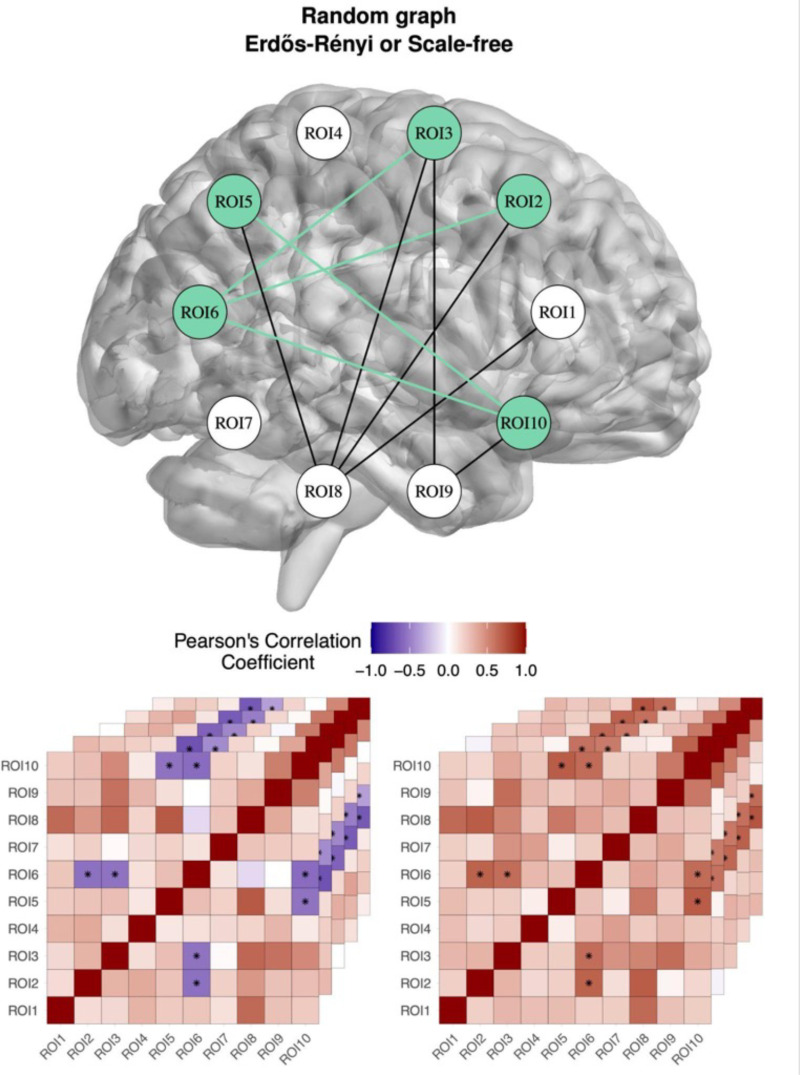 Figure 15
 Figure 16
 Figure 17
 Figure 18
Peer Reviews
No public reviews on file for this paper yet. If you reviewed it on a platform where reviews are public (OpenReview, ICLR, NeurIPS, ICML), you can paste yours below so the community can read it here.
Videos
No videos yet. Explain this paper in a talk, walkthrough, or lecture? Add one.
Taxonomy
TopicsFunctional Brain Connectivity Studies · Neural dynamics and brain function · EEG and Brain-Computer Interfaces