Indications of the SERPINE 1 variant rs1799768’s role in anti-VEGF therapy resistance in neovascular age-related macular degeneration
Muhammer Özgür ÇEVİK, Zühal Mert Altuntaş, Sadık Görkem Çevik, Jeffrey S Isenberg, Jeffrey S Isenberg, Jeffrey S Isenberg

TL;DR
A genetic variant in the SERPINE1 gene may explain why some patients with neovascular age-related macular degeneration do not respond well to anti-VEGF therapy.
Contribution
The study identifies a specific SERPINE1 polymorphism (rs1799768) as a novel risk factor for anti-VEGF therapy resistance in neovascular AMD.
Findings
The SERPINE1 rs1799768 polymorphism is significantly associated with suboptimal anti-VEGF therapy response in nAMD patients (p = 0.006).
Other hypercoagulation-related polymorphisms did not show statistically significant associations with treatment resistance.
Inherited PAI-1-675 4G/5G polymorphisms may contribute to IV anti-VEGF therapy inefficacy in nAMD.
Abstract
Age-related macular degeneration (AMD) is a retinal disease prevalent in the elderly population, with two main subtypes: dry (non-exudative) and neovascular (wet or exudative). Neovascular AMD (nAMD) has a more debilitating prognosis than dry AMD, making it the third leading cause of blindness. Intravitreal injections of anti-vascular endothelial growth factor (IV anti-VEGF) are the most effective and widely accepted treatment for nAMD. However, a significant number of nAMD patients exhibit suboptimal responses to IV anti-VEGF therapy, with the underlying mechanisms not yet fully understood. We hypothesized that genetic polymorphisms associated with blood hypercoagulation may also contribute to suboptimal responses to IV anti-VEGF therapy. This study recruited 20 nAMD patients, who were divided into two groups based on their treatment responses after four years: 10 patients with…
Genes, proteins, chemicals, diseases, species, mutations and cell lines named across the full text — each resolved to its canonical identifier and authoritative record.
Click any figure to enlarge with its caption.
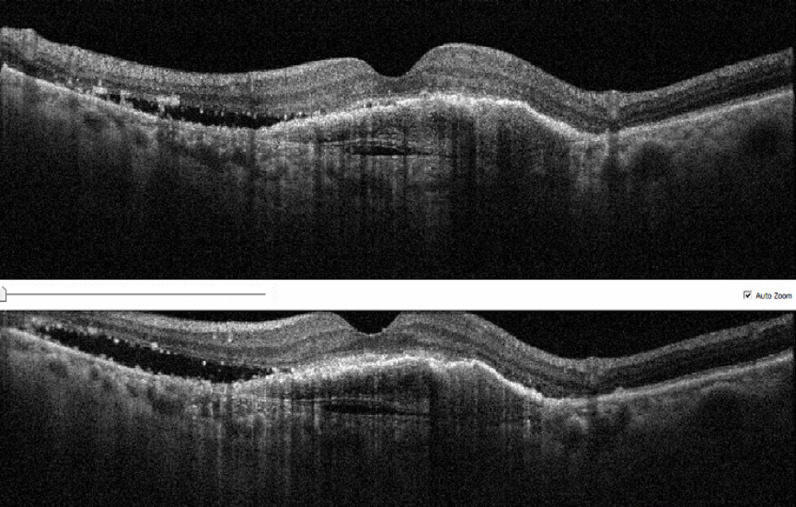 Figure 1
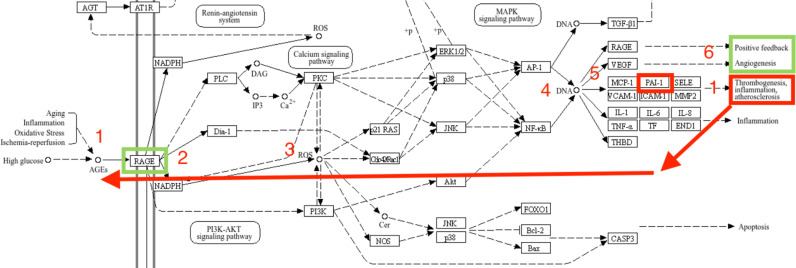 Figure 2
 Figure 3
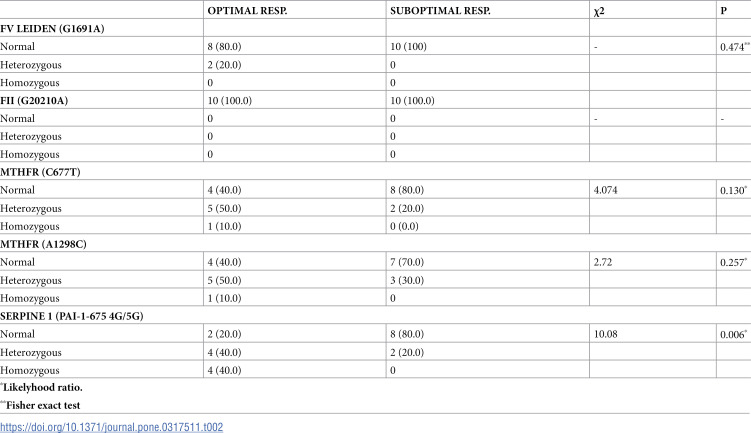 Figure 4
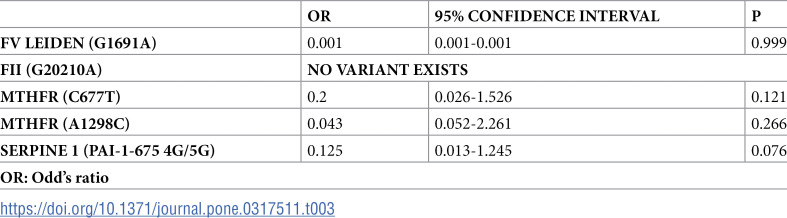 Figure 5
Peer Reviews
No public reviews on file for this paper yet. If you reviewed it on a platform where reviews are public (OpenReview, ICLR, NeurIPS, ICML), you can paste yours below so the community can read it here.
Videos
No videos yet. Explain this paper in a talk, walkthrough, or lecture? Add one.
Taxonomy
TopicsRetinal Diseases and Treatments · Retinal Development and Disorders · Retinal Imaging and Analysis