Happy-Productive worker thesis: The role of work characteristics, gender, and age
Jaime A. Bayona, William F. Durán, Jesús Perdomo-Ortiz, Delio I. Castañeda, Carlos A. Valencia, Pauline Fatien Diochon, Diego F. Alvarado

TL;DR
This study explores how work characteristics, gender, and age influence worker well-being and performance, offering insights for human resources management.
Contribution
The study introduces a three-configuration model to better understand the Happy-Productive Worker Thesis in organizational contexts.
Findings
Different work characteristics are linked to worker group membership based on well-being and performance.
Gender and age influence how workers are categorized into these configurations.
Findings provide practical insights for human resources management strategies.
Abstract
Happy-productive worker thesis (HPWT) research predicts four configurations depending on well-being and performance levels, one synergistic and three antagonists; however, there has been some discrepancy in the expected results of HPWT, as there are some inclusive results about the specific characteristics that lead to each one of the predicted groups. In this study, we face these discrepancies using a three-configuration model that is more realistic in the organizational context, and exploring how work characteristics, gender, and age can predict workers’ membership in such configurations. We performed multinomial logistic regressions using a sample of 504 Colombian workers and their supervisors from different economic sectors. The results indicated that different work characteristics are associated with the membership of workers in each group, and how this membership varies depending…
Genes, proteins, chemicals, diseases, species, mutations and cell lines named across the full text — each resolved to its canonical identifier and authoritative record.
Click any figure to enlarge with its caption.
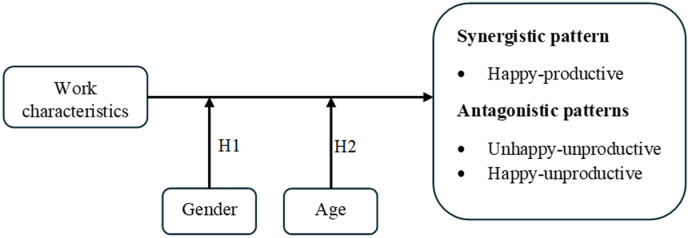 Figure 1
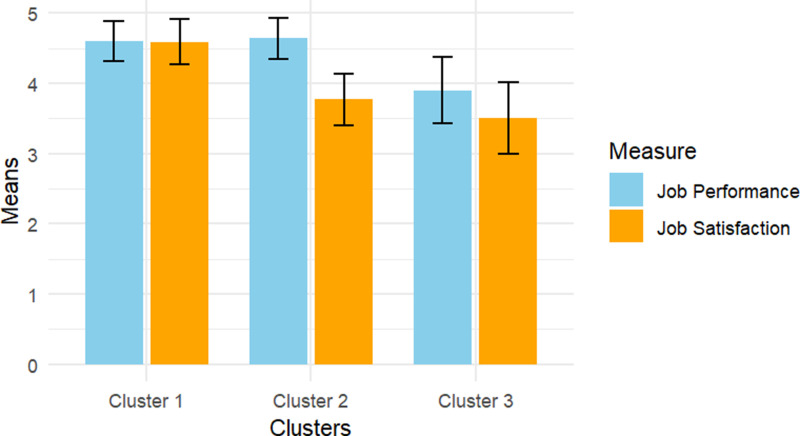 Figure 2
 Figure 3
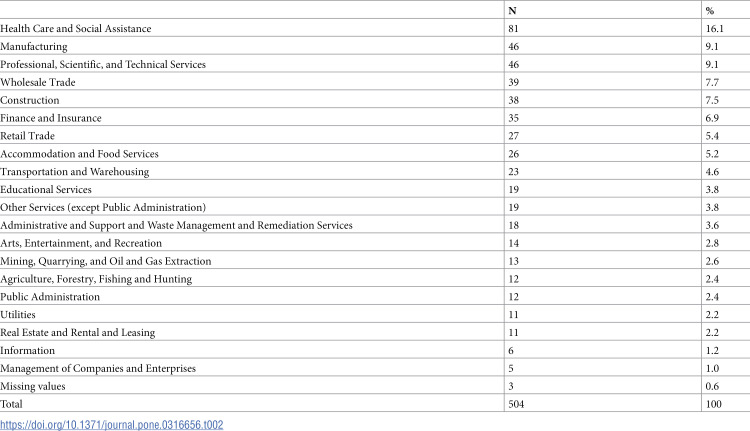 Figure 4
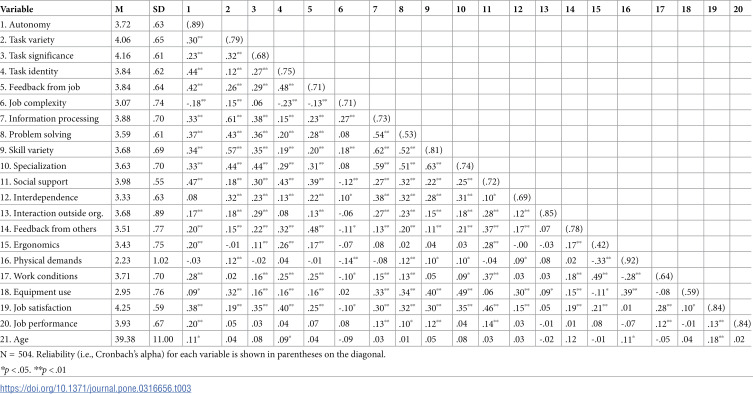 Figure 5
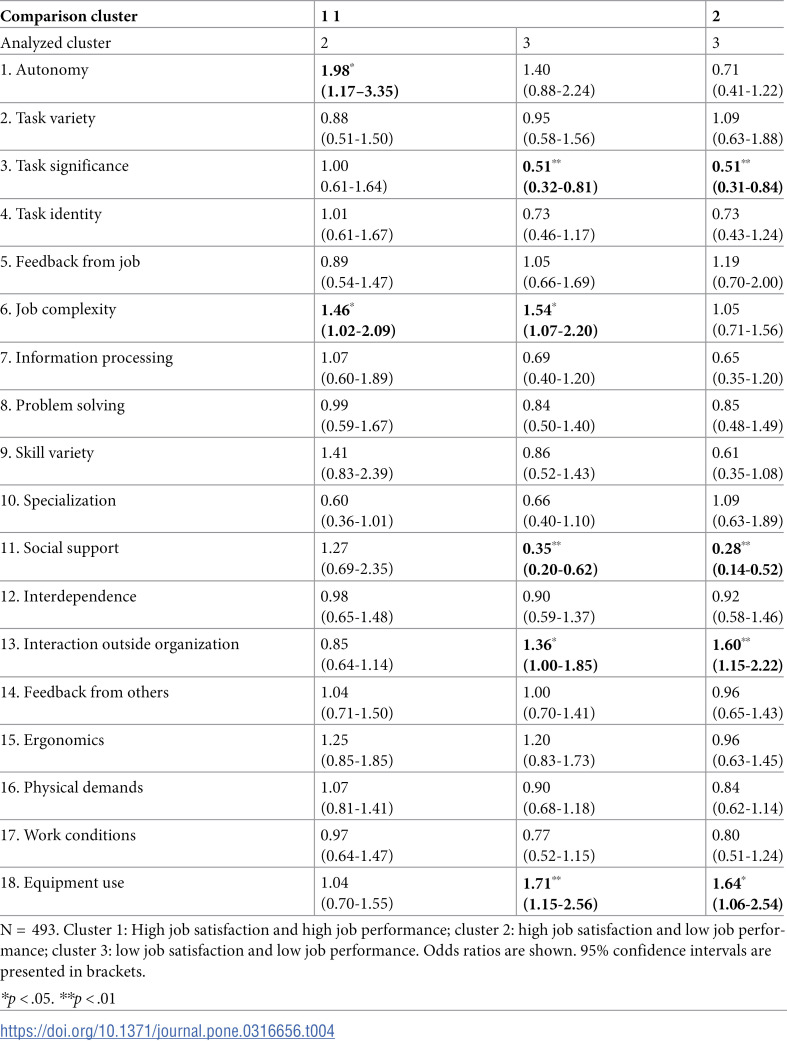 Figure 6
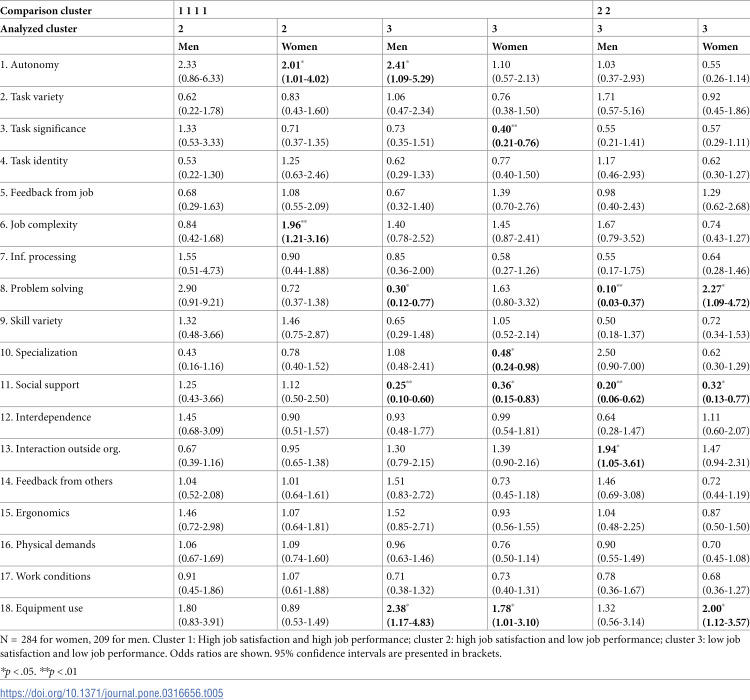 Figure 7
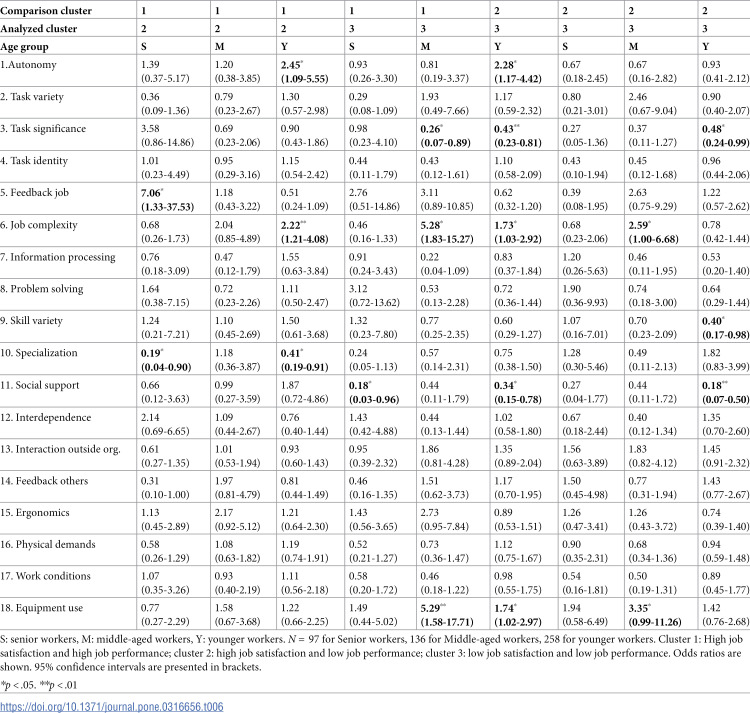 Figure 8
Peer Reviews
No public reviews on file for this paper yet. If you reviewed it on a platform where reviews are public (OpenReview, ICLR, NeurIPS, ICML), you can paste yours below so the community can read it here.
Videos
No videos yet. Explain this paper in a talk, walkthrough, or lecture? Add one.
Taxonomy
TopicsEmployment and Welfare Studies · Retirement, Disability, and Employment · Workplace Health and Well-being