Submovements in manual tracking: people with Parkinson’s disease produce more submovements than age-matched controls
Lior Noy, Sharon Hassin-Baer, Tsvia Fay-Karmon, Noora Kattouf, Simon Israeli-Korn, Robrecht van der Wel, Jason Friedman

TL;DR
People with Parkinson’s disease make jerkier movements than age-matched controls when tracking slow-moving targets.
Contribution
The study shows that Parkinson’s patients use more submovements during slow tracking tasks compared to controls.
Findings
PwP produced more type 3 submovements than age-matched and younger controls.
Younger controls had fewer tracking errors than older participants.
Movement smoothness declined with age and Parkinson’s disease.
Abstract
In general, people are unable to produce slow, smooth movements - as movements become slower (i.e., with longer durations), they become jerkier. A hallmark feature of Parkinson’s disease is bradykinesia - slowness of movement. In this study, we investigate the intersection of these two observations - how do people with Parkinson’s disease (PwP) perform in a slow tracking task, and how does it vary as a function of movement frequency? On the one hand, as PwP move more slowly in day-to-day life, they may be better in a slow tracking task. On the other hand, their general impairment in movement production may lead to worse tracking outcomes. We used a well-tested tracking task known as the one-person mirror game, where participants control the left-right movement of an ellipse on a graphics tablet. They did so using a stylus and were instructed to match the horizontal location of a…
Genes, proteins, chemicals, diseases, species, mutations and cell lines named across the full text — each resolved to its canonical identifier and authoritative record.
Click any figure to enlarge with its caption.
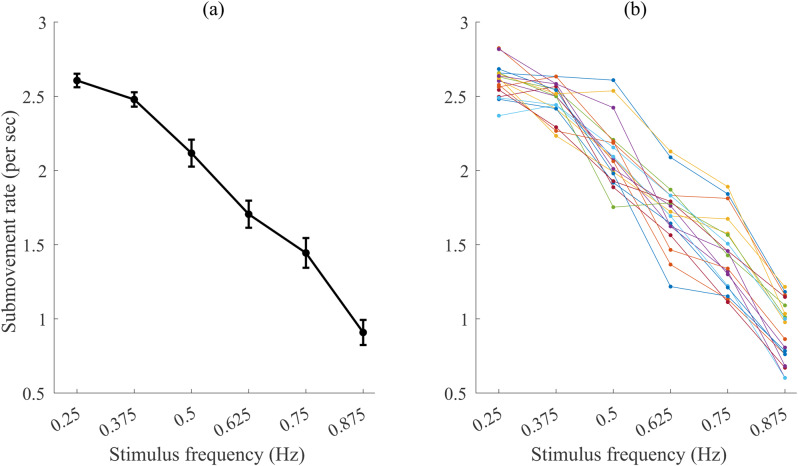 Figure 1
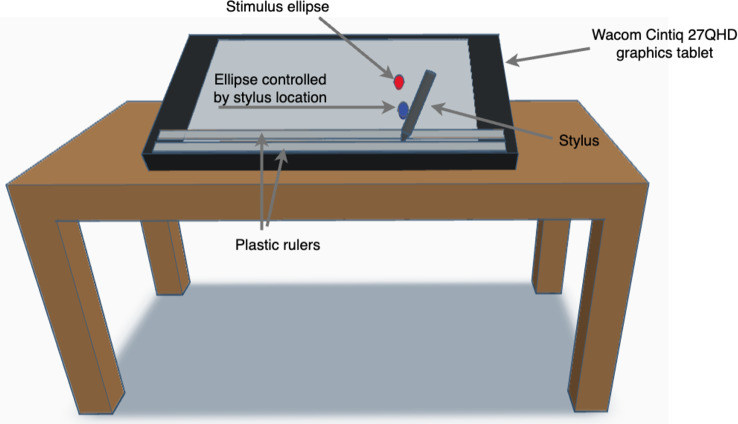 Figure 2
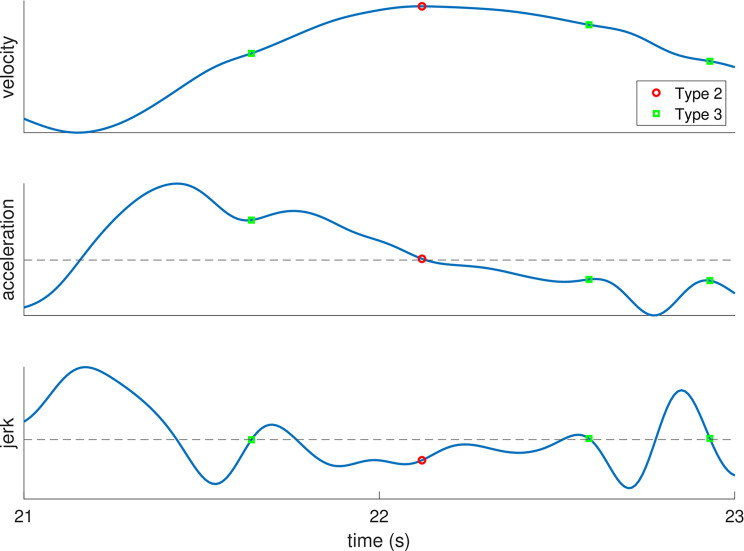 Figure 3
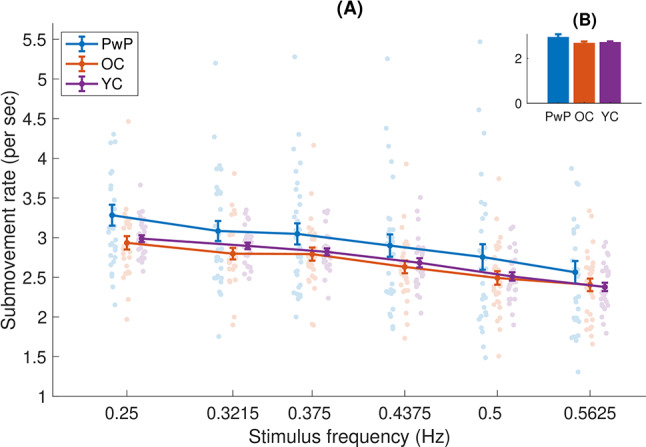 Figure 4
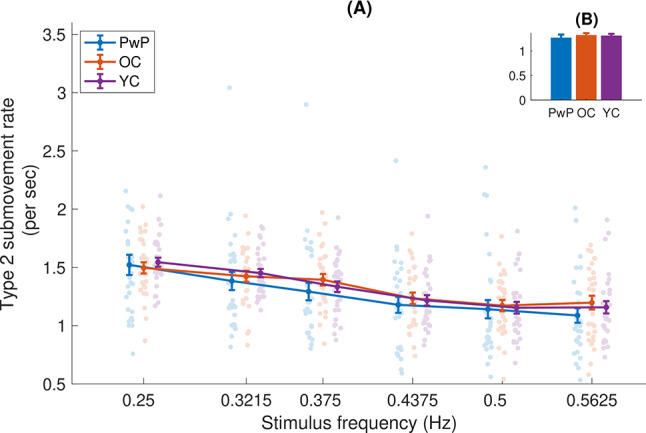 Figure 5
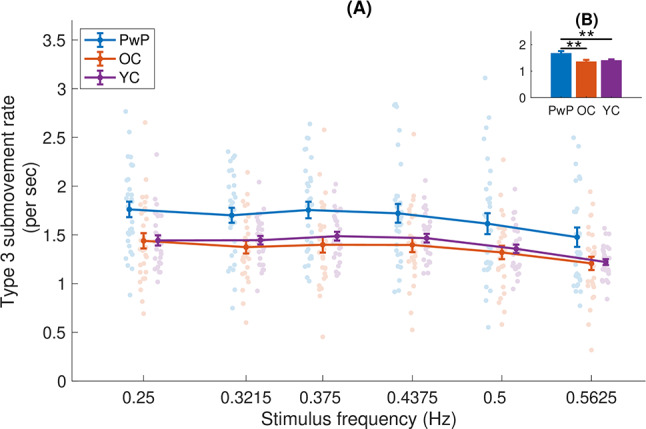 Figure 6
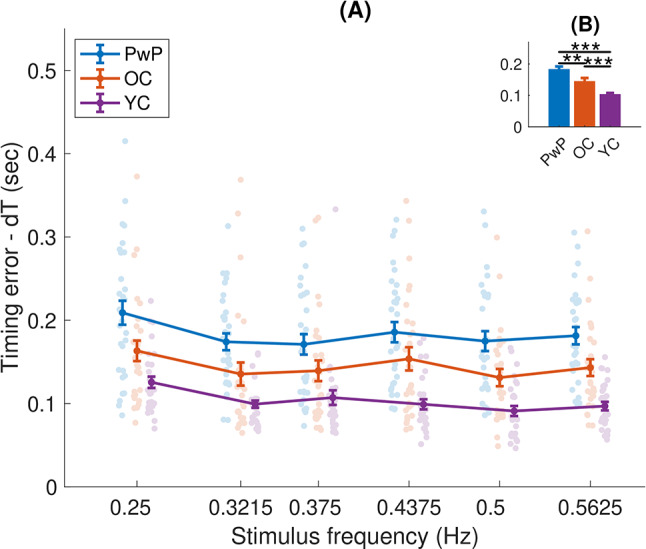 Figure 7
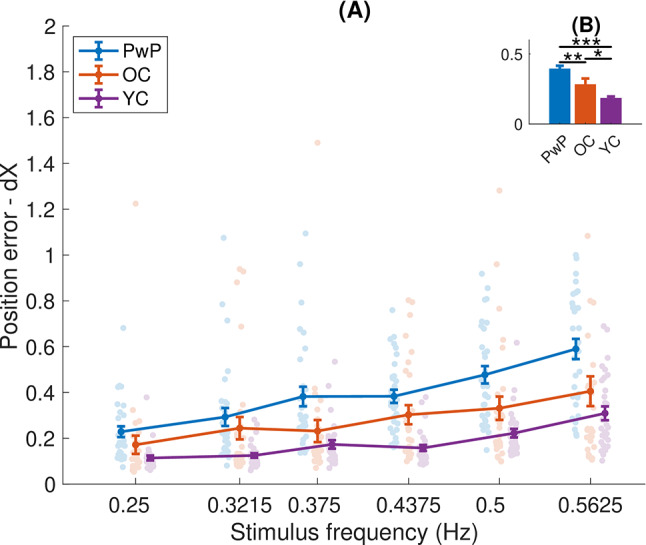 Figure 8
Peer Reviews
No public reviews on file for this paper yet. If you reviewed it on a platform where reviews are public (OpenReview, ICLR, NeurIPS, ICML), you can paste yours below so the community can read it here.
Videos
No videos yet. Explain this paper in a talk, walkthrough, or lecture? Add one.
Taxonomy
TopicsParkinson's Disease Mechanisms and Treatments · Balance, Gait, and Falls Prevention · Motor Control and Adaptation