Predictors of short stature in Israeli children aged 6–7 years: a retrospective cohort study
Naama Fisch-Shvalb, Michal Yackobovitch-Gavan, Naomi Fliss-Isakov, Yair Morali, Nati Brooks, Moran Blaychfeld-Magnazi, Deena Rachel Zimmerman, Liora Lazar, Moshe Phillip, Ronit Endevelt

TL;DR
This study finds that Israeli children from the ultraorthodox Jewish sector are more likely to have short stature by age 6–7, with growth differences starting early in life.
Contribution
The study identifies early-life predictors of short stature in Israeli children and highlights the vulnerability of the ultraorthodox Jewish population.
Findings
Short stature is most prevalent in ultraorthodox Jewish children compared to other sectors.
Growth gaps emerge by age 2, with female sex, lower early height z-scores, and sector affiliation as key predictors.
Public health interventions should focus on monitoring growth in high-risk groups during early childhood.
Abstract
There are differences in the rates of short stature (WHO height-z score < -2SD) between the various sectors in Israeli children aged 6–7 years, with higher rates in the ultraorthodox Jewish population. We aimed to: (a) Compare the anthropometric data at 0–2 years of age and the obstetric and demographic data of children with short stature at 6–7 years of age with those of children with normal height. (b) Assess risk factors for short stature at the age of 6–7 years. (c) Evaluate the impact of clinical and socioeconomic factors on linear growth from birth to the age of 6–7 years. This was a retrospective cohort study. Anonymized anthropometric data measured at the first grade of school during 2015–2019 were collected from the Ministry of Health records. The participants were stratified into sectors according to the affiliation of their school. Retrospective growth and sociodemographic…
Genes, proteins, chemicals, diseases, species, mutations and cell lines named across the full text — each resolved to its canonical identifier and authoritative record.
Click any figure to enlarge with its caption.
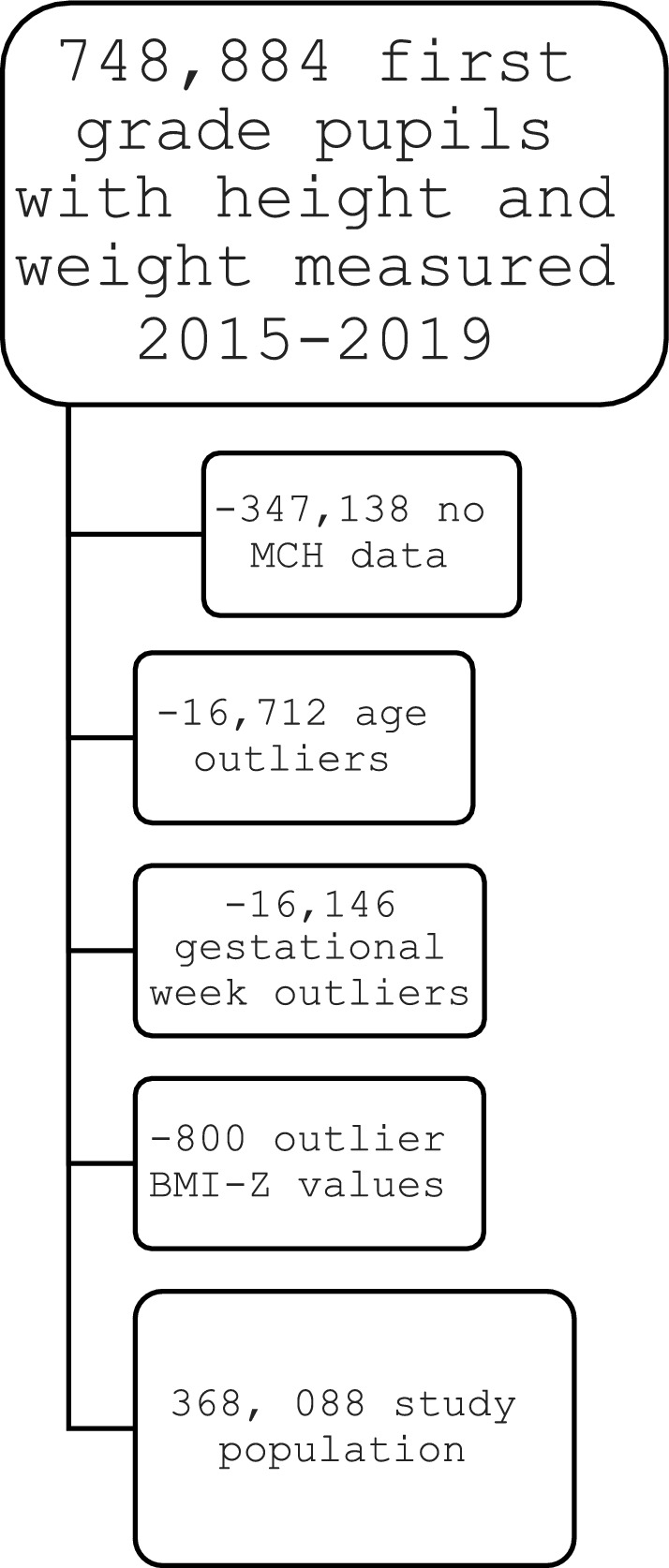 Figure 1
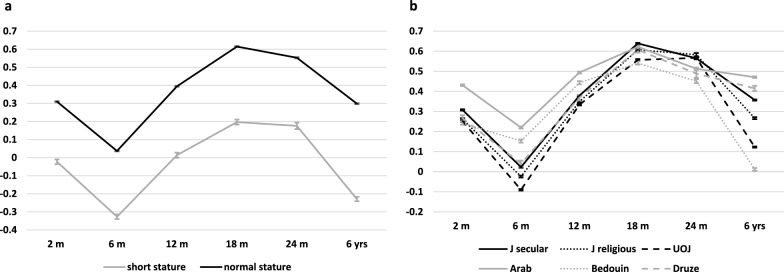 Figure 2
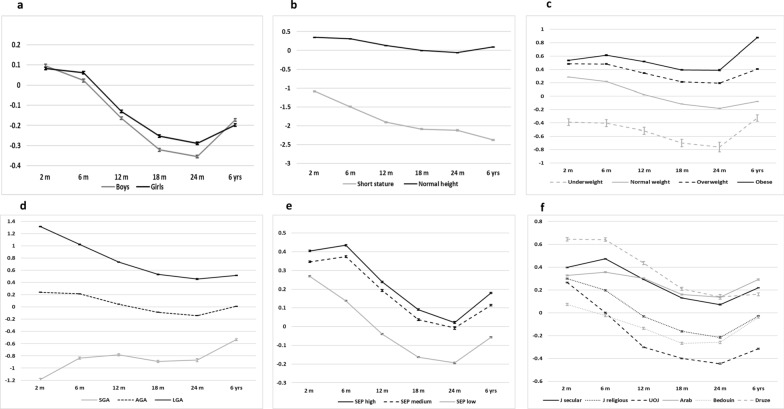 Figure 3
Peer Reviews
No public reviews on file for this paper yet. If you reviewed it on a platform where reviews are public (OpenReview, ICLR, NeurIPS, ICML), you can paste yours below so the community can read it here.
Videos
No videos yet. Explain this paper in a talk, walkthrough, or lecture? Add one.
Taxonomy
TopicsChild Nutrition and Water Access · Birth, Development, and Health · Obesity, Physical Activity, Diet