Sexual dimorphism in cortical theta rhythms relates to elevated internalizing symptoms during adolescence
Nathan M. Petro, Giorgia Picci, Lauren R. Ott, Maggie P. Rempe, Christine M. Embury, Samantha H. Penhale, Yu-Ping Wang, Julia M. Stephen, Vince D. Calhoun, Brittany K. Taylor, Tony W. Wilson

TL;DR
The study finds that brain activity patterns in adolescent girls, especially older ones, are linked to higher internalizing symptoms like anxiety and depression.
Contribution
The study reveals a sex-specific relationship between cortical theta rhythms and internalizing symptoms during adolescence.
Findings
Theta activity in older girls with higher internalizing symptoms is weaker compared to younger girls.
The effect is strongest in the temporoparietal junction and cingulate cortex.
Sex moderates the relationship between age, internalizing symptoms, and theta activity in association cortices.
Abstract
Psychiatric disorders frequently emerge during adolescence, with girls at nearly twice the risk compared to boys. These sex differences have been linked to structural brain differences in association regions, which undergo profound development during childhood and adolescence. However, the relationship between functional activity in these cortical regions and the emergence of psychiatric disorders more broadly remains poorly understood. Herein, we investigated whether differences in internalizing and externalizing symptoms among youth are related to multispectral spontaneous neural activity. Spontaneous cortical activity was recorded using magnetoencephalography (MEG) in 105 typically-developing youth (9–15 years-old; 54 female) during eyes-closed rest. The strength of spontaneous neural activity within canonical frequency bands was estimated at each cortical vertex. The resulting…
Genes, proteins, chemicals, diseases, species, mutations and cell lines named across the full text — each resolved to its canonical identifier and authoritative record.
Click any figure to enlarge with its caption.
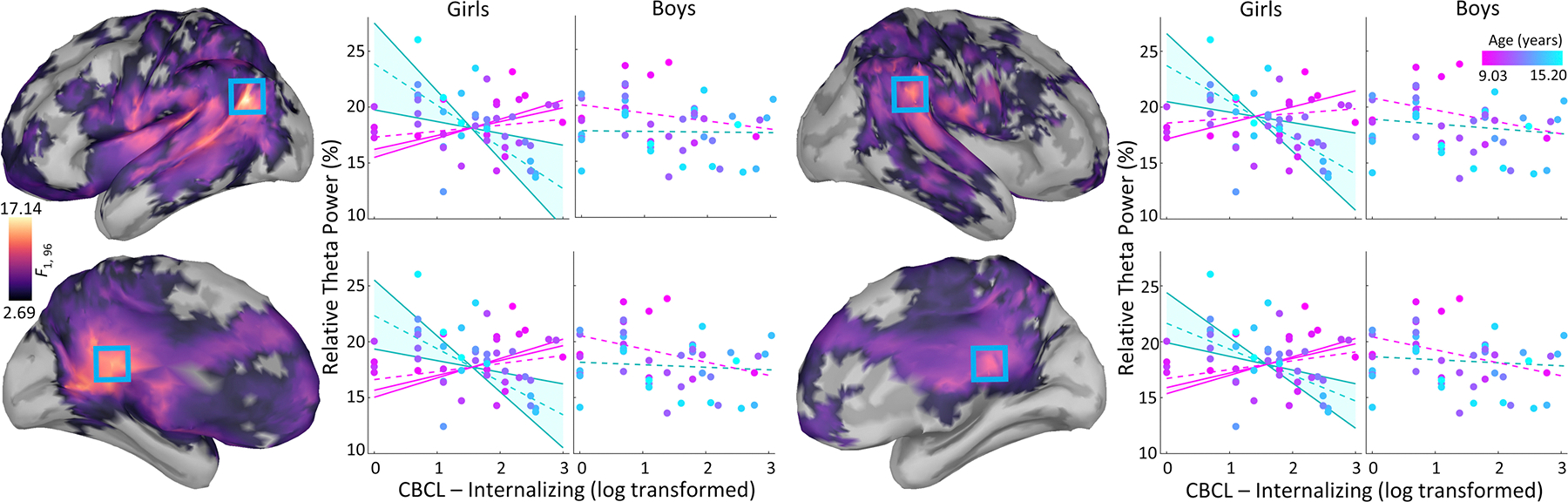 Figure 1
Peer Reviews
No public reviews on file for this paper yet. If you reviewed it on a platform where reviews are public (OpenReview, ICLR, NeurIPS, ICML), you can paste yours below so the community can read it here.
Videos
No videos yet. Explain this paper in a talk, walkthrough, or lecture? Add one.
Taxonomy
TopicsAnxiety, Depression, Psychometrics, Treatment, Cognitive Processes · Stress Responses and Cortisol · Mental Health Research Topics