Population Kinetics and Protein Profiles of Co-Cultured Adult and Fetus Rabbit Bladder Smooth Muscle Cells
Hayrunisa Kahraman Esen, Burcu Biltekin, Mevlit Korkmaz, B. Haluk Güvenç

TL;DR
This study examines how mixing adult and fetal rabbit bladder muscle cells affects their growth and protein profiles, revealing slower growth and changes in proteins when co-cultured.
Contribution
The study introduces a novel co-culture model of adult and fetal bladder smooth muscle cells to explore population kinetics and protein interactions.
Findings
Co-cultured cells showed significantly longer population doubling times compared to single cultures.
Electrophoresis revealed distinct protein bands in co-cultured cells, including a unique 32kDa band.
Fetal cells maintained viability and morphology in co-cultures but showed reduced proliferation rates.
Abstract
Bladder tissue models have been developed using smooth muscle cells (SMCs) on various scaffolds to mimic bladder morphology and physiology. This study investigates the effects of co-culturing fetal and adult SMCs on growth properties and protein profiles to understand cellular interactions and population kinetics. Bladder tissue samples from 10 adult and 10 fetal New Zealand rabbits were divided into 5 groups: adult SMCs (A), fetal SMCs (F), 50%A + 50%F (A+F), 75%A + 25%F (3A+F), and 25%A + 75%F (A+3F). Population doubling time (PDT) of 3 × 10⁶ cells from each group was measured after 48 and 72 hours. Protein concentrations were estimated by spectrophotometric analysis and analyzed via SDS-PAGE gel electrophoresis. Cells exhibited typical SMC morphology, confirmed by positive staining for α-SMA and MYH11. Median cell counts of single cultures were significantly higher than co-cultures…
Genes, proteins, chemicals, diseases, species, mutations and cell lines named across the full text — each resolved to its canonical identifier and authoritative record.
Click any figure to enlarge with its caption.
 Figure 1
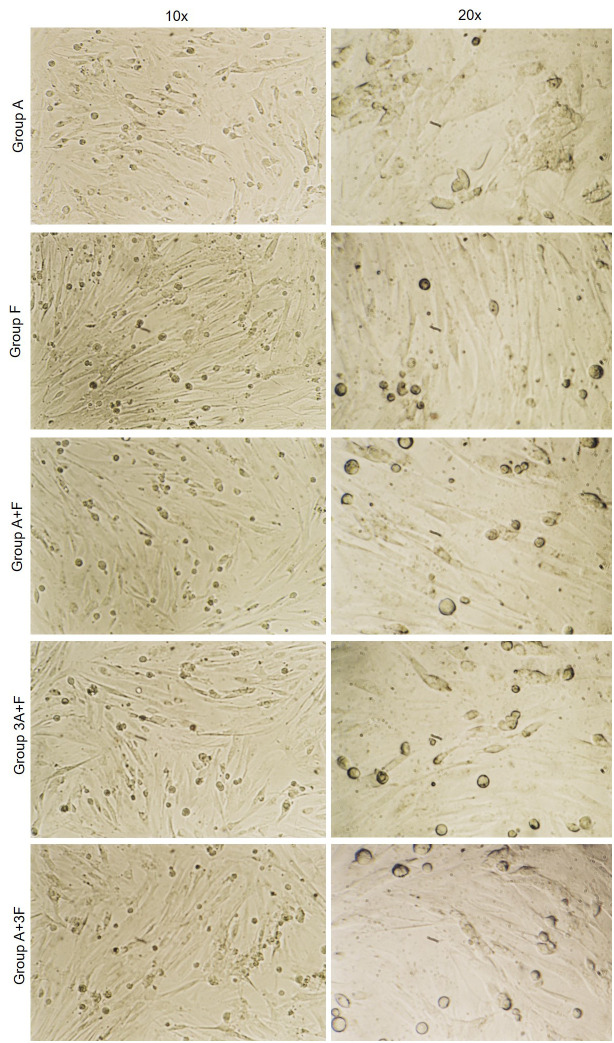 Figure 2
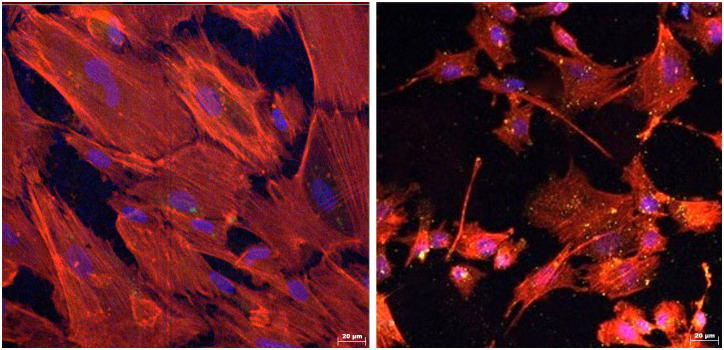 Figure 3
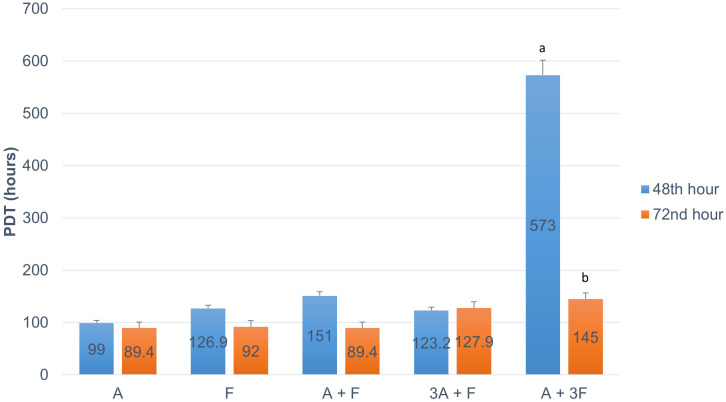 Figure 4
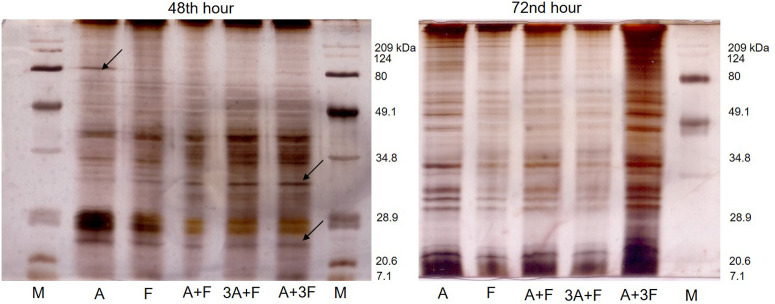 Figure 5
Peer Reviews
No public reviews on file for this paper yet. If you reviewed it on a platform where reviews are public (OpenReview, ICLR, NeurIPS, ICML), you can paste yours below so the community can read it here.
Videos
No videos yet. Explain this paper in a talk, walkthrough, or lecture? Add one.
Taxonomy
TopicsTissue Engineering and Regenerative Medicine · Urological Disorders and Treatments · Urinary Bladder and Prostate Research