Impact of ASXL1 Gene Alterations on Myelodysplastic Syndrome With Isolated 20q Deletion
Yanan Chang, Linlin Liu, Chenghua Cui, Jiange He, Chengwen Li, Yujiao Jia, Ruixue Zhang, Wanyun Wu, Ji Zhou, Jigang Xiao, Zefeng Xu, Tiejun Qin, Qi Sun, Huijun Wang, Zhijian Xiao

TL;DR
This study examines how changes in the ASXL1 gene affect patients with a specific type of blood disorder called myelodysplastic syndrome.
Contribution
The study identifies distinct clinical and biological features of different ASXL1 gene alterations in MDS patients with isolated 20q deletion.
Findings
ASXL1 mutations are linked to worse blood cell counts and higher risk classifications in MDS patients.
ASXL1 deletions are associated with different clinical features compared to mutations.
Biallelic ASXL1 inactivation is rare but occurs in a small subset of patients.
Abstract
Isolated 20q deletion [del(20q)] is a recurrent favorable abnormality in myelodysplastic syndrome (MDS) and may cause deletion of the ASXL1 gene. Meanwhile, ASXL1 mutations are also common in individuals with MDS. This study aimed to describe the biological and clinical implications of ASXL1 mutations and deletion in newly diagnosed MDS patients with isolated del(20q). Gene mutation and copy number alterations in 178 newly diagnosed MDS patients with isolated del(20q) were analyzed using DNA next generation sequencing. Twenty‐five (14%) of 178 patients were found to have ASXL1 mutations, which exhibited lower absolute neutrophil counts (ANC) (p = 0.006), a higher percentage of bone marrow blasts (p = 0.001), more mutant genes (p < 0.001), higher IPSS‐R (p = 0.038) and IPSS‐M (p = 0.001) risk groups. Furthermore, ASXL1 mutations were preferentially associated with mutations in U2AF1,…
Genes, proteins, chemicals, diseases, species, mutations and cell lines named across the full text — each resolved to its canonical identifier and authoritative record.
Click any figure to enlarge with its caption.
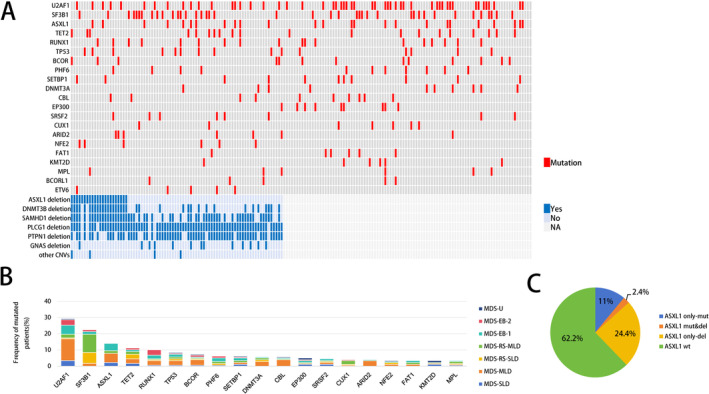 Figure 1
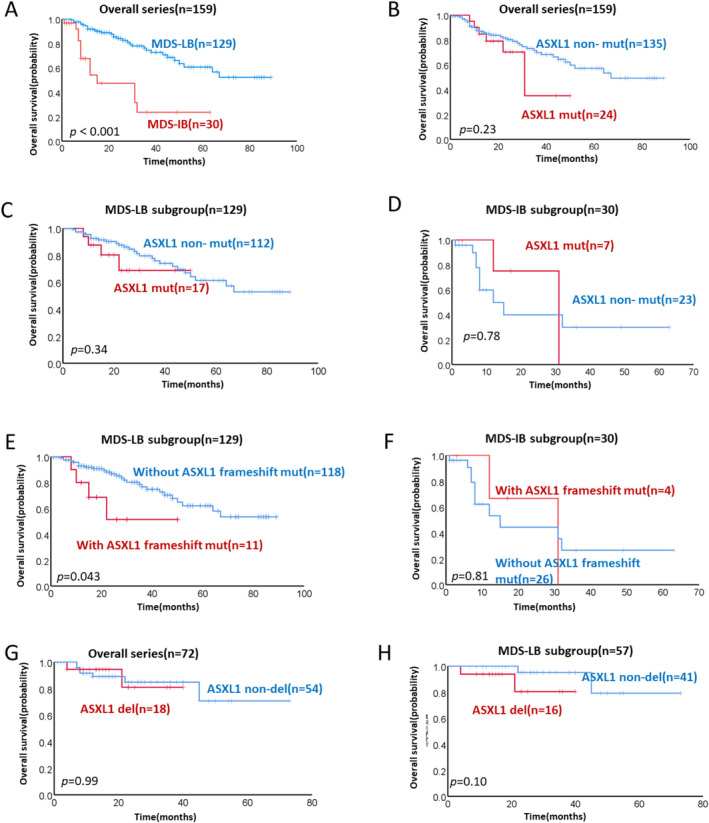 Figure 2
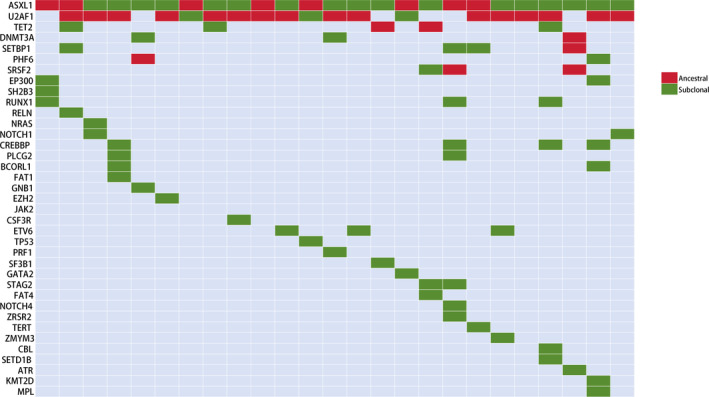 Figure 3
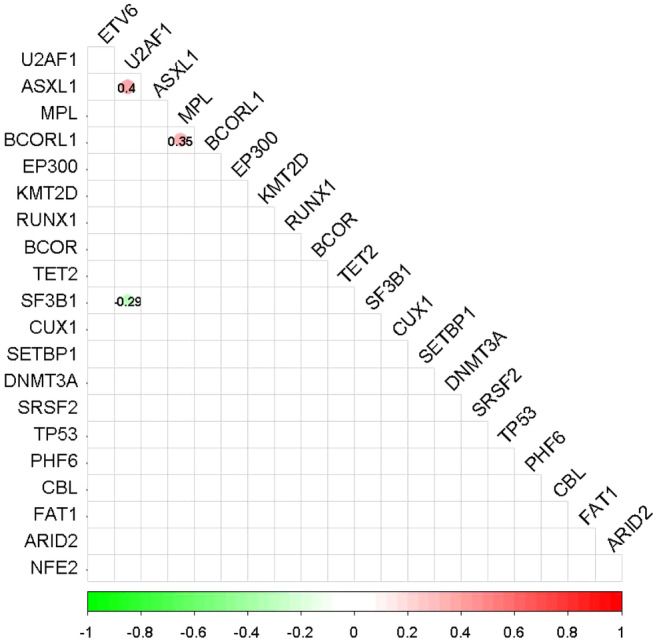 Figure 4
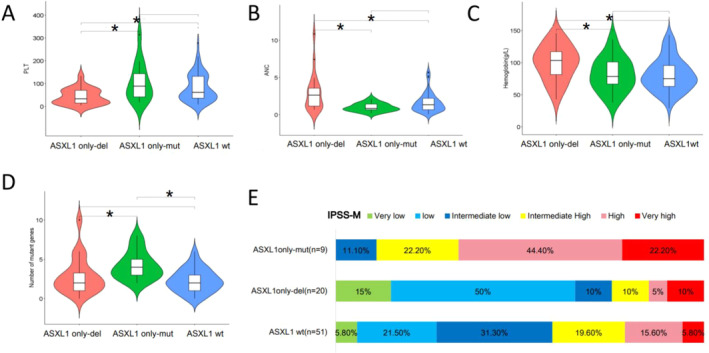 Figure 5
Peer Reviews
No public reviews on file for this paper yet. If you reviewed it on a platform where reviews are public (OpenReview, ICLR, NeurIPS, ICML), you can paste yours below so the community can read it here.
Videos
No videos yet. Explain this paper in a talk, walkthrough, or lecture? Add one.
Taxonomy
TopicsAcute Myeloid Leukemia Research · Blood disorders and treatments · Sarcoma Diagnosis and Treatment