International validation of a pre-transplant risk assessment tool for graft survival in pediatric kidney transplant recipients
Loes Oomen, Liesbeth L de Wall, Burkhard Tönshoff, Kai Krupka, Jerome Harambat, Julien Hogan, Cécile Couchoud, Emilie Savoye, Huib de Jong, Elisabeth A M Cornelissen, Antonia H M Bouts, Mandy G Keijzer-Veen, Wout F J Feitz, Charlotte M H H T Bootsma-Robroeks

TL;DR
This study validates a kidney transplant risk model for children in different countries and finds that local adaptations improve predictions.
Contribution
The study demonstrates the need for country-specific adaptations of a pediatric kidney transplant risk model to improve international applicability.
Findings
The Dutch prediction model showed good internal validation (AUC 0.77 at 10 years) but poor external validation in Germany and France.
Adapted national models outperformed the international model with higher AUCs in Dutch, French, and German cohorts.
Cohorts differed significantly in baseline characteristics and outcomes, highlighting the need for localized models.
Abstract
A pre-transplant prediction model using commonly available factors is valuable for optimizing donor selection, communication, and counseling for pediatric kidney transplant (PKT) recipients. This study aims to externally validate a Dutch PKT prediction model and assess its international applicability. Data from the Dutch-, CERTAIN-, and CRISTAL registries, covering PKT from 2005 to 2021, were used. The Dutch prediction model was externally validated in a German and French cohort and then adapted to these specific countries. An international prediction model was also developed using all available data. Models were based on 80% derivation cohorts and internally validated using areas under the receiver operating characteristic curve (ROC-AUC) and calibration plots. Of 3266 transplantations, 2475 (273 Dutch, 356 German, 1622 French, and 224 other) were used for analysis. Cohorts differed…
Genes, proteins, chemicals, diseases, species, mutations and cell lines named across the full text — each resolved to its canonical identifier and authoritative record.
Click any figure to enlarge with its caption.
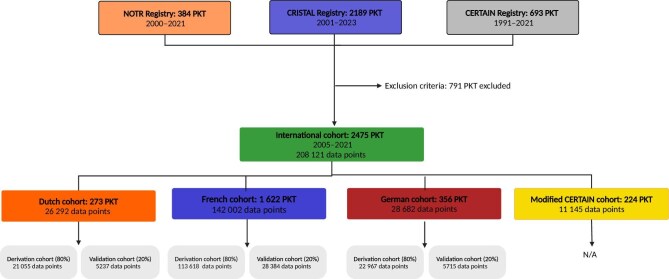 Figure 1
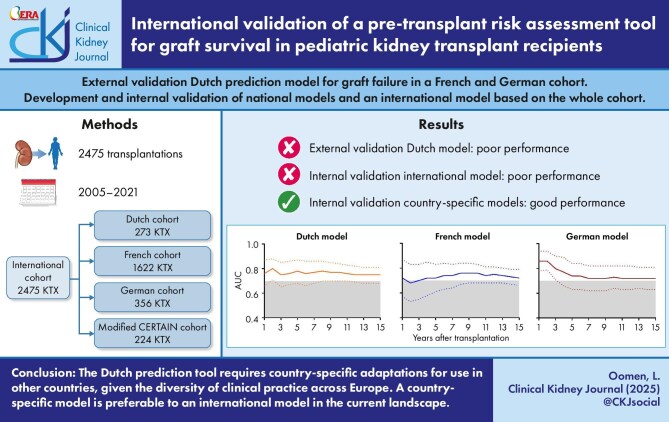 Figure 1
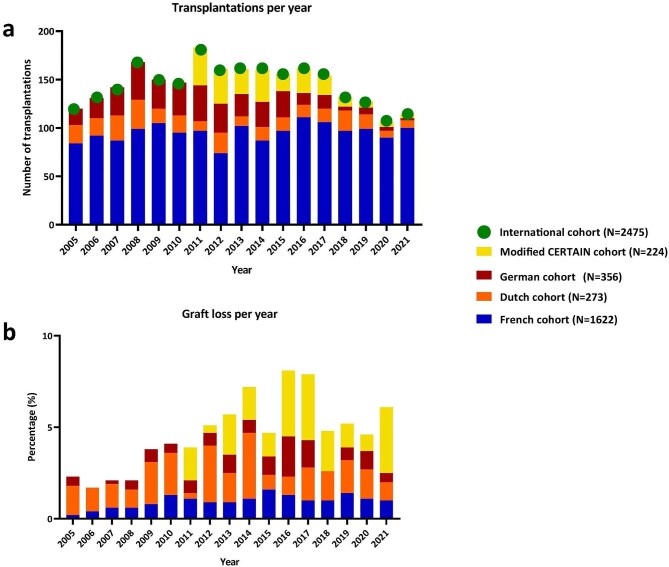 Figure 2
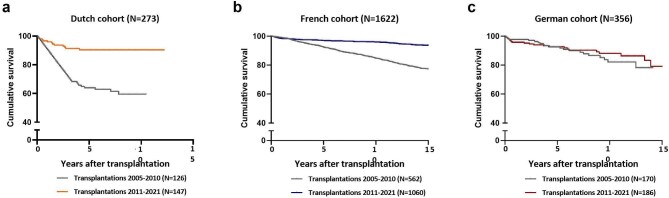 Figure 3
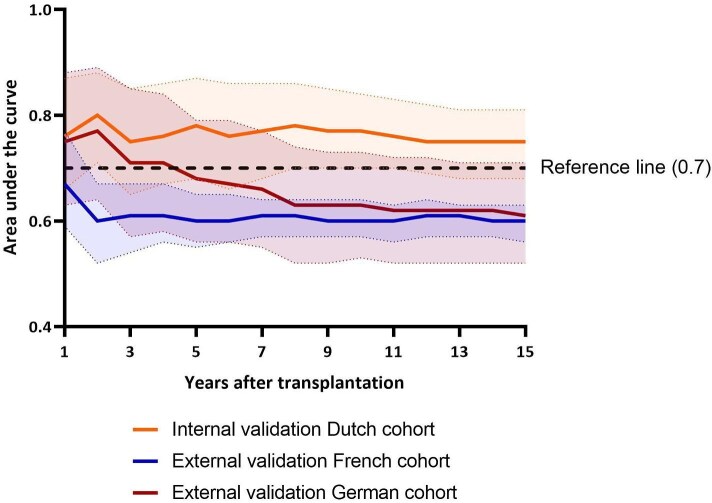 Figure 4
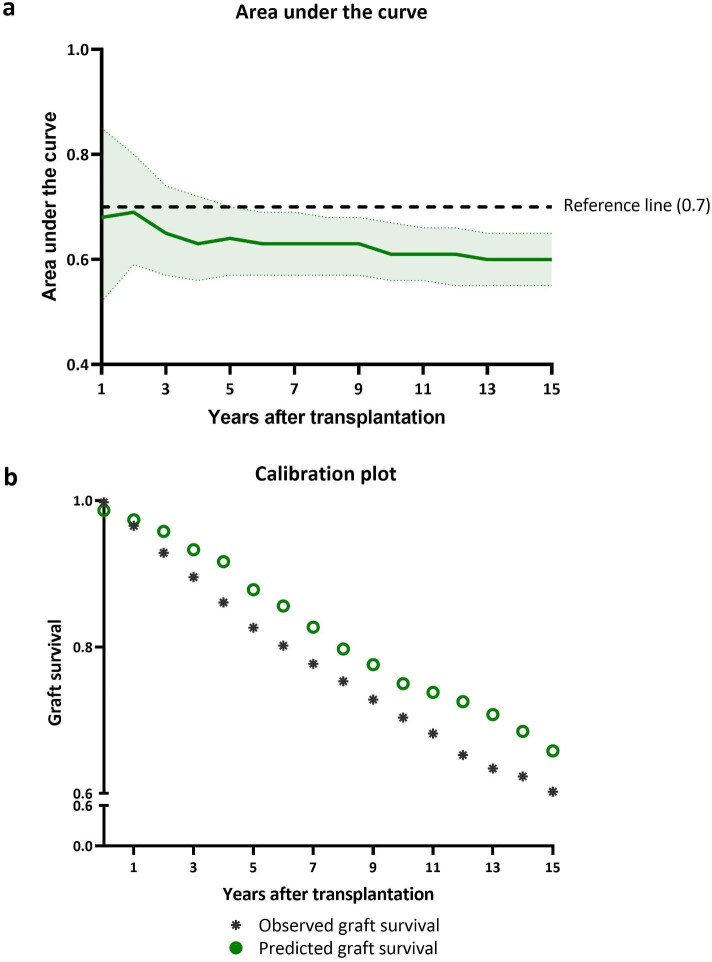 Figure 5
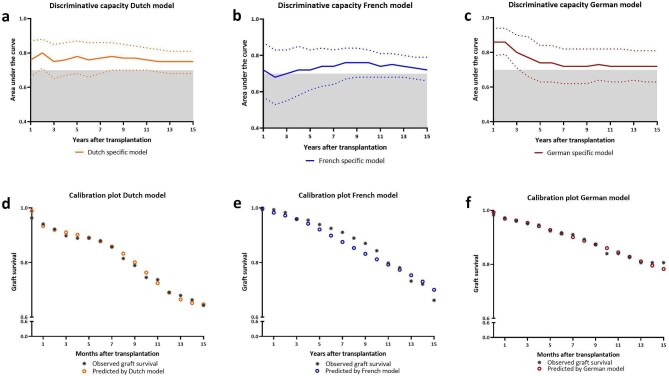 Figure 6
Peer Reviews
No public reviews on file for this paper yet. If you reviewed it on a platform where reviews are public (OpenReview, ICLR, NeurIPS, ICML), you can paste yours below so the community can read it here.
Videos
No videos yet. Explain this paper in a talk, walkthrough, or lecture? Add one.
Taxonomy
TopicsRenal Transplantation Outcomes and Treatments · Organ Transplantation Techniques and Outcomes · Transplantation: Methods and Outcomes