Intracerebral Hematoma Secondary to Wernicke’s Encephalopathy: A Case Report With a Review of Literature
Khadija Ouchen, Siham Bouchal, Nizar El Bouardi, Mustapha Maaroufi, Faouzi Belahsen

TL;DR
A 48-year-old man with Wernicke’s encephalopathy due to thiamine deficiency developed a rare complication: intracerebral hematoma.
Contribution
This case report highlights a rare complication of Wernicke’s encephalopathy and its association with intracerebral hematoma.
Findings
The patient showed typical MRI findings of Wernicke’s encephalopathy in standard brain regions.
The patient also developed an intracerebral hematoma, a rare and severe complication of the condition.
Low serum thiamine levels confirmed the diagnosis of Wernicke’s encephalopathy.
Abstract
Wernicke’s encephalopathy (WE) is an acute neurological disorder secondary to thiamine deficiency (vitamin B1). Treatment should be started as early as possible to prevent serious complications. Typical magnetic resonance imaging (MRI) findings of WE can be seen as symmetrical signal abnormalities in the periventricular regions of the thalamus, hypothalamus, mammillary bodies, periaqueductal region, and floor of the fourth ventricle. Intracranial hemorrhage is a rare but serious complication of WE, whose physiopathology remains unclear. We report the case of a 48-year-old man with suggestive MRI abnormalities of WE in typical sites and low serum thiamine levels, complicated by intracerebral hematoma.
Genes, proteins, chemicals, diseases, species, mutations and cell lines named across the full text — each resolved to its canonical identifier and authoritative record.
Click any figure to enlarge with its caption.
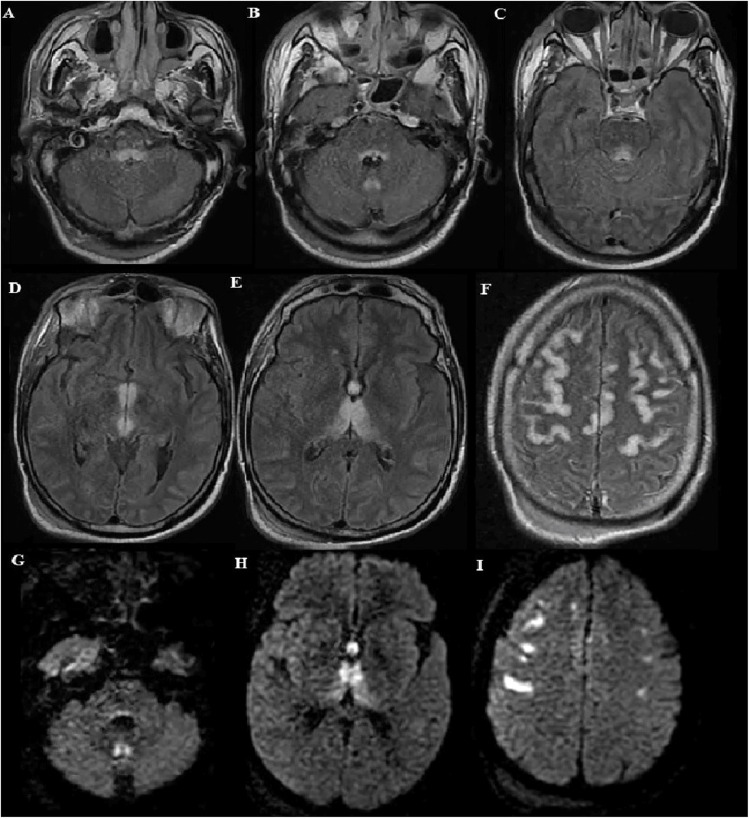 Figure 1
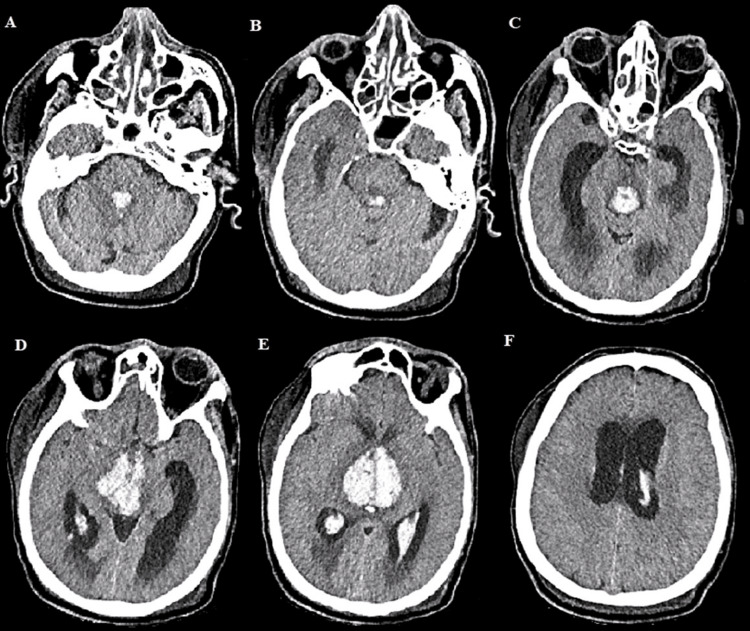 Figure 2
Peer Reviews
No public reviews on file for this paper yet. If you reviewed it on a platform where reviews are public (OpenReview, ICLR, NeurIPS, ICML), you can paste yours below so the community can read it here.
Videos
No videos yet. Explain this paper in a talk, walkthrough, or lecture? Add one.
Taxonomy
TopicsAlcoholism and Thiamine Deficiency · Infectious Encephalopathies and Encephalitis · Neurological and metabolic disorders