MUSE and PROPELLER DWI for ADC in parasagittal dura: insights from high-resolution and reduced-distortion DWI
Yi-Jui Liu, Shao-Chieh Lin, Chun-Han Liao, Shin-Lei Peng, Yi-Xian Lu, Chi-Feng Hsieh, Chiao-Hua Lee, Ming-Ting Tsai, Chun-Jung Juan, Ya-Hui Li, Hing-Chiu Chang

TL;DR
This paper introduces high-resolution DWI techniques to better study fluid movement in the brain's parasagittal dura, which could help understand neurological disorders.
Contribution
The study demonstrates the use of MUSE and PROPELLER DWI for improved imaging of parasagittal dura diffusion.
Findings
MUSE and PROPELLER DWI provide clearer images of the parasagittal dura compared to traditional methods.
ADC values in the parasagittal dura are higher than in gray and white matter but lower than in CSF.
High-resolution DWI can effectively visualize PSD structures and their correlation with T2 FLAIR imaging.
Abstract
The parasagittal dura (PSD) is a thin channel along the sagittal sinus vein at the brain’s upper convexities. Previous studies have shown that cerebrospinal fluid (CSF) flows directly into the PSD, with PSD dimensions and tracer clearance rates associated with aging and brain disorders. Since slow lymphatic drainage is sensitive to water diffusion, PSD circulation may be evaluated using diffusion-weighted imaging (DWI). However, traditional echo-planar DWI (EP-DWI) suffers from low resolution and image distortion, limiting its application to PSD assessment. This study employed high-resolution Multiplexed Sensitivity Encoding (MUSE) DWI and Periodically Rotated Overlapping Parallel Lines with Enhanced Reconstruction (PROPELLER) DWI to investigate PSD water diffusion. These advanced techniques reduce image distortion while enhancing spatial resolution. Our results demonstrated that PSD…
Genes, proteins, chemicals, diseases, species, mutations and cell lines named across the full text — each resolved to its canonical identifier and authoritative record.
Click any figure to enlarge with its caption.
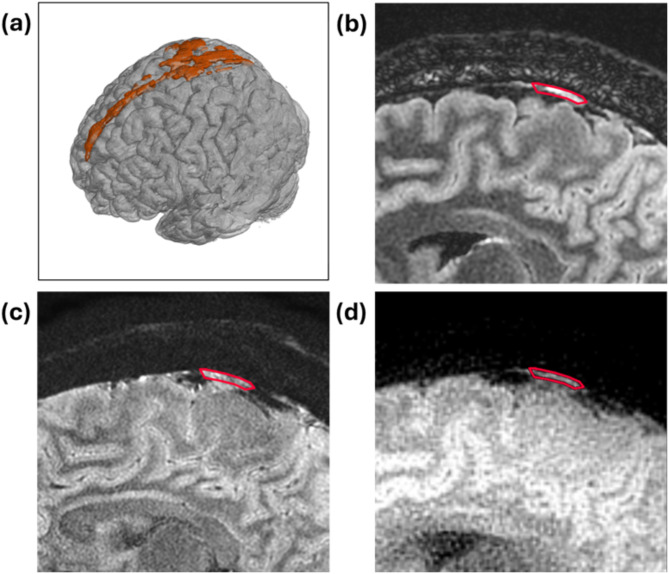 Figure 1
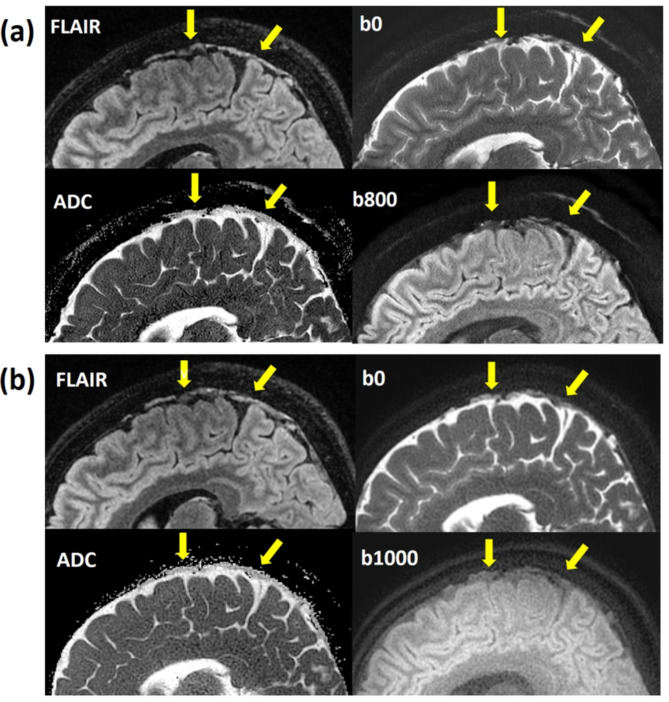 Figure 2
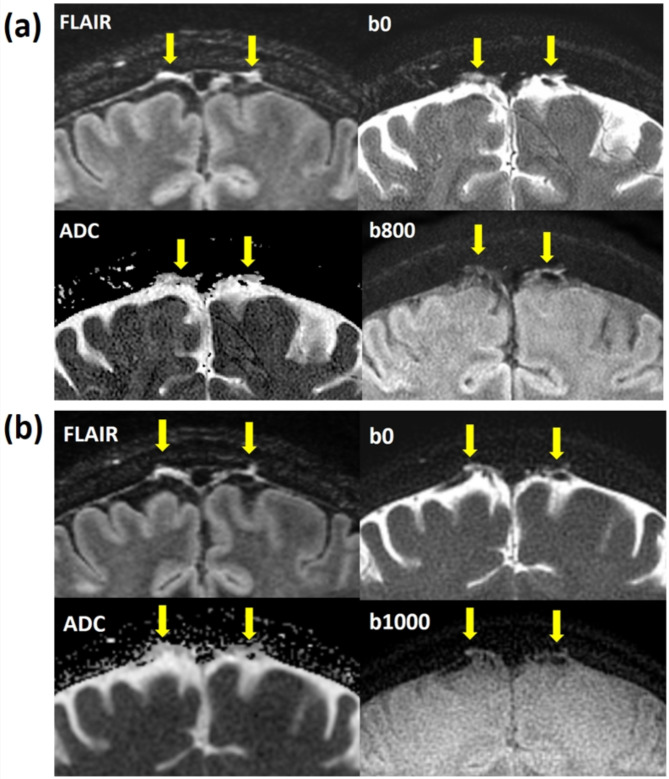 Figure 3
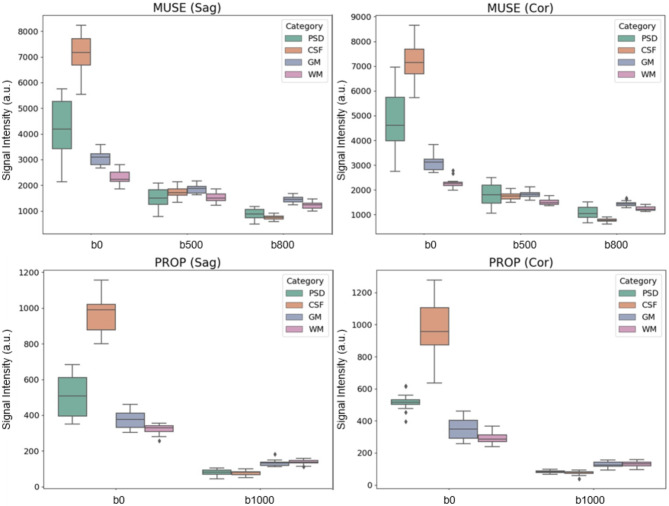 Figure 4
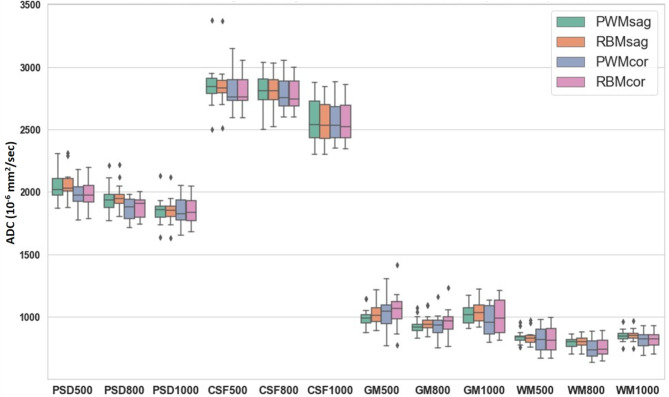 Figure 5
Peer Reviews
No public reviews on file for this paper yet. If you reviewed it on a platform where reviews are public (OpenReview, ICLR, NeurIPS, ICML), you can paste yours below so the community can read it here.
Videos
No videos yet. Explain this paper in a talk, walkthrough, or lecture? Add one.
Taxonomy
TopicsCerebrospinal fluid and hydrocephalus · Advanced Neuroimaging Techniques and Applications · Fetal and Pediatric Neurological Disorders