Relacorilant or surgery improved hemostatic markers in Cushing syndrome
C. Simeoli, N. Di Paola, A. Stigliano, P. Lardo, T. Kearney, E. Mezosi, E. Ghigo, R. Giordano, C. N. Mariash, D. M. Donegan, R. A. Feelders, A. L. Hand, K. A. Araque, A. G. Moraitis, R. Pivonello

TL;DR
Relacorilant treatment or surgery improved blood clotting markers in patients with Cushing syndrome, suggesting potential benefits for managing coagulation issues.
Contribution
Demonstrated that relacorilant or surgery can improve hemostatic markers in Cushing syndrome patients, offering new therapeutic insights.
Findings
Relacorilant significantly reduced factor VIII and platelet count while increasing aPTT in Cushing syndrome patients.
Surgery led to significant decreases in factor VIII, von Willebrand factor, and increased aPTT over 6 months.
Both relacorilant and surgery showed improvements in coagulation markers, suggesting potential preoperative or alternative treatment options.
Abstract
Glucocorticoid-mediated hypercoagulability can persist in patients with endogenous Cushing syndrome (CS) after curative surgery and may transiently worsen early postoperatively. These studies aimed to characterize coagulation markers at baseline in patients with CS and the impact of relacorilant or remission post-surgery in an open-label, phase 2 study (NCT02804750) and a retrospective, longitudinal, surgical cohort study. In the relacorilant study, 34 patients received relacorilant (100–200 mg/day for up to 12 weeks or 250–400 mg/day for up to 16 weeks) and had postbaseline data. Coagulation markers were assessed before and during treatment. In the surgical study, conducted at “Federico II” University of Naples, Italy, coagulation markers were assessed in 30 patients before surgery and after biochemical remission. In the relacorilant study, significant mean changes from baseline to…
Genes, proteins, chemicals, diseases, species, mutations and cell lines named across the full text — each resolved to its canonical identifier and authoritative record.
Click any figure to enlarge with its caption.
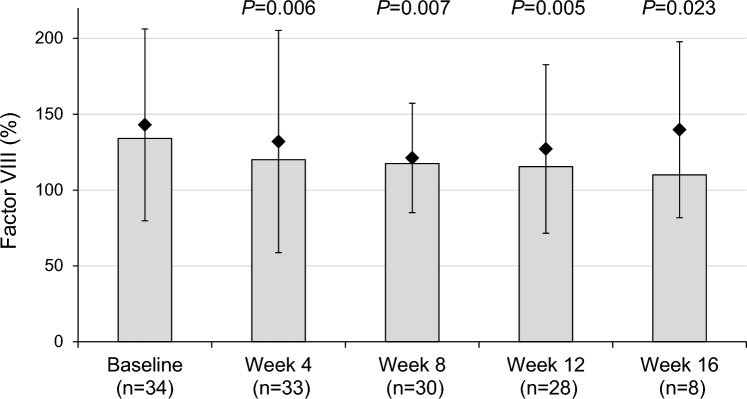 Figure 1
Peer Reviews
No public reviews on file for this paper yet. If you reviewed it on a platform where reviews are public (OpenReview, ICLR, NeurIPS, ICML), you can paste yours below so the community can read it here.
Videos
No videos yet. Explain this paper in a talk, walkthrough, or lecture? Add one.
Taxonomy
TopicsPituitary Gland Disorders and Treatments · Adrenal Hormones and Disorders · Growth Hormone and Insulin-like Growth Factors