LC–MS/MS quantification of bacterial and fungal signal peptides via direct injection: a case study of cross-kingdom communication
Carolin Pohl, Linda Schuster, Cindy Rau, Uta Gutbier, Stephan Beil, Hilmar Börnick, Kai Ostermann, Stefan Stolte

TL;DR
This paper introduces a new method to quickly and accurately measure signal peptides from bacteria and yeast, enabling the study of communication between different species.
Contribution
A novel ESI-LC–MS/MS method for real-time, quantitative detection of cross-kingdom signal peptides without pre-concentration.
Findings
The method achieved low limits of quantification for CSF, α-factor, and P-factor in complex matrices.
Genetically modified yeasts secreted up to 2.5 µM of CSF and 1 µM of α-factor and P-factor.
The method allows simultaneous detection of signal peptides in different matrices in near-real time.
Abstract
Bacteria and yeast use secreted signal peptides, also known as pheromones, for cell–cell communication within their respective species. Recently, genetic modification has allowed for the extension and exploitation of this type of communication, to communication between organisms from different species and even from different kingdoms. This innovative approach is intended to allow for the large-scale production of specific compounds for applications in medicine and biotechnology while producing reduced amounts of by-products. Until now, the detection of signal peptides, which are often short-lived and only present in small amounts, is usually qualitative, non-selective, and time-consuming and/or requires the presence of additional cell types. Here, an ESI-LC–MS/MS method for the specific quantification of signal peptides from yeast (α- and P-factor) and bacteria (CSF) using a TSKgel…
Genes, proteins, chemicals, diseases, species, mutations and cell lines named across the full text — each resolved to its canonical identifier and authoritative record.
Click any figure to enlarge with its caption.
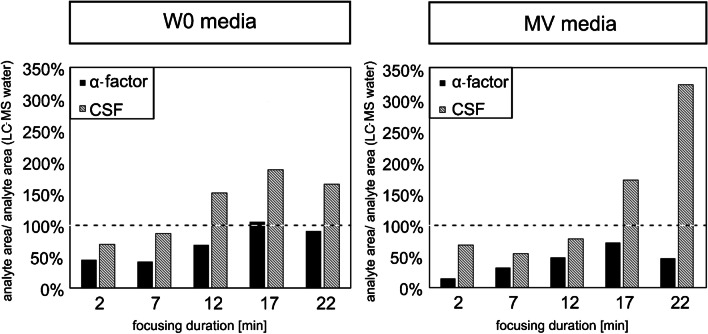 Figure 1
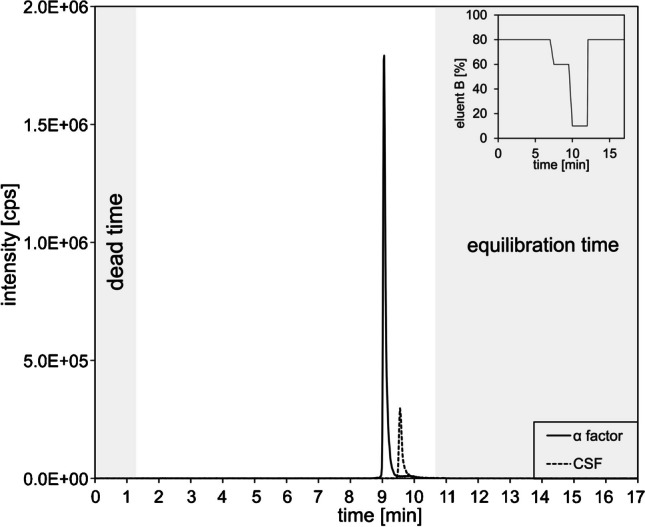 Figure 2
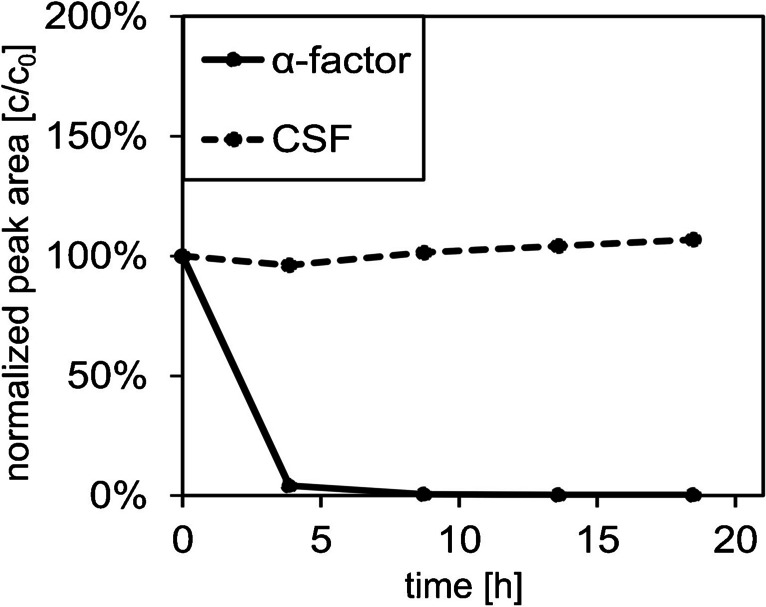 Figure 3
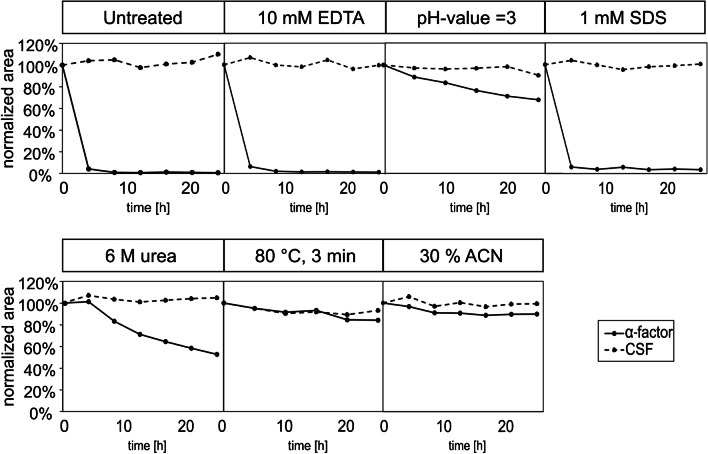 Figure 4
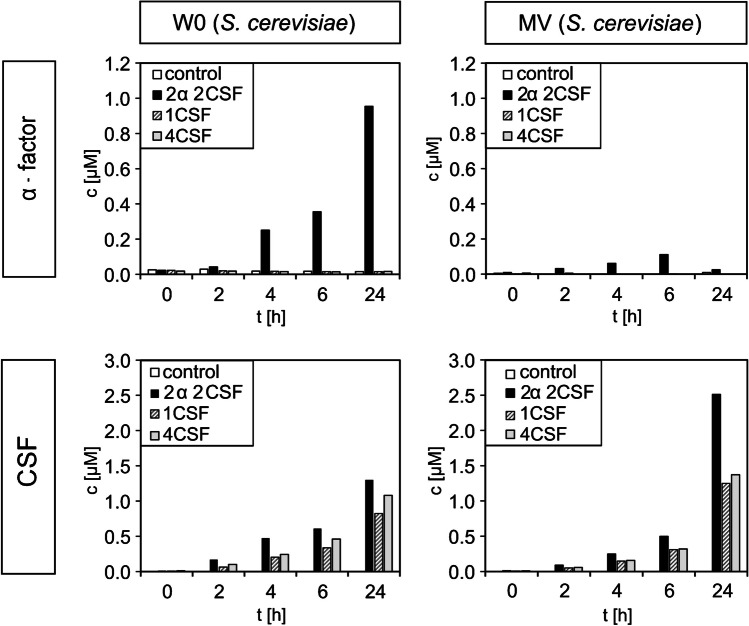 Figure 5
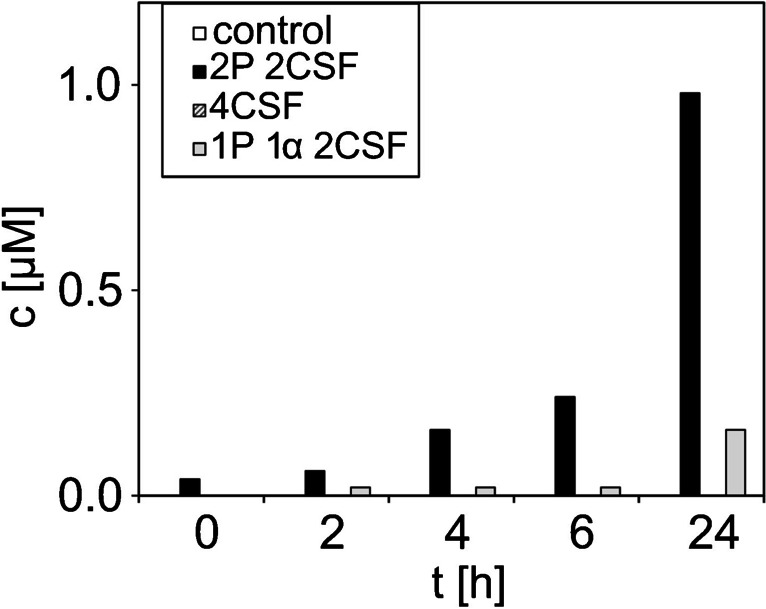 Figure 6
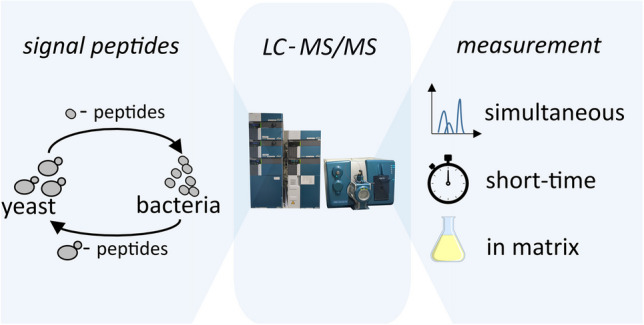 Figure 7
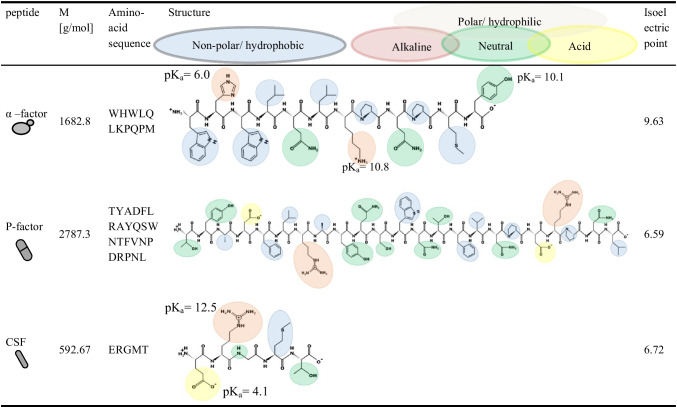 Figure 8
Peer Reviews
No public reviews on file for this paper yet. If you reviewed it on a platform where reviews are public (OpenReview, ICLR, NeurIPS, ICML), you can paste yours below so the community can read it here.
Videos
No videos yet. Explain this paper in a talk, walkthrough, or lecture? Add one.
Taxonomy
TopicsProtein purification and stability · Monoclonal and Polyclonal Antibodies Research · Bacterial Genetics and Biotechnology