Role of membrane porosity in passive sampling of aquatic contaminants for stable isotope analysis: enhancement of analyte accumulation rates and selectivity
Armela Tafa, Anat Bernstein, Martin Elsner, Rani Bakkour

TL;DR
Increasing membrane pore size in water samplers speeds up contaminant collection without affecting isotope analysis accuracy, making it easier to study low-concentration pollutants.
Contribution
Increasing membrane porosity enhances analyte accumulation rates and selectivity in passive samplers while preserving isotopic integrity.
Findings
Increasing membrane pore size from 0.1 to 8 μm increased mass accumulation rates of atrazine, S-metolachlor, and boscalid by 3.0-3.5 times.
Larger pores did not compromise isotopic integrity, with Δδ13C ≤ +0.4±0.1‰ and Δδ15N ≤ -0.6±0.4‰.
Larger pores showed enhanced selectivity for target analytes over humic acids without increased biofouling.
Abstract
Compound-specific isotope analysis (CSIA) is a potent method for illustrating the in situ degradation of aquatic contaminants. However, its application to surface and groundwater is hindered by low contaminant concentrations, typically in the nanogram-per-litre range, requiring the processing of large water volumes. Polar organic chemical integrative samplers (POCIS) have shown promising results when combined with CSIA, yet their extended deployment time to accumulate sufficient analyte mass remains a major limitation. In our study, we addressed this issue by increasing the pore size of the polyethersulfone membrane (PES) from 0.1 to 8 \documentclass[12pt]{minimal} \usepackage{amsmath} \usepackage{wasysym} \usepackage{amsfonts} \usepackage{amssymb} \usepackage{amsbsy} \usepackage{mathrsfs} \usepackage{upgreek} \setlength{\oddsidemargin}{-69pt}…
Genes, proteins, chemicals, diseases, species, mutations and cell lines named across the full text — each resolved to its canonical identifier and authoritative record.
Click any figure to enlarge with its caption.
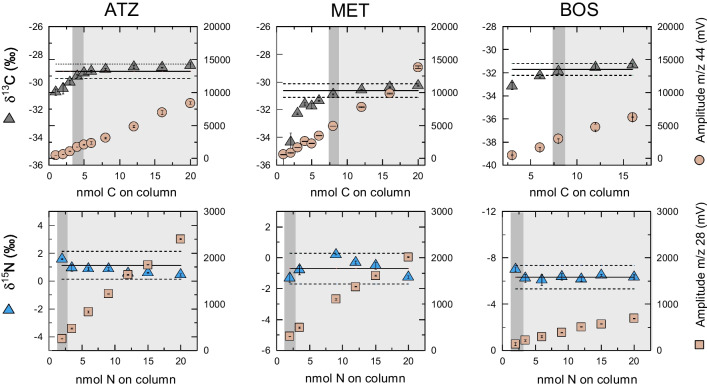 Figure 1
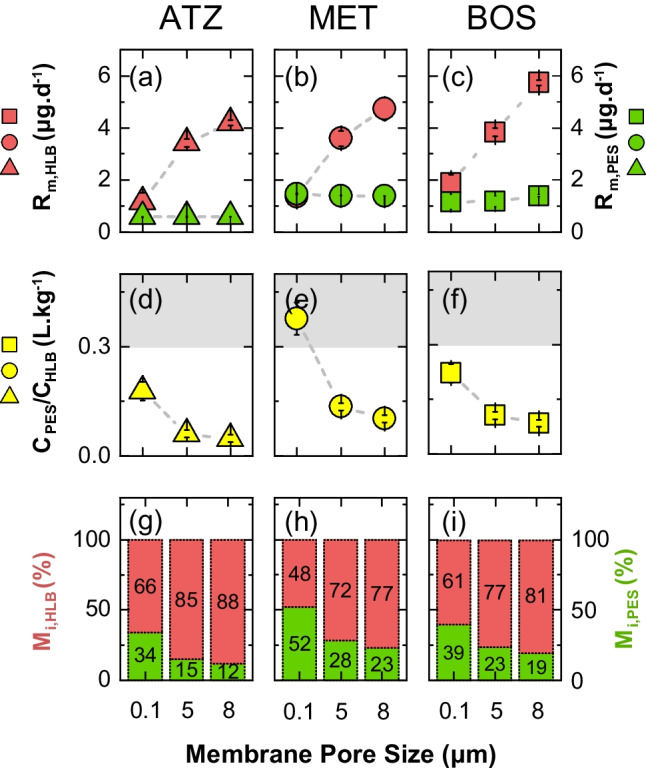 Figure 2
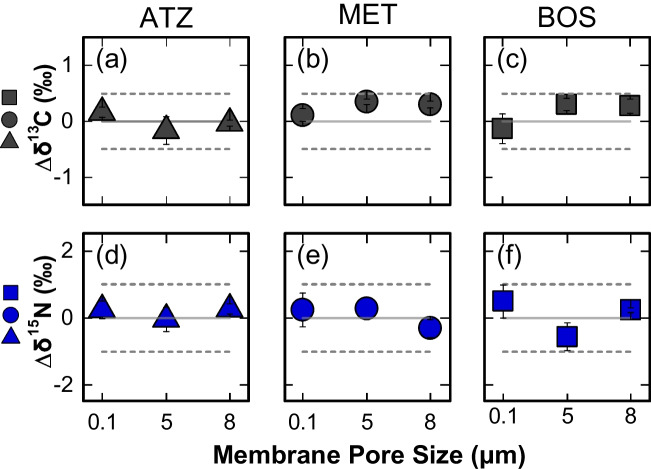 Figure 3
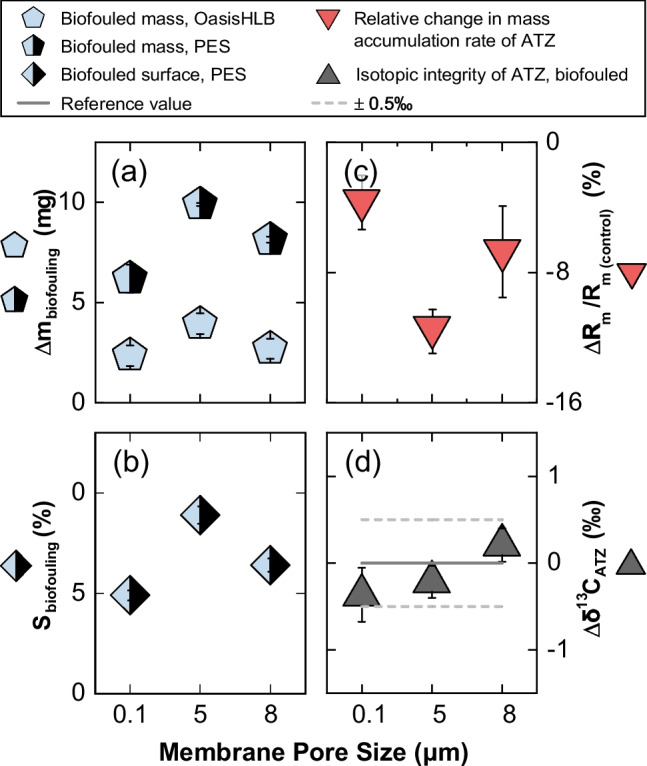 Figure 4
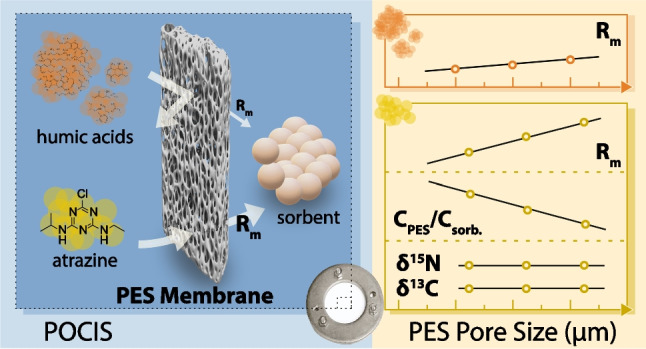 Figure 5
Peer Reviews
No public reviews on file for this paper yet. If you reviewed it on a platform where reviews are public (OpenReview, ICLR, NeurIPS, ICML), you can paste yours below so the community can read it here.
Videos
No videos yet. Explain this paper in a talk, walkthrough, or lecture? Add one.
Taxonomy
TopicsAnalytical chemistry methods development · Pharmaceutical and Antibiotic Environmental Impacts · Groundwater flow and contamination studies