A comparison of acceptability of contraceptive vaginal rings, pills, and injectables among cisgender women in Kenya and Zimbabwe: protocol for a mixed-methods study
Chelsea B. Polis, Francis O. Obare, Irene V. Bruce, Cynthia Banda, Lisa B. Haddad, Antwanette Heyns, Petros Isaakidis, Mercy Kamupira, Terrance Kufakunesu, Zachary A. Kwena, Farai Machinga, Regina F. Magore, Aleck Mapangire, Mercy Marimirofa, Matheus Mathipa, Sanyukta Mathur

TL;DR
This study compares how well women in Kenya and Zimbabwe accept contraceptive vaginal rings versus pills and injectables, aiming to improve understanding of user preferences and satisfaction.
Contribution
The study introduces a mixed-methods approach to assess real-world acceptability of contraceptive vaginal rings in African settings.
Findings
The study will compare method uptake, continuation, and satisfaction over one year among participants using Annovera versus other methods.
Qualitative interviews will explore drivers and barriers to using contraceptive vaginal rings in real-world settings.
Findings will provide insights to inform future investments in reproductive health in African countries.
Abstract
Expanding contraceptive options could better meet users’ diverse needs and preferences. Annovera ® is a contraceptive vaginal ring that provides a year of pregnancy prevention while remaining under user control and allowing for regular menstrual cycles. This method may also help to reduce burdens on some health care and supply chain systems. However, knowledge gaps exist regarding initial and ongoing acceptability of contraceptive vaginal rings in African settings. We will undertake an open-label, non-randomized, two-arm, parallel clinical acceptability study with an embedded qualitative component, based in clinics providing contraceptive services in Kenya and Zimbabwe. Women aged 18-45 interested in newly initiating or switching contraception will choose from among all available contraceptive options, including Annovera. We aim to enroll 200 participants selecting Annovera and 200…
Genes, proteins, chemicals, diseases, species, mutations and cell lines named across the full text — each resolved to its canonical identifier and authoritative record.
Click any figure to enlarge with its caption.
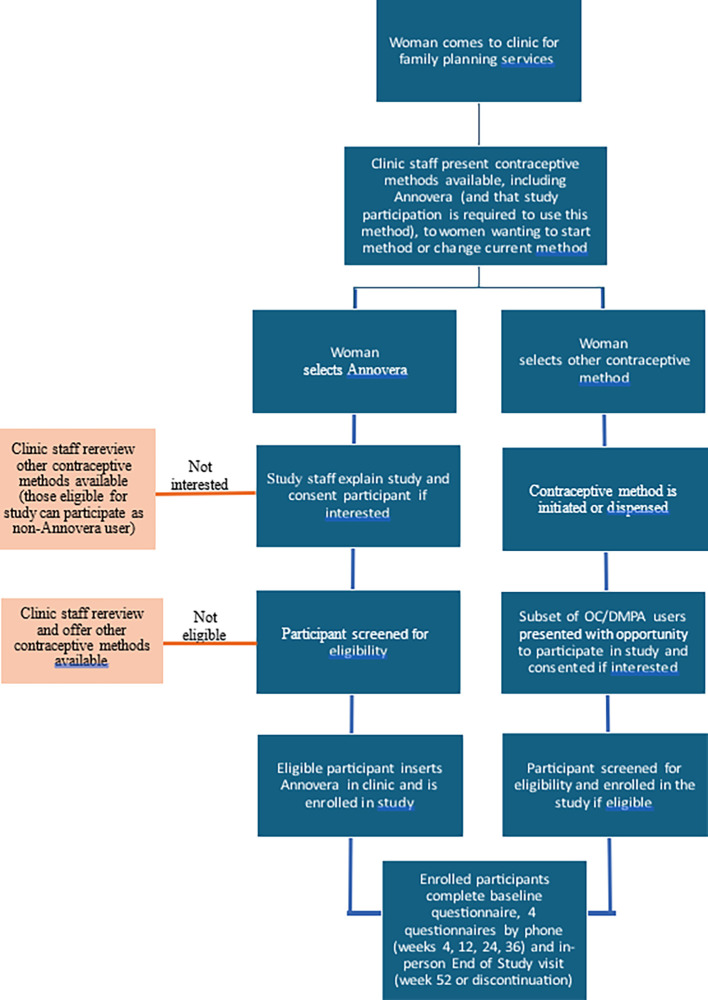 Figure 1
Peer Reviews
No public reviews on file for this paper yet. If you reviewed it on a platform where reviews are public (OpenReview, ICLR, NeurIPS, ICML), you can paste yours below so the community can read it here.
Videos
No videos yet. Explain this paper in a talk, walkthrough, or lecture? Add one.
Taxonomy
TopicsReproductive Health and Contraception · Global Maternal and Child Health · Adolescent Sexual and Reproductive Health