Characterization of Blue Light Receptors LreA and LreB in Aspergillus flavus
Hye-Min Park, Ye-Eun Son, He-Jin Cho, Jae-Hyuk Yu, Hee-Soo Park

TL;DR
This study explores how blue light receptors LreA and LreB affect the growth and toxin production in the fungus Aspergillus flavus.
Contribution
The study identifies the specific roles of LreA and LreB in conidiation, stress response, and pathogenicity in A. flavus.
Findings
Deleting lreA or lreB increased growth rate but reduced conidial production in A. flavus.
Mutant strains showed abnormal conidiophores and reduced aflatoxin B1 production during kernel infection.
LreA and LreB are essential for proper asexual development and pathogenicity in A. flavus.
Abstract
Light is a key external signal factor that regulates asexual development, stress resistance, and secondary metabolism in fungi. In the presence of light, photoreceptors sense several light receptors and affect fungal life. In this study, we characterized the function of the blue light receptors LreA and LreB in Aspergillus flavus, a potent pathogenic and toxigenic fungus. lreA or lreB deletion increased the growth rate but decreased conidial production in the presence or absence of light. The ΔlreA-mutant strain and the ΔlreB-mutant strain produced abnormal conidiophores, suggesting that lreA and lreB were essential for proper conidiation in A. flavus. The absence of lreA or lreB slightly decreased the stress response tolerance against thermal and oxidative stresses. In kernel infection, the ΔlreA mutant strain and the ΔlreB mutant strain produced conidia and aflatoxin B1 that were less…
Genes, proteins, chemicals, diseases, species, mutations and cell lines named across the full text — each resolved to its canonical identifier and authoritative record.
Click any figure to enlarge with its caption.
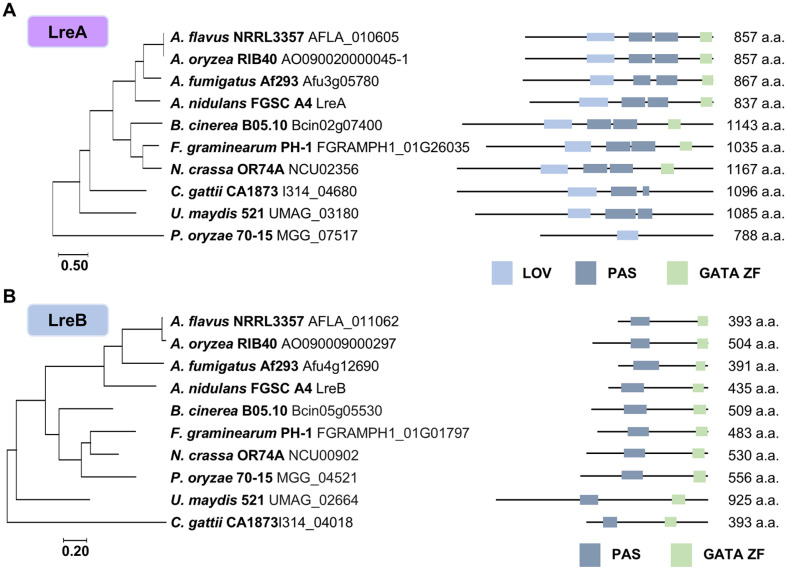 Figure 1
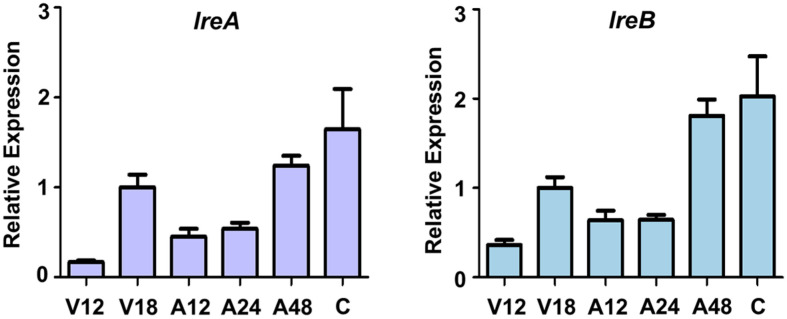 Figure 2
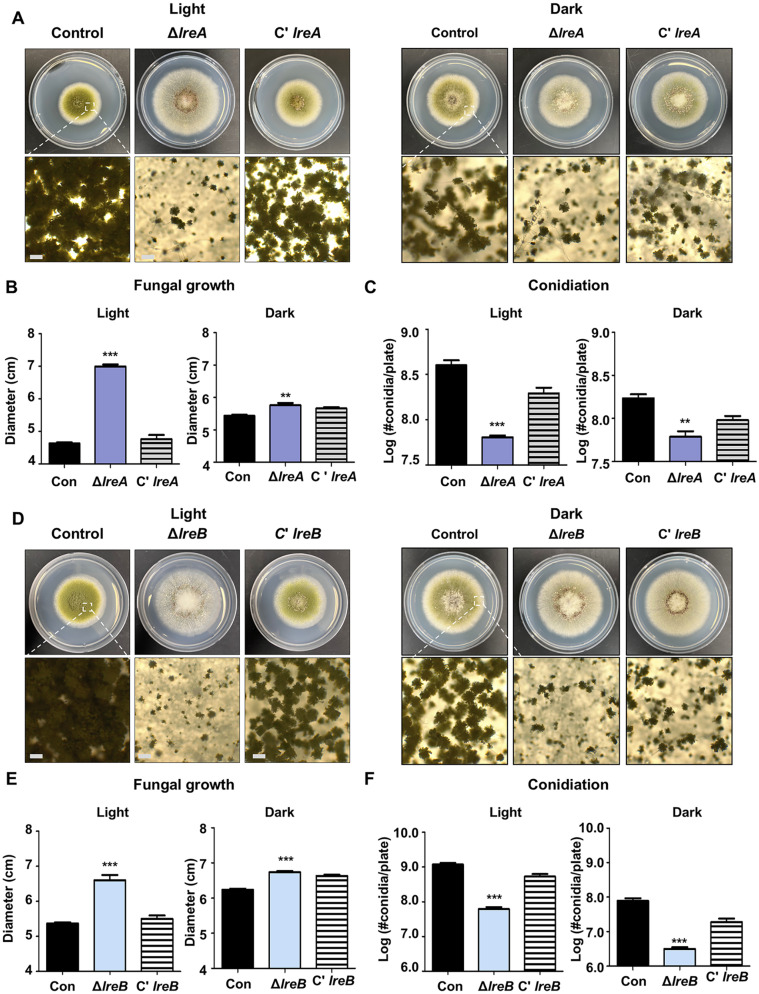 Figure 3
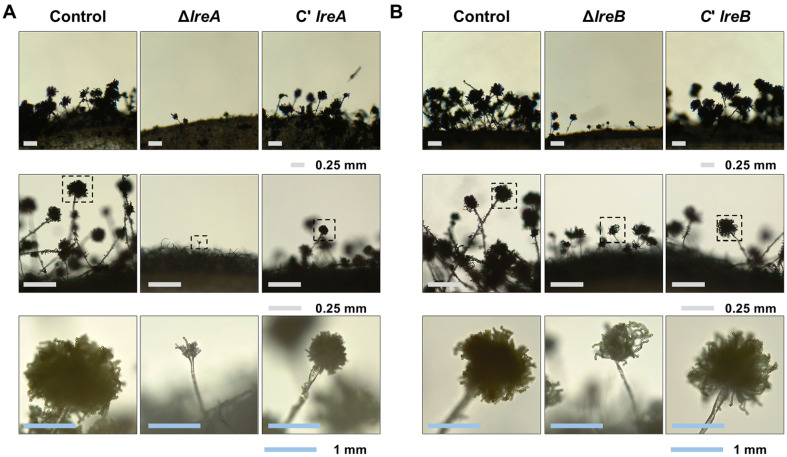 Figure 4
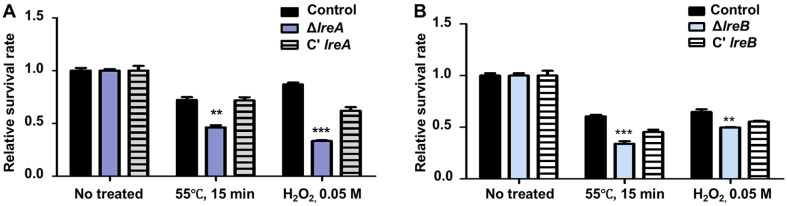 Figure 5
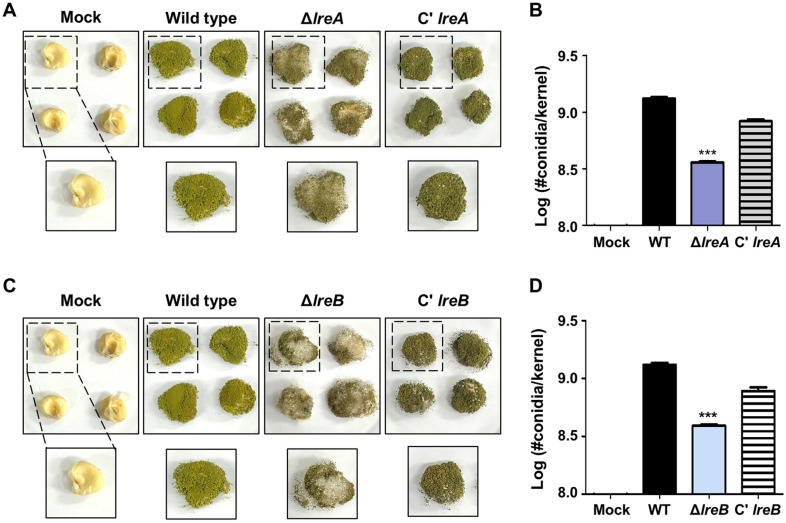 Figure 6
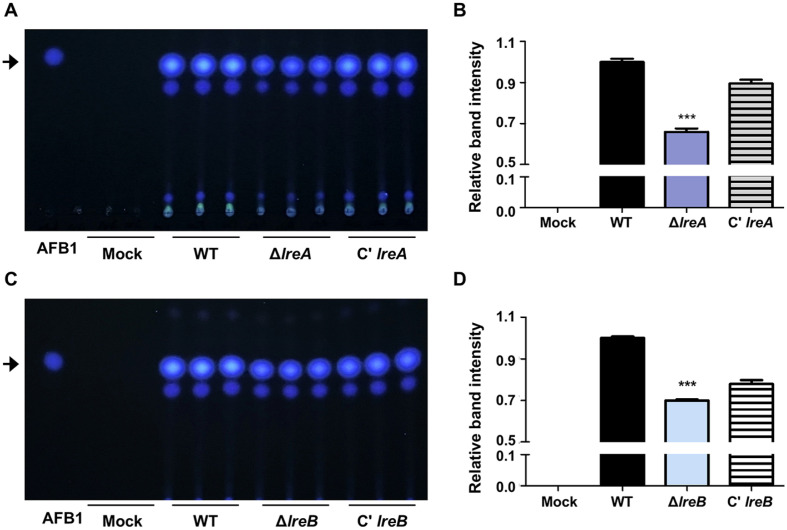 Figure 7
Peer Reviews
No public reviews on file for this paper yet. If you reviewed it on a platform where reviews are public (OpenReview, ICLR, NeurIPS, ICML), you can paste yours below so the community can read it here.
Videos
No videos yet. Explain this paper in a talk, walkthrough, or lecture? Add one.
Taxonomy
Topicsbioluminescence and chemiluminescence research