Mycoplasma hominis Intracranial Abscess Diagnosed by Characteristic Colonies Obtained Through Extended Culture: Case Report and Literature Review
Oki Sato, Keitaro Iwata, Makoto Murase, Eiyu Ebata, Kiyofumi Ohkusu, Masakazu Sasaki, Daisuke Ono

TL;DR
A rare case of intracranial abscess caused by Mycoplasma hominis was diagnosed through extended culture after initial tests failed to detect the bacteria.
Contribution
This case highlights the importance of extended culture for diagnosing M. hominis intracranial abscess when Gram staining is negative.
Findings
M. hominis was identified through 16S rRNA gene sequencing of colonies observed on day 19 of culture.
Antibiotic treatment with levofloxacin and clindamycin resolved the abscesses over 52 days.
No recurrence was observed after treatment completion.
Abstract
Mycoplasma hominis (M. hominis) causes genitourinary infections and pregnancy-related complications. Reports of intracranial abscesses due to M. hominis infection are rare. Here, we report a M. hominis intracranial abscess case following a traffic accident who was admitted to our hospital (day 0). The patient, a man in his 70s, underwent cystourethrography, and a urethral catheter was inserted. On day three, the patient underwent intracerebral hematoma evacuation, and on day seven, intravenous ceftazidime and vancomycin were administered after the patient developed a fever. On day 10, the antibiotics were switched to meropenem and vancomycin due to persistent fever. On day 17, magnetic resonance imaging revealed brain and epidural abscesses, and abscess drainage was performed. Gram staining of the abscess specimen showed numerous polymorphonuclear leukocytes, but no visible…
Genes, proteins, chemicals, diseases, species, mutations and cell lines named across the full text — each resolved to its canonical identifier and authoritative record.
Click any figure to enlarge with its caption.
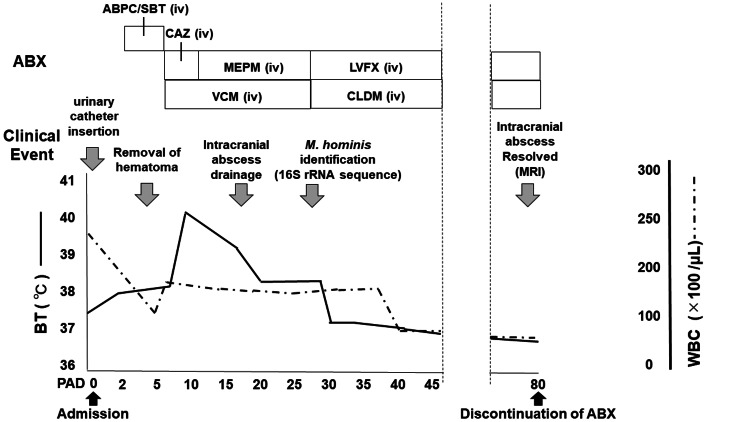 Figure 1
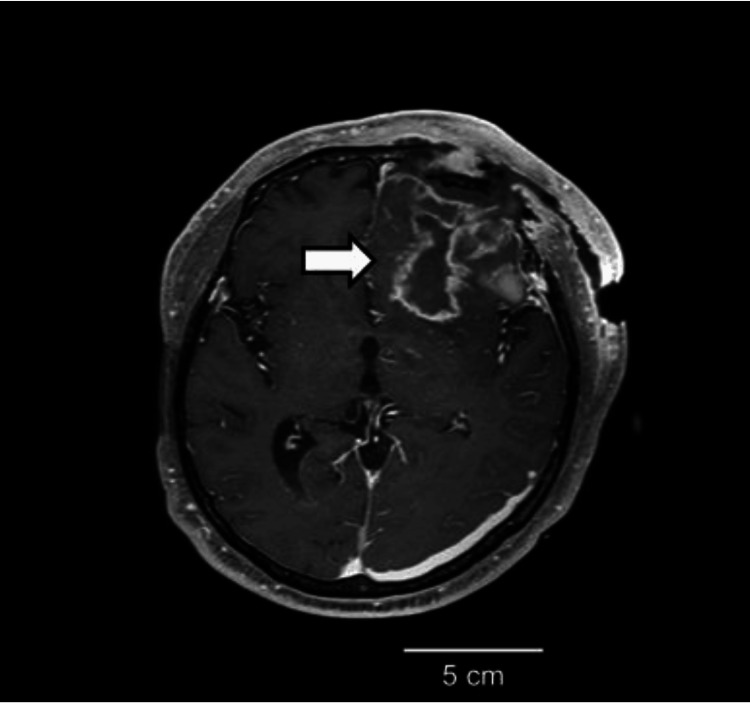 Figure 2
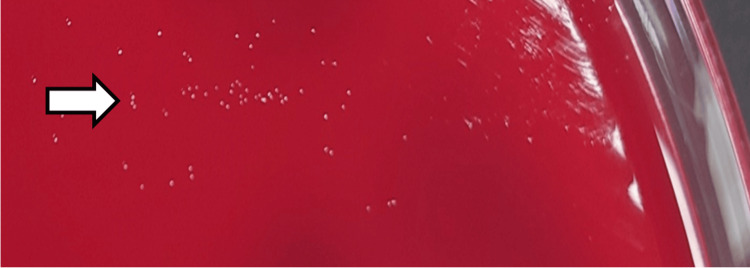 Figure 3
Peer Reviews
No public reviews on file for this paper yet. If you reviewed it on a platform where reviews are public (OpenReview, ICLR, NeurIPS, ICML), you can paste yours below so the community can read it here.
Videos
No videos yet. Explain this paper in a talk, walkthrough, or lecture? Add one.
Taxonomy
TopicsMicrobial infections and disease research · Bacterial Identification and Susceptibility Testing · Streptococcal Infections and Treatments