Development of a Pharyngeal Residue Level Assessment Index Using Artificial Intelligence (AI) Acoustic Analysis: A Study Protocol
Yoshitaka Shimizu, Tamayo Takahashi, Aya Oda, Serica Imamura, Eiji Imado, Utaka Sasaki, Hisanobu Kamio, Maho Suyama, Ryo Uetsuki, Shinichiro Ohshimo, Nobuaki Shime, Hiroshi Hanamoto

TL;DR
This study aims to develop an AI-based acoustic system to detect and quantify pharyngeal residue after surgery, potentially reducing aspiration risks.
Contribution
The novel contribution is the development of an AI acoustic analyzer to assess pharyngeal residue levels in post-anesthesia patients.
Findings
AI acoustic analysis will be used to measure and quantify pharyngeal residue sounds.
The study will compare acoustic data with physical measurements of residue volume.
The approach could offer a low-cost method to reduce postoperative aspiration risks.
Abstract
The swallowing function is often compromised immediately after general anesthesia owing to the effects of anesthetic agents. Consequently, pharyngeal residue may accumulate, which increases the risk of aspiration during the perioperative period. Therefore, we designed a single-arm, open-label study, developing an artificial intelligence (AI)-based acoustic analyzer for quantifying pharyngeal residues and evaluating its efficacy. A sample of 30 patients aged ≥18 years scheduled for jaw deformity surgery will be enrolled in this study. Immediately after tracheal tube extubation, adventitious sounds from pharyngeal residues, such as saliva and blood, will be measured and quantified using an AI acoustic analysis system. Subsequently, the residual pharyngeal fluid will be suctioned and quantified by measuring the change in container weight before and after collection. The primary outcome…
Genes, proteins, chemicals, diseases, species, mutations and cell lines named across the full text — each resolved to its canonical identifier and authoritative record.
Click any figure to enlarge with its caption.
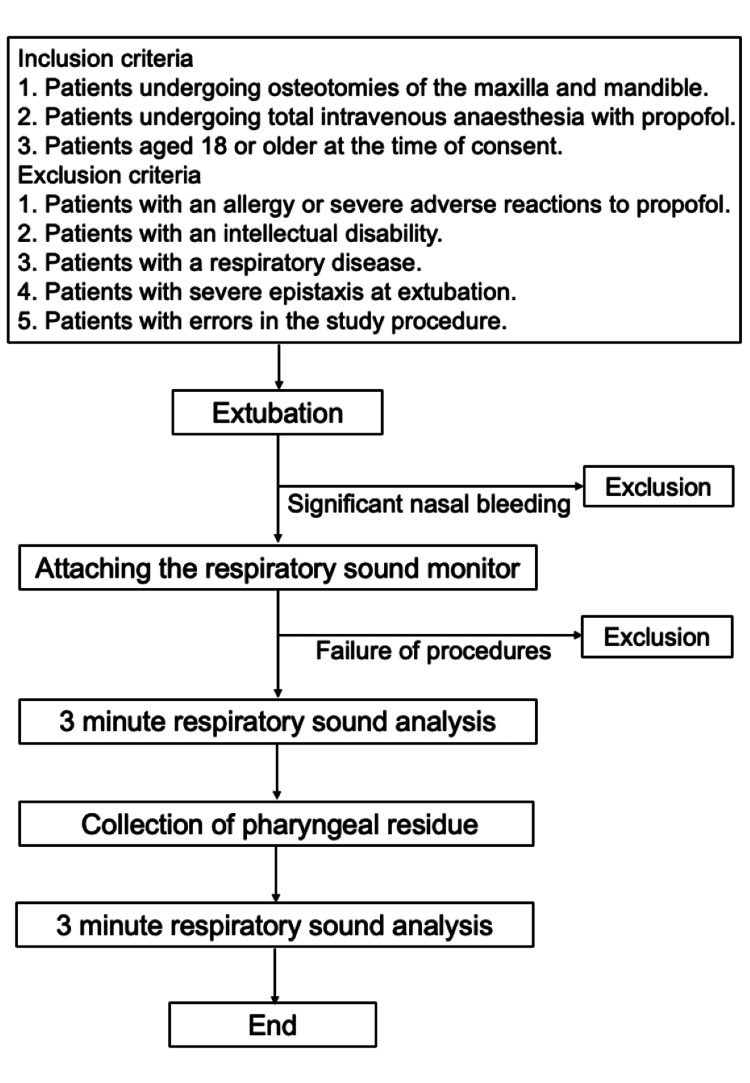 Figure 1
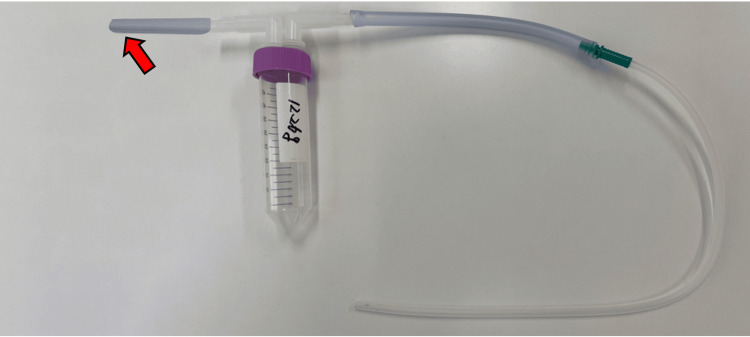 Figure 2
Peer Reviews
No public reviews on file for this paper yet. If you reviewed it on a platform where reviews are public (OpenReview, ICLR, NeurIPS, ICML), you can paste yours below so the community can read it here.
Videos
No videos yet. Explain this paper in a talk, walkthrough, or lecture? Add one.
Taxonomy
TopicsDysphagia Assessment and Management · Voice and Speech Disorders · Obstructive Sleep Apnea Research