Motivated reasoning in the field: polarization of prose, precedent, and policy in U.S. Circuit Courts, 1891–2013
Wei Lu, Daniel L. Chen, Jerg Gutmann, Jerg Gutmann, Jerg Gutmann, Jerg Gutmann

TL;DR
This study shows that U.S. Circuit Court judges have become more politically polarized in their writing and legal reasoning over the past 120 years.
Contribution
The paper introduces a novel use of natural language processing and machine learning to analyze judicial polarization in prose and citation practices.
Findings
Judges show increased polarization in the textual content of judicial opinions.
On divided panels and near midterm elections, judges exhibit increased dissent votes and reduced polarization in writing and citations.
Judges on the shortlist for Supreme Court vacancies show greater polarization in precedent selection.
Abstract
This study explores politically motivated reasoning among U.S. Circuit Court judges over the past 120 years, examining their writing style and use of previous case citations in judicial opinions. Employing natural language processing and supervised machine learning, we scrutinize how judges’ language choices and legal citations reflect partisan slant. Our findings reveal a consistent, albeit modest, polarization in citation practices. More notably, there is a significant increase in polarization within the textual content of opinions, indicating a stronger presence of motivated reasoning in their prose. We also examine the impact of heightened scrutiny on judicial reasoning. On divided panels and as midterm elections draw near, judges show an increase in dissent votes while decreasing in polarization in both writing and citation practices. Furthermore, our study explores polarization…
Genes, proteins, chemicals, diseases, species, mutations and cell lines named across the full text — each resolved to its canonical identifier and authoritative record.
Click any figure to enlarge with its caption.
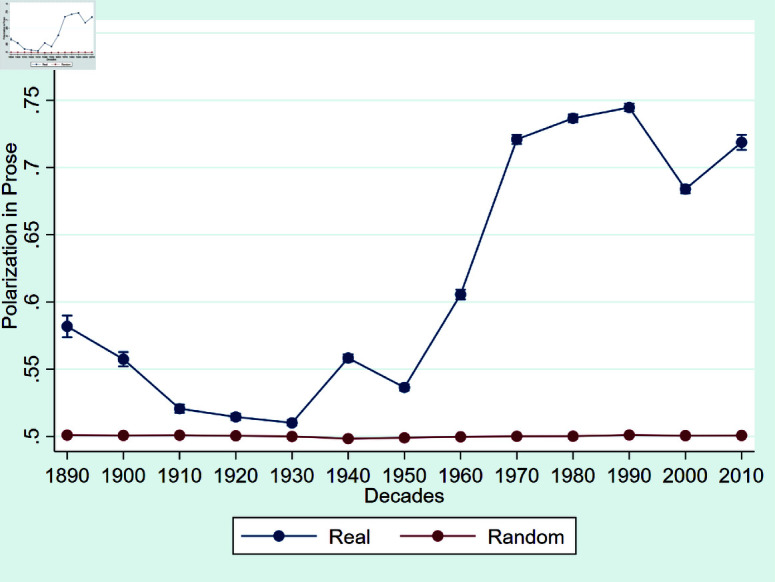 Figure 1
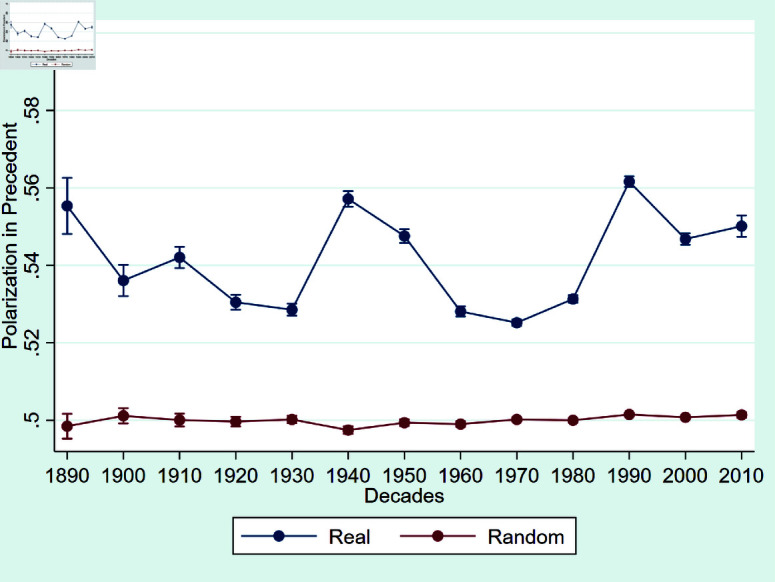 Figure 2
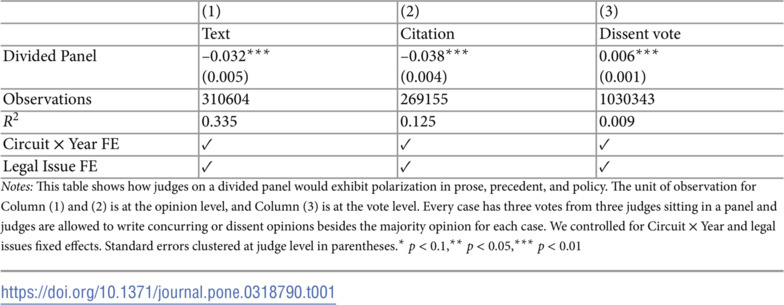 Figure 3
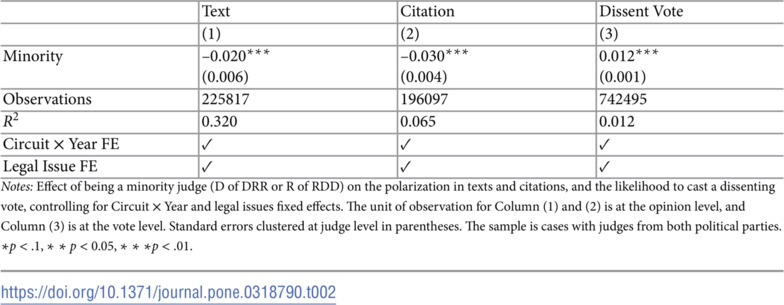 Figure 4
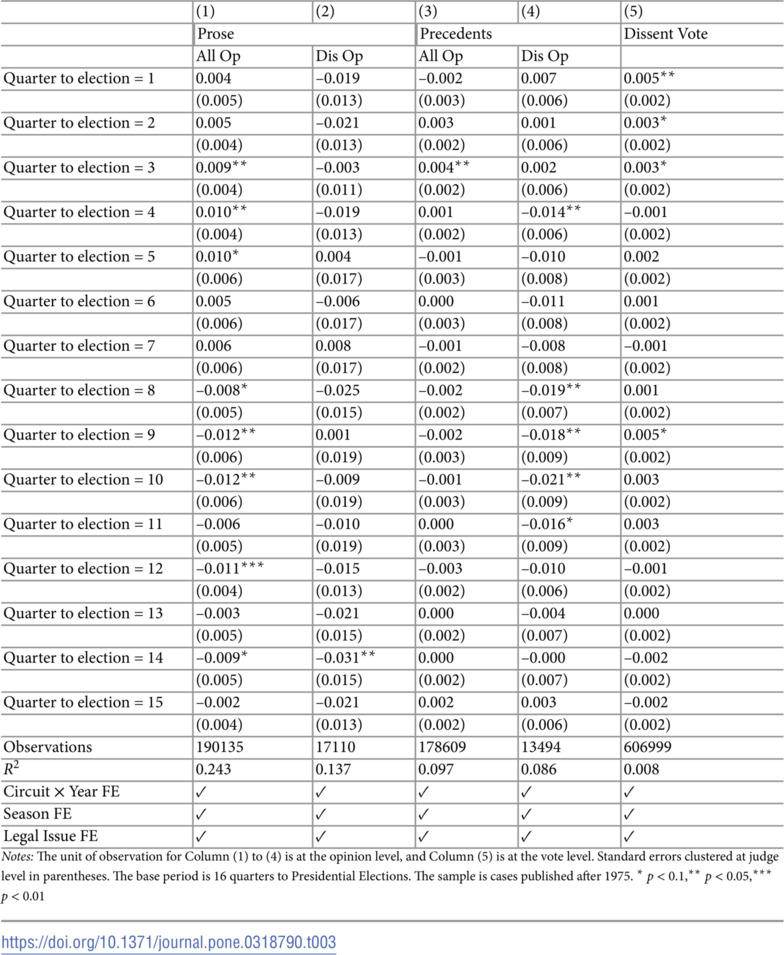 Figure 5
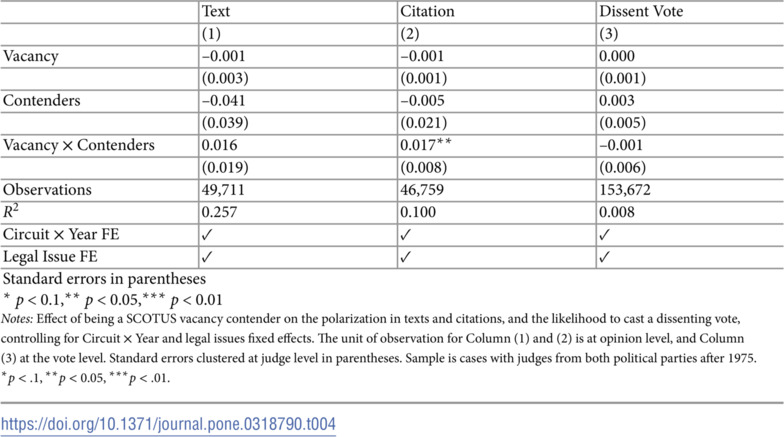 Figure 6
Peer Reviews
No public reviews on file for this paper yet. If you reviewed it on a platform where reviews are public (OpenReview, ICLR, NeurIPS, ICML), you can paste yours below so the community can read it here.
Videos
No videos yet. Explain this paper in a talk, walkthrough, or lecture? Add one.
Taxonomy
TopicsJudicial and Constitutional Studies · Legal Education and Practice Innovations · Law, Economics, and Judicial Systems