The subcellular topology of the RNAi machinery is multifaceted and reveals adherens junctions as an epithelial hub
Joyce Nair-Menon, Christina Kingsley, Houda Mesnaoui, Peter Lin, Kyrie Wilson, Bärbel Rohrer, Antonis Kourtidis

TL;DR
This study reveals that the RNAi machinery has a complex subcellular organization, with RNAi components localized at cell junctions in healthy epithelial cells but not in transformed or mesenchymal cells.
Contribution
The study identifies a novel junctional localization of RNAi machinery at adherens junctions in well-differentiated epithelial cells.
Findings
Junctional localization of RNAi components is common in well-differentiated epithelia but absent in transformed or mesenchymal cells.
The microprocessor is found in the cytoplasm, and RISC is localized in the nucleus, challenging traditional models.
RNAi complexes associate with adherens junctions via PLEKHA7, an E-cadherin partner.
Abstract
The RNA interference (RNAi) machinery is a key cellular mechanism catalyzing biogenesis and function of miRNAs to post-transcriptionally regulate mRNA expression. The RNAi machinery includes a set of protein complexes with subcellular localization traditionally presented in a uniform fashion: the microprocessor processes miRNAs in the nucleus, whereas the DICER and the RNA-induced silencing complex (RISC) further process and enable activity of miRNAs in the cytoplasm. However, several studies have identified subcellular patterns of RNAi components that deviate from this model. We have particularly shown that RNAi complexes associate with the adherens junctions of well-differentiated epithelial cells, through the E-cadherin partner PLEKHA7. To assess the extent of these subcellular topological patterns, we examined subcellular localization of the microprocessor and RISC in a series of…
Genes, proteins, chemicals, diseases, species, mutations and cell lines named across the full text — each resolved to its canonical identifier and authoritative record.
Click any figure to enlarge with its caption.
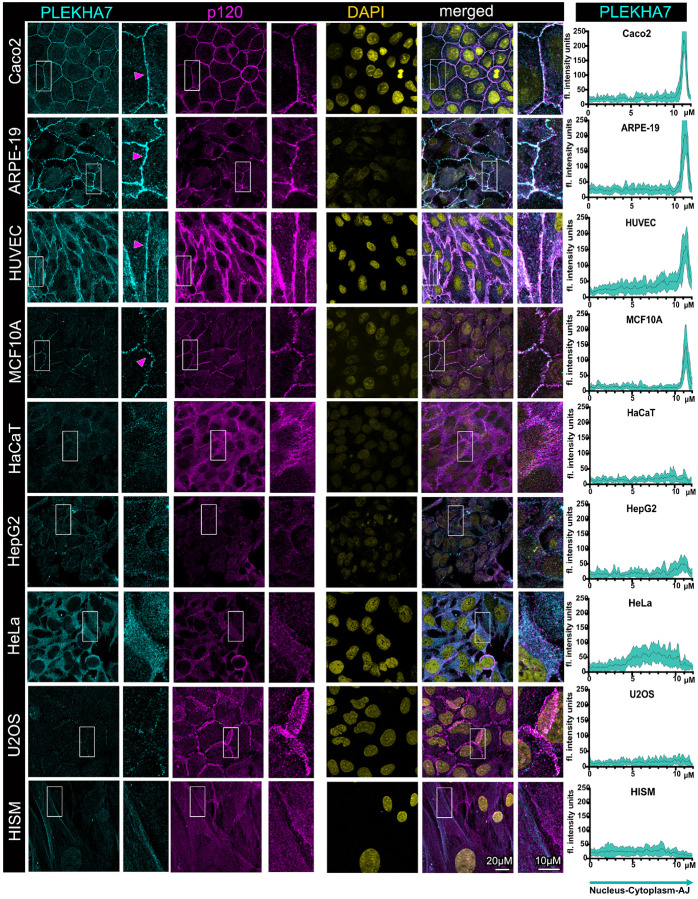 Figure 1
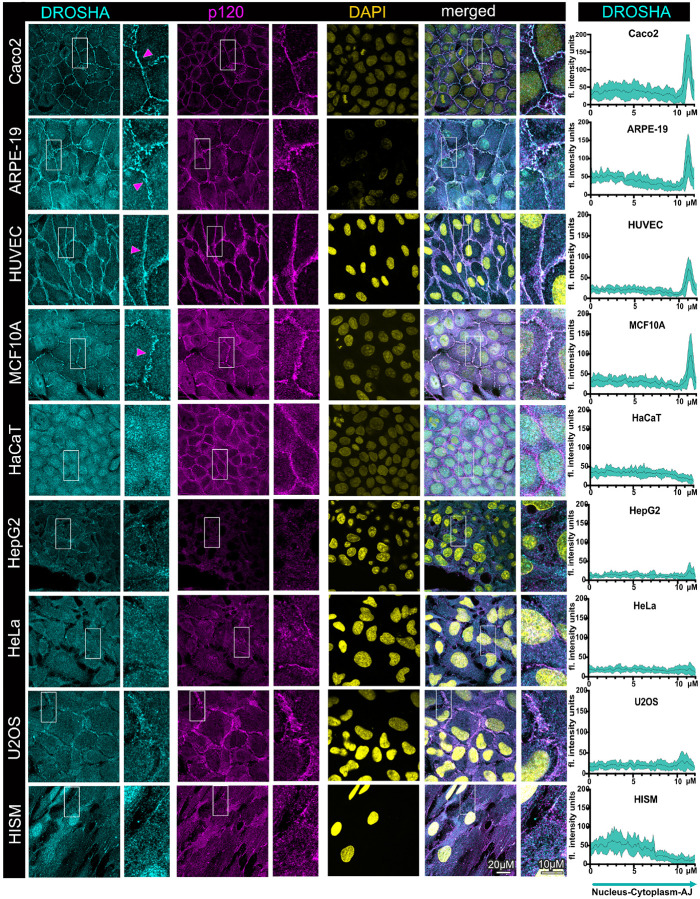 Figure 2
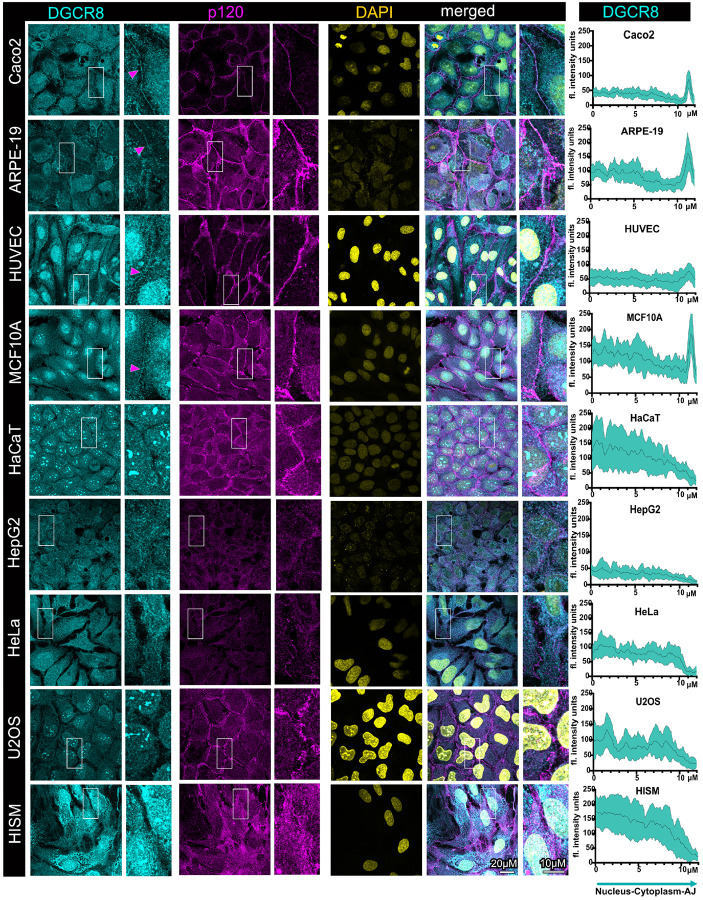 Figure 3
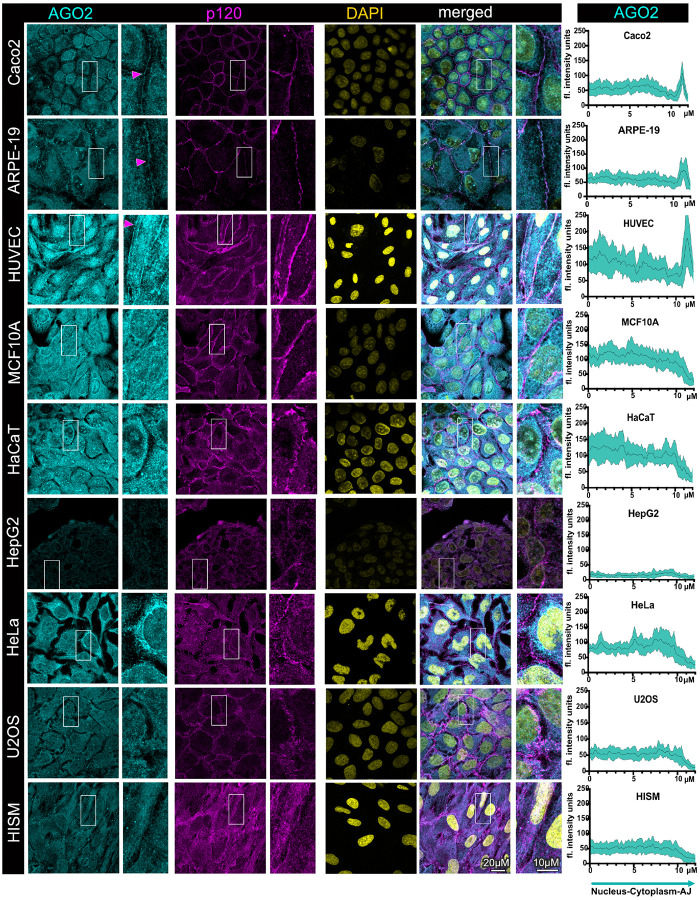 Figure 4
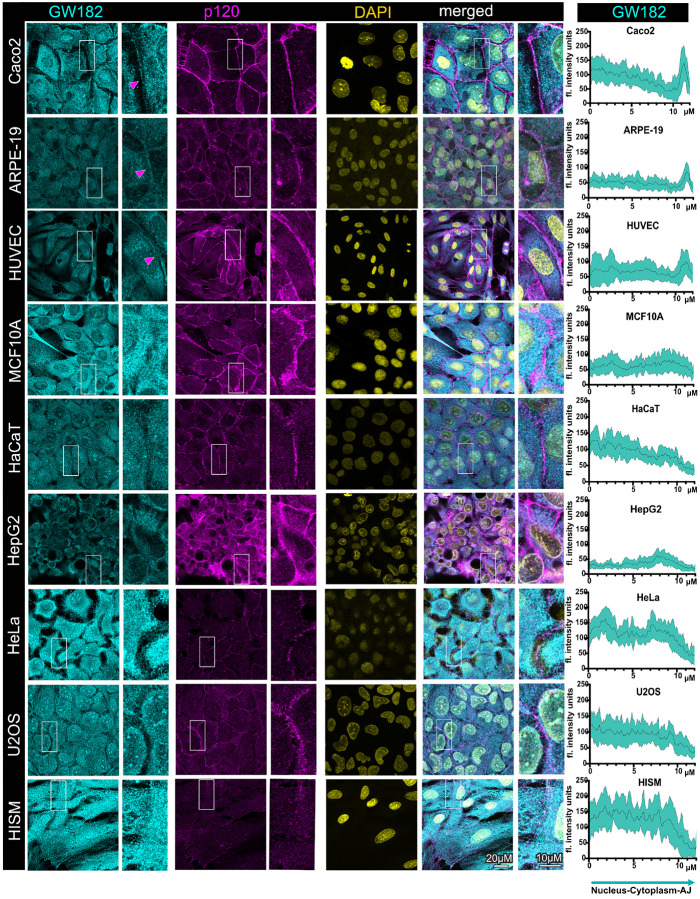 Figure 5
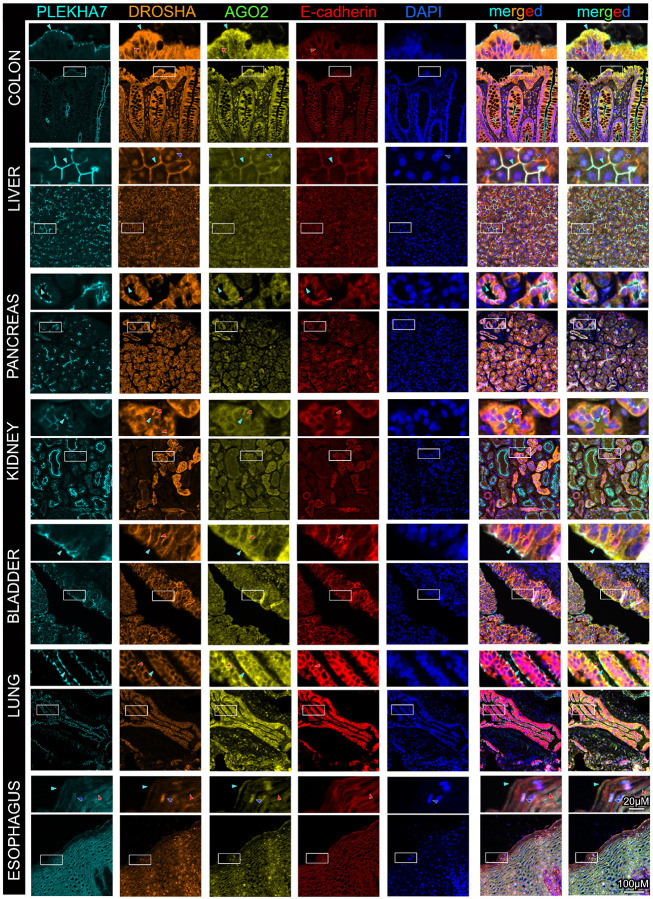 Figure 6
Peer Reviews
No public reviews on file for this paper yet. If you reviewed it on a platform where reviews are public (OpenReview, ICLR, NeurIPS, ICML), you can paste yours below so the community can read it here.
Videos
No videos yet. Explain this paper in a talk, walkthrough, or lecture? Add one.
Taxonomy
TopicsRNA Research and Splicing · MicroRNA in disease regulation · RNA modifications and cancer